
If you’ve spent any time in parenting groups, you’ll have seen the debates. Someone asks when they can turn their baby’s car seat around, and suddenly there are 200 comments, strong opinions, and at least one person worrying about broken legs.
Let’s take a deep breath and look at what the evidence actually says. Because once you understand the science, the recommendation to keep children rear-facing for longer makes a lot of sense, and the common worries turn out to be far less scary than they sound.
What does UK car seat law actually say?
In the UK, the law requires babies in height-based (i-Size, R129) car seats to travel rear-facing until they are at least 15 months old. After that, it’s legal to turn them around to face the front.
But here’s the important bit: legal minimum and safest option aren’t the same thing. Safety experts, including the people who crash-test these seats for a living, recommend keeping children rear-facing for much longer: ideally until around age 4, or 105cm tall, depending on your seat’s limits.
That’s not an arbitrary number. It’s based on decades of crash data, particularly from Sweden, where extended rear-facing has been the norm since the 1960s and child road deaths are among the lowest in the world.
The physics of a crash: why direction matters so much
In a collision, a car typically goes from tens of miles per hour to zero in a fraction of a second. The car stops but the bodies inside want to keep moving (that’s inertia for you).
For a forward-facing passenger, the seatbelt or harness holds the body back. But the head doesn’t have a strap of its own. It keeps travelling forward, whipping the neck with it. Adults are built to (mostly) tolerate this, although even they can get a nasty case of whiplash. But for small children it’s a different story.
Children aren’t mini adults (their heads are enormous)
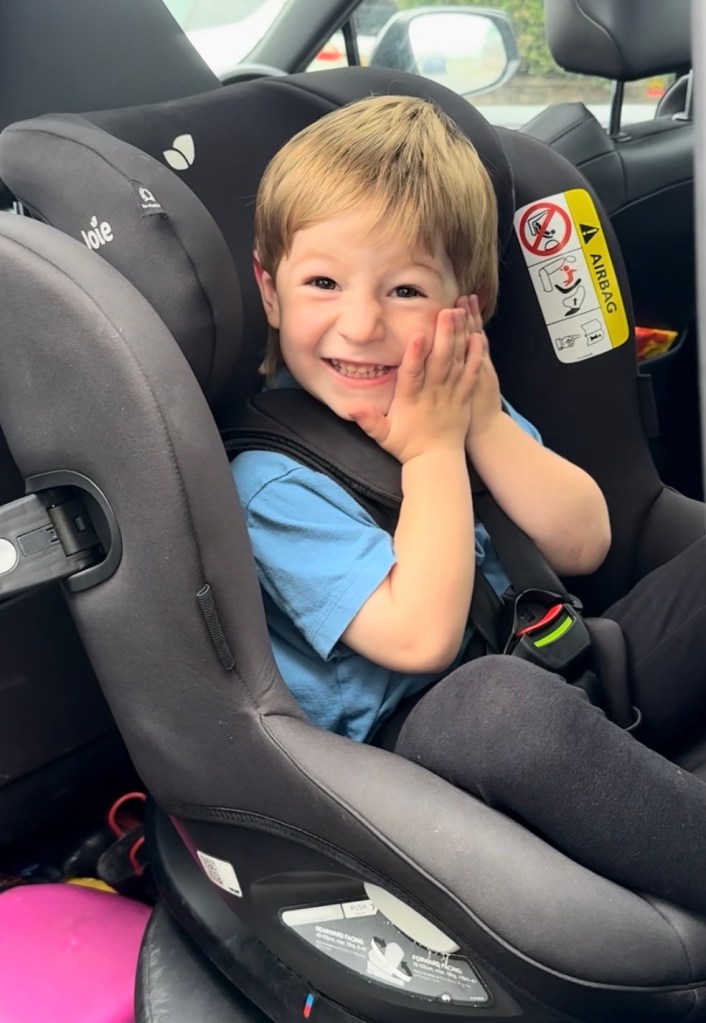
Here’s the bit that surprises most parents: a young child’s head makes up around a quarter of their body weight. For an adult, it’s roughly 6%.
Now remember those wobbly newborn days, when your baby couldn’t hold their own head up? Even after the neck muscles strengthen, the underlying structures are still works in progress. A young child’s vertebrae are partly made of cartilage rather than fully hardened bone, and the ligaments connecting them are looser and stretchier than an adult’s.
So in a crash, you’ve got a proportionally huge, heavy head attached to a soft, still-developing neck – a neck that also happens to contain some rather important nervous system wiring, too. When that head is thrown forward, the strain on the neck is enormous. Facing the seat backwards takes almost all of that strain away.
How rear facing is different
When a child is rear-facing, something very different happens. Instead of being flung forwards against the harness, the child is pushed back into their seat. The shell of the car seat catches them, absorbing and spreading the crash forces across their entire back — the strongest, broadest part of their body. Crucially, their head, neck and spine all move together as one unit, rather than the head snapping forward on its own.
The difference this makes is striking: research suggests young children are up to five times more likely to be seriously injured or killed in a crash when forward-facing compared with rear-facing.
This is why rear-facing is absolutely critical for babies, but it’s also why it remains the safest option right through the toddler years. Those proportions and soft tissues don’t change overnight on a child’s first birthday (or their second, or third).
“But won’t their legs be squashed?”
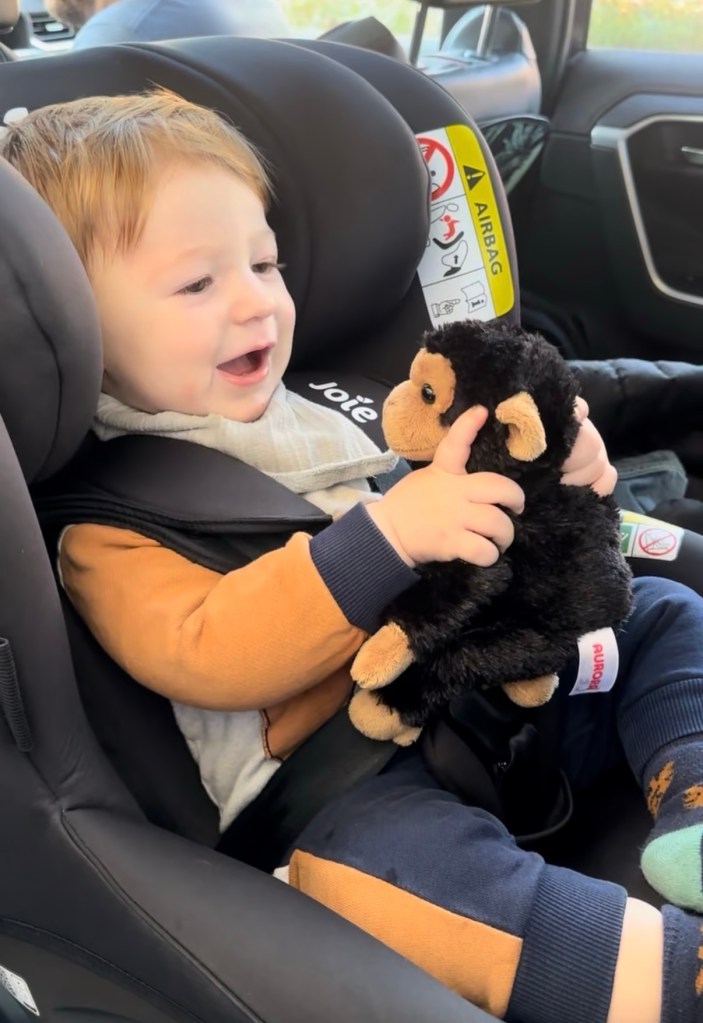
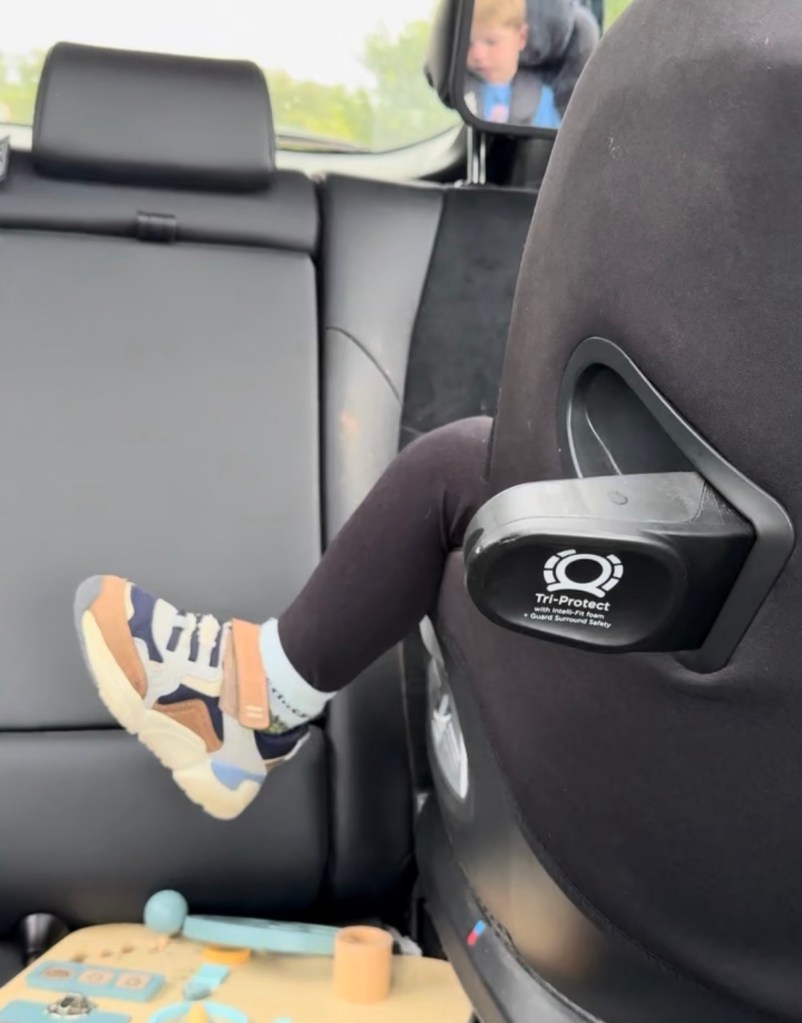
This is the number one worry, and it’s completely understandable. A rear-facing three-year-old does can look like they’re folded up like a deckchair. But here’s the reassuring truth:
- Children are far bendier than we are. Their joints aren’t fully formed, and positions that would have an adult groaning are genuinely comfortable for them. Crossed legs, frog legs, feet up the seat back — they’ll find a cosy position without a second thought.
- Leg injuries from rear-facing are not a meaningful pattern in crash data. The “broken legs” fear is a myth that’s circulated for years without evidence behind it. And even in the worst-case scenario, a leg injury is treatable in a way that a serious neck injury may not be.
- Rear-facing can actually be comfier. Think about sitting on a tall stool with your legs dangling. Most of us instinctively look for a footrest. Rear-facing children always have somewhere to rest their legs, while forward-facing children often end up kicking the seat in front trying to get comfortable. (Your car’s upholstery may consider this a safety feature too.)
When forward-facing might be the right call for your family
Here’s where we put the non-judgemental hat firmly on, because real life is messier than crash-test data.
If your little one suffers badly from car sickness, rear-facing may make it worse for some children. And if a small person being repeatedly sick behind you is distracting you from driving safely, that’s a real safety consideration in itself. A calm, focused driver matters too.
Rear-facing for as long as possible is the evidence-based ideal, but you know your child and your circumstances. Making an informed choice that works for your family is what good parenting looks like. No guilt required.
The bottom line
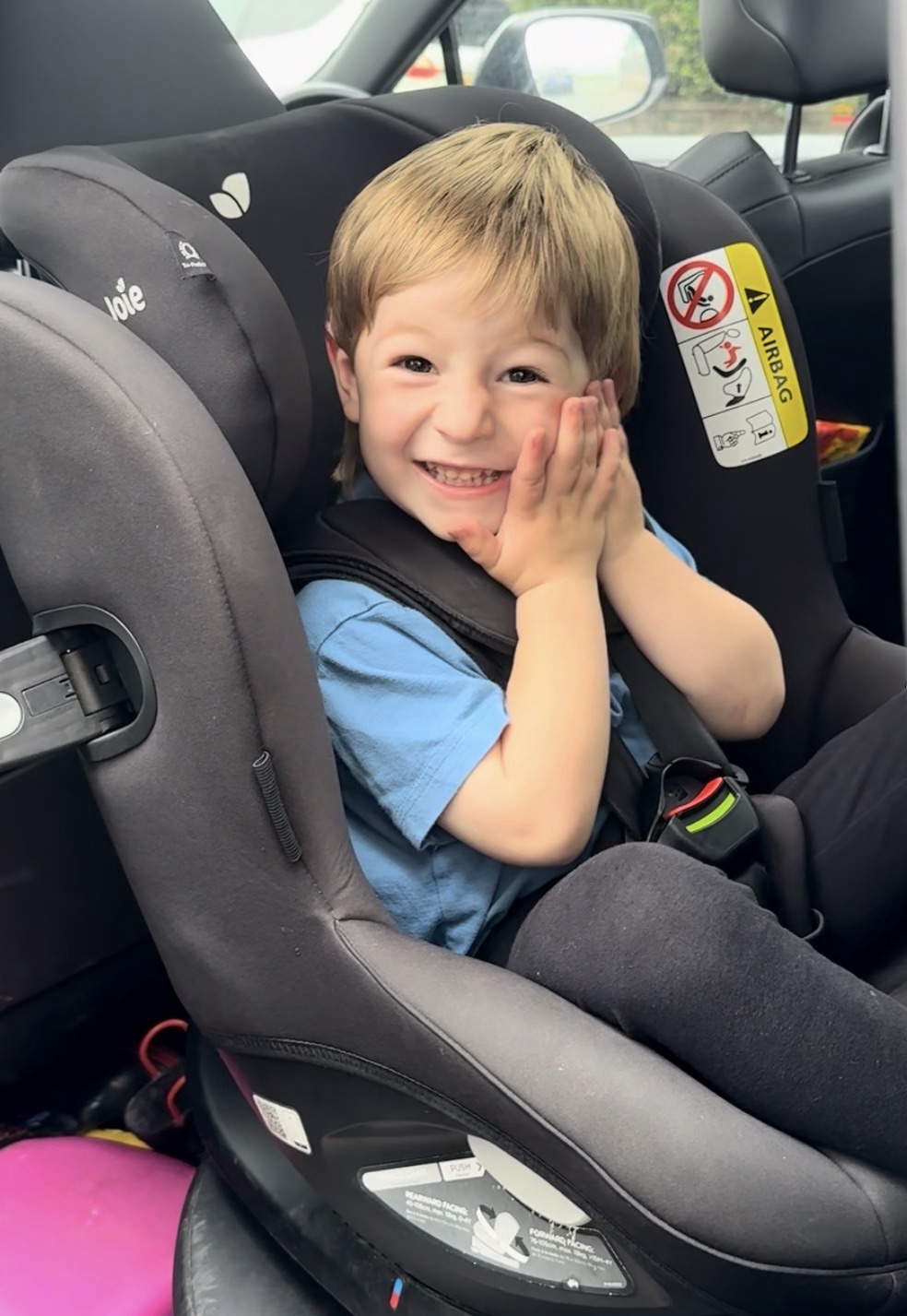
Crashes are unlikely. But car journeys are one of the riskiest things our children regularly do, and rear-facing is one of the simplest, most effective protections available. The law says 15 months; the evidence says keep going for as long as your seat allows, ideally to around age 4 or 105cm.
Their legs will be fine. Their flexibility is superhuman. And that gigantic, wonderful head of theirs deserves all the protection it can get.
Further reading
- GOV.UK — Child car seats: the law — the official UK rules on rear-facing requirements and approved seats
- BeSafe — Rear-facing car seats are 5x safer — accessible explainer on the crash research behind the 5x figure
- Which? — Child car seat laws in the UK — consumer guide covering extended rear-facing seats and crash-test findings
- RAC — Car child seat laws: all you need to know — practical guide to UK car seat rules, including airbag warnings
- RoSPA — Child Car Seats — independent safety charity advice on choosing and fitting seats





 The Science Baby
Leave a comment