
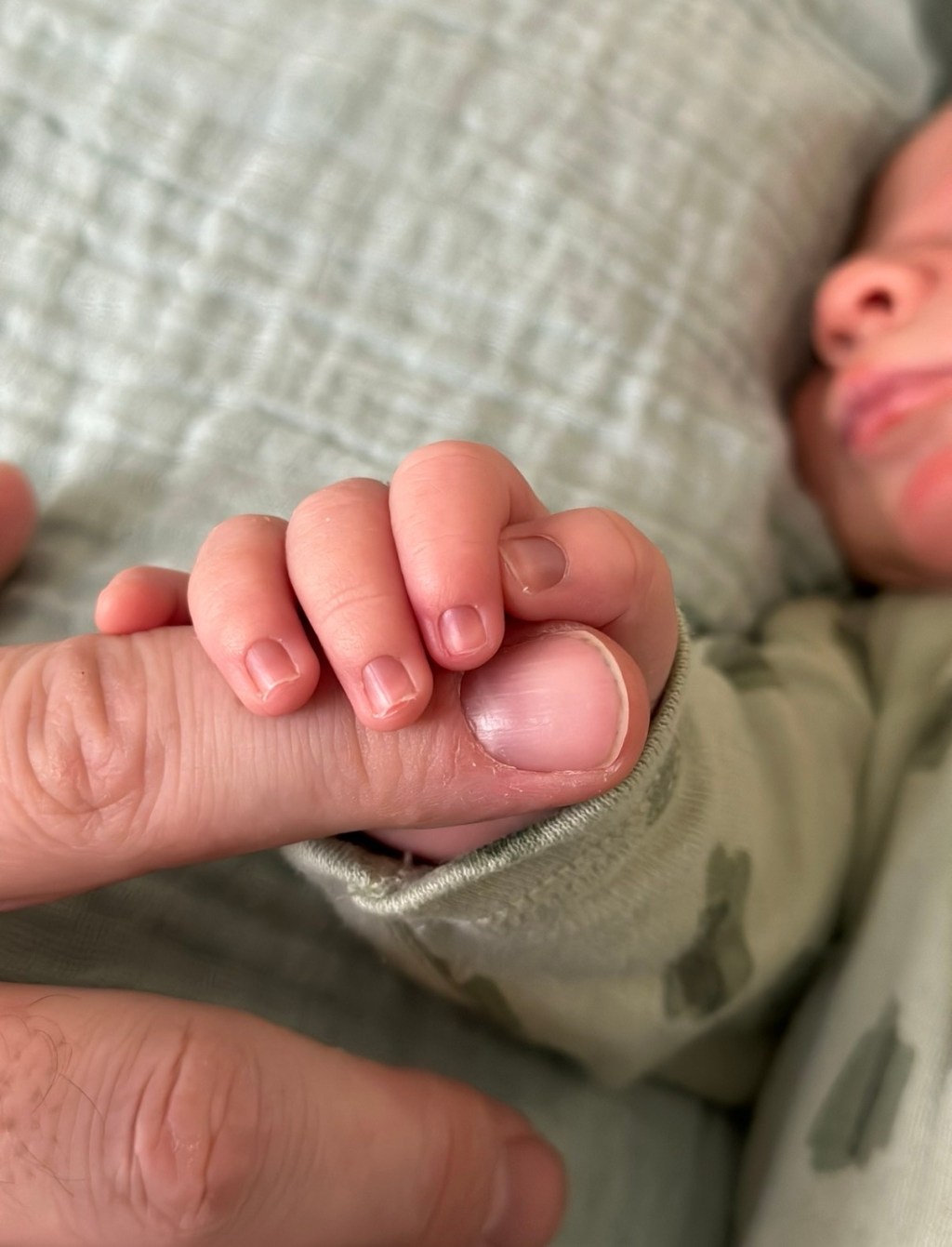
There is something almost surreal about the moment a newborn clamps around your finger. The grip is instant, total, and startlingly powerful. More like a small vice than a tiny hand. It turns out there’s a remarkable reason for that, and it has nothing to do with how strong the baby is (even though a foetus actually has more muscles than a grown up!).
What Is the Palmar Reflex?
The palmar grasp reflex, sometimes simply called the palmar reflex, is one of a suite of involuntary responses present in human newborns from birth. When an object, such as a finger, is placed in the palm of a baby’s hand and presses gently against it, the fingers automatically close around it in a strong, sustained grip.
The key word here is involuntary. This isn’t something the baby decides to do. It is a reflex: a hardwired circuit in the spinal cord and brainstem that fires before any signal reaches the conscious brain. In fact, the palmar reflex completely bypasses the cerebral cortex. The brain, in the sense we usually mean it, is not involved at all.
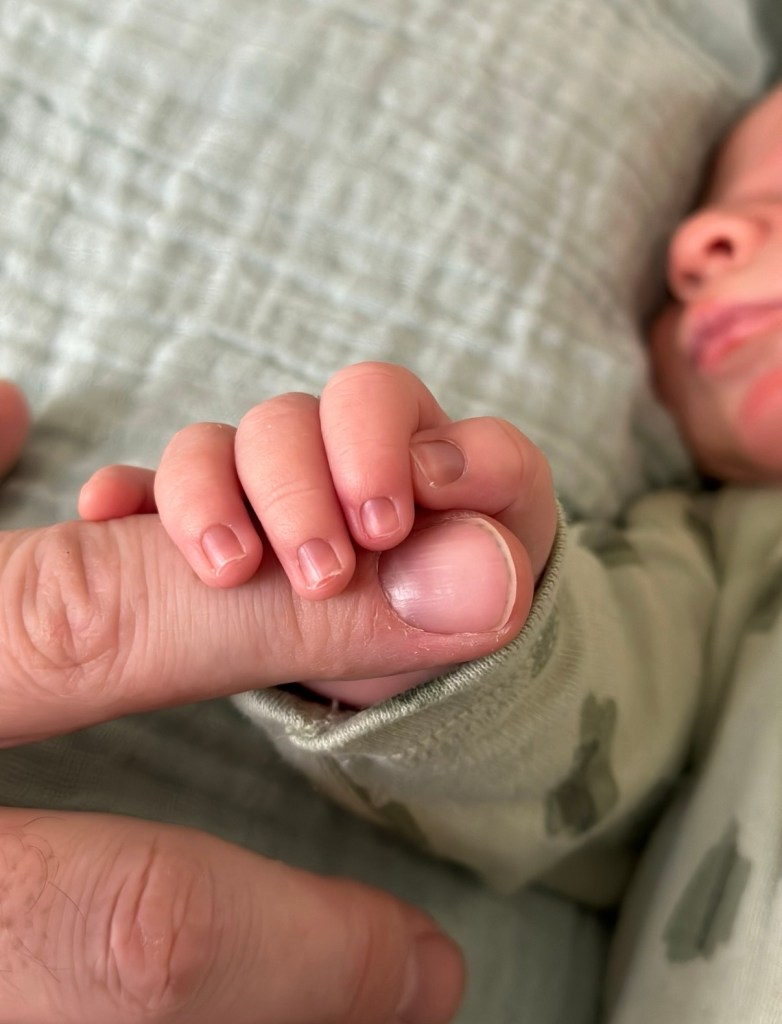
This is not unusual for newborn reflexes. The rooting reflex (turning towards touch on the cheek), the Moro reflex (startling and flinging out the arms), and the stepping reflex (making walking movements when the soles are pressed) all work the same way. They’re ancient, automatic, and operating well beneath conscious thought.
Just How Strong Is It?
The palmar grasping reflex is strong enough to take you by surprise. Studies have shown that newborns can generate enough gripping force to briefly support most or all of their own body weight when hanging from a horizontal surface.
This is more than just a party trick. It is a safety mechanism of extraordinary evolutionary efficiency. In the first moments of their shockingly underdeveloped existence, a baby can’t yet coordinate its limbs, can’t track objects, and has no idea where its own hands are in space, but it nonetheless has a grip capable of catching itself. That’s an impressive piece of biological engineering.
It’s a Message from Our Evolutionary Past
Remarkably, the palmar reflex is not exclusive to humans. Non-human primates — monkeys, apes, and our more distant relatives — show the same reflex, and in them, the function is unambiguous: it allows infants to cling to their mother’s fur immediately after birth. A baby macaque or chimpanzee that fails to grip is a baby that falls.
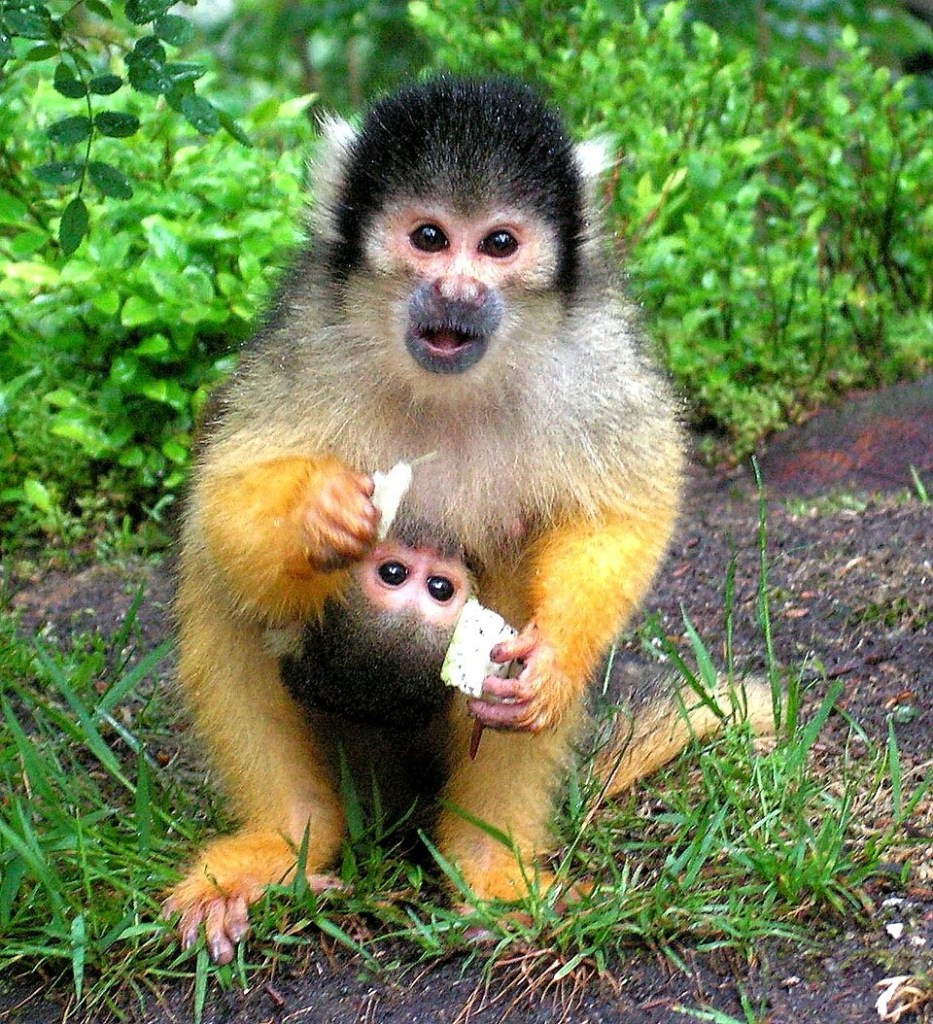
Human infants, of course, are no longer born into a world where they need to cling to a fur-covered parent moving through trees. Yet the reflex persists. It’s a vestige of a survival strategy that worked for millions of years before we came along. It is, in the language of evolutionary biology, a conserved trait: one so useful, and so deeply embedded in our developmental biology, that evolution has never found cause to remove it.
This places the palmar reflex in interesting company. The goosebumps you get when you’re cold or afraid are a vestigial reflex that once raised body hair for insulation or to appear larger to a threat. The plantaris muscle in your leg, present in most people, absent in some, once helped grip with the foot. The palmar grasp is a more dramatic version of the same story: a physical echo of an ancestral world.
When Does the Reflex Disappear?
The palmar reflex is not permanent. Around 4 to 6 months of age, it begins to fade as the developing cerebral cortex starts to exert more control over a baby’s movement. This is not a loss but a progression: as the reflex integrates into voluntary motor control, the baby develops the ability to intentionally reach, grasp, hold, and release: a far more sophisticated set of skills.
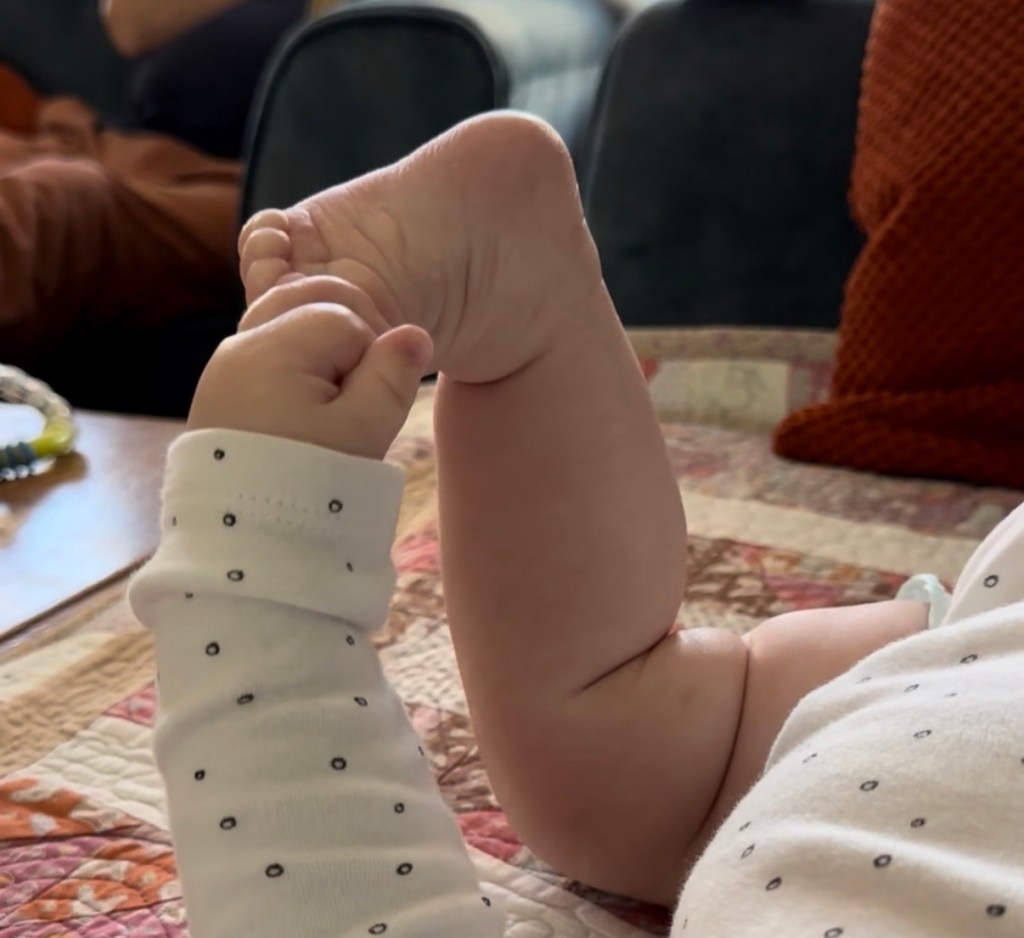
Paediatricians routinely check for the palmar reflex as part of newborn assessments. Its presence confirms that the lower motor pathways are working normally. Importantly, its absence at birth, or its persistence well beyond 6 months, can be a clinical signal worth investigating. It may indicate neurological delay or other developmental concerns.
The Bigger Picture: Newborn Reflexes as a Window into the Brain
The palmar reflex is one of around 70 newborn reflexes documented in medical literature. Together, they represent a remarkable map of neurological development. Each reflex has a developmental window: a time when it should be present, and a time when it should fade. Tracking that arc tells clinicians a great deal about how a baby’s nervous system is maturing.
It also tells us something more philosophical: a newborn human is not a blank slate. Long before they have preferences, memories, or language, they arrive already loaded with millions of years of evolutionary instruction. The grip that curls around your finger in the first minutes of life is not just instinct. It is inheritance.
Read More
- The Grasp Reflex and Moro Reflex in Infants — clinical overview of newborn reflexes
- Newborn Reflexes — accessible guide for parents
- Primitive Reflexes — Patient.info overview of when reflexes should appear and disappear
- The Evolution of Infant Clinging in Primates — peer-reviewed research on the primate grip reflex
- Infant Reflexes: MedlinePlus Medical Encyclopedia — plain-language explanation with clinical context
- Your Baby’s Reflexes — NHS guide to newborn reflexes for new parents






 The Science Baby
Leave a comment