
Pregnancy can leave lasting biological changes in the body. During pregnancy, cells from a fetus cross the placenta and can remain inside the mother for years or even decades, a phenomenon known as fetal microchimerism.
Did you know that if you’ve ever been pregnant, you’re not just you anymore?
You’re a blend of yourself and every baby you’ve ever carried. Scientists call this phenomenon fetal microchimerism, and it means that long after pregnancy, tiny traces of your baby remain inside you.
What Is Fetal Microchimerism?
During pregnancy, nutrients, oxygen, and waste products flow between mother and baby through the placenta. But it’s not just nutrients that cross the barrier. Cells and DNA can also travel both ways: from mother to baby, and from baby back into mom.
Even after the baby and the placenta are delivered, some of those fetal cells stick around, initially in her blood, and then integrating into the mother’s tissues. In Greek mythology, a chimera was a hybrid creature, part lion, part goat, part serpent. In biology, the term “chimera” describes anyone who carries cells with different genetic origins. That means that if you’ve ever been pregnant, you are technically a chimera too! Of course, since you don’t actually have another body part sticking out of you, it’s just chimerism of the ‘micro’ kind!
How Many of Baby’s Cells Stay in Mom?
Scientists estimate that during pregnancy, up to 6% of the free-floating DNA in a mother’s blood actually comes from her baby. Even after birth, traces remain. On average, about 3 out of every million cells in a mother’s body carry her child’s DNA.
And since your body is made of trillions of cells, that adds up to millions of little fragments of your baby living inside you.
Incredibly, fetal microchimerism doesn’t only occur in full-term pregnancies. Research has found that even after a very early loss, as early as 5 weeks into a pregnancy, cells can still pass into the mother’s body, leaving a lasting legacy. For many parents, this can be a source of comfort: a reminder that a part of their baby is still with them.
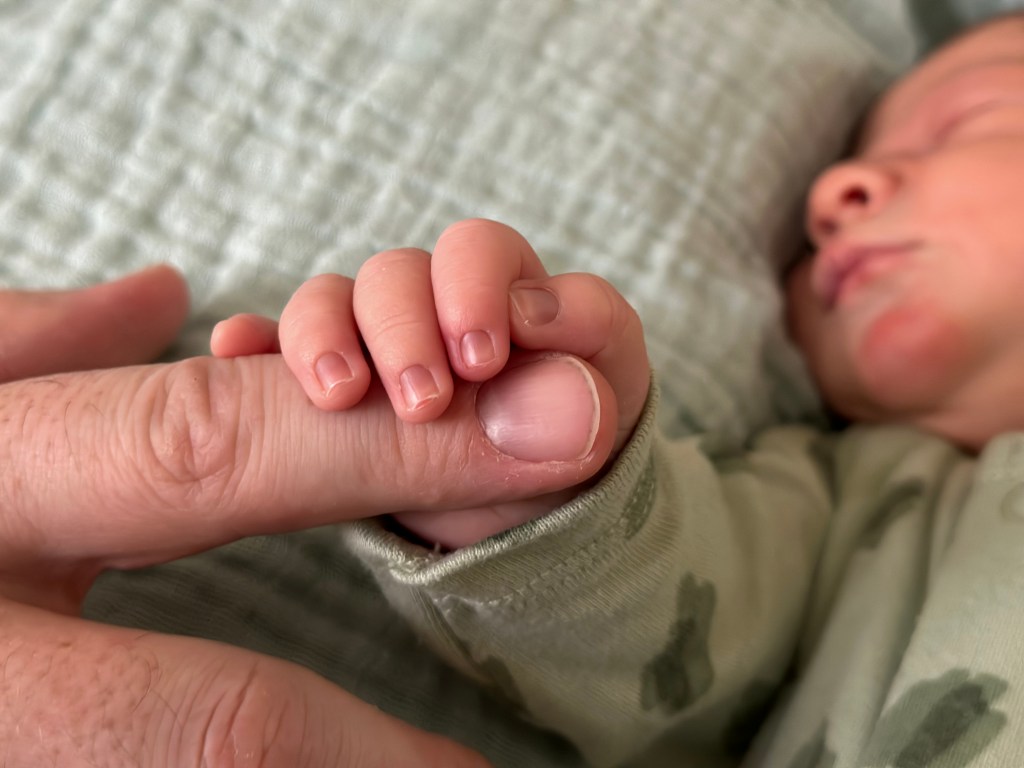
Incredibly, these shared cells don’t disappear quickly.
Technically, your immune system should attack and clear away these “foreign” cells. But for reasons we don’t yet fully understand, your baby’s cells manage to stay undetected, or perhaps even protected, inside you. Some settle into organs like the liver, heart, and even the brain, quietly working alongside your own cells.
Some studies have detected fetal cells in mothers 27 years after giving birth.
Is Fetal Microchimerism Good or Bad?
There’s been a lot of research into this microchimerism, and scientists are still piecing together the full story. So far, the evidence is a fascinating mix:
- Autoimmune diseases: Women are more prone than men to autoimmune conditions, and fetal cells have been found in damaged tissues. Some researchers suspect these cells could play a role in triggering illness.
- Protection from disease: On the flip side, microchimerism has also been linked to protection against certain autoimmune diseases.
- Cancer research: In some studies, mothers with cancer had fewer fetal cells than healthy mothers, suggesting a protective role. (And that’s not the only way that your child can protect you from cancer). However, in others, fetal cells were found inside tumors, raising the possibility they respond to or interact with the disease.
The big question remains: are these cells causing problems, or are they rushing in to help?
Healing Superpowers From Your Baby
One exciting theory is that fetal cells might be acting as a kind of internal repair kit. Because they originate from a rapidly growing fetus, many of these cells retain stem-cell-like properties, which means they can transform into different types of cells and help regenerate tissue.
So, when mom’s body is injured, fetal cells may travel to the site of damage, almost like tiny first responders. Imagine your child giving you the gift of healing superpowers before they’ve even been born.

A Beautiful Legacy
Whether or not scientists ever untangle all the mysteries of fetal microchimerism, one thing is clear: pregnancy leaves behind more than just memories. It leaves a cellular legacy that can last for decades.
For many parents, that’s a comforting thought: even after birth, even after loss, your baby is still a part of you, in the most literal, biological sense.
Read more
- Cells from your baby live on in your body – sometimes forever – New Scientist
- Fetal cells may protect mothers against disease – Scientific American
- When cells of a fetus stay in mom for decades – Discover Magazine
- Microchimerism in health and disease – Nature Reviews Endocrinology (more technical, but thorough)
- How fetal microchimerism works – Healthline





 The Science Baby
Leave a reply to Episode 6: We Need To Talk About Pregnancy Loss – The Science Baby Cancel reply