
Back in March 2023, I became a mother. It hadn’t been the easiest journey to conception – after 7 years of trying, and a couple of pregnancy losses along the way, my husband and I eventually got help via IVF, and our science baby was born miraculously healthy.
In all that time, I’d had plenty of chance to consider what motherhood would be like. All those months of trying (especially around the end of each month when I would mentally calculate due dates before I’d even had so much as a missed period or a positive pregnancy test), every day that I injected myself with fertility boosting drugs, and throughout the months of watching my belly grow, I would imagine what it would be like to be a mother.
I’d dream of holding a newborn, changing their nappies, waking through the night to feed them. I’d imagine meeting fellow mothers, bonding over shared experiences, catching up during walks in the park or coffee while the little ones play. I’d envision my husband becoming a father, my own mother becoming a grandmother, and my cat inheriting a skin-sibling.
All of this was realised in my mind’s eye with the glowing soft focus of ignorant optimism. What could be more wonderful, more fulfilling, more natural than the evolutionarily essential act of becoming a mother?

The reality couldn’t have been further from these naive imaginings.
Don’t get me wrong, I loved my baby, I counted my lucky stars every day that medical science had brought him to me. But motherhood was definitely not what I had expected.
And immersing myself in the internet in those dark postpartum hours, I began to realise that I wasn’t alone.
I, along with countless other mothers, found that the experience of becoming a mother was disorienting, confusing, not a little bit uncomfortable.
What they don’t tell you about motherhood
Naturally, some of these feelings are to be expected in the postpartum period. new mothers have been through a major medical ordeal, they’re injured, exhausted, and suddenly in charge of keeping a completely helpless creature alive.
But even after the immediate survival stresses have passed, many of these dizzying feelings of confusion and discomfort can linger.
How many of these have you felt in early motherhood?
- You’re not interested in the same things you used to be. Maybe your old hobbies don’t excite you or bring you peace. Maybe you don’t have headspace for enjoying music, reading or going out. Maybe you find yourself drawn to completely new subjects and pursuits.
- Your relationships with your loved ones changes. Maybe you just can’t seem to connect with your partner. Maybe you find the idea of intimacy uncomfortable. Maybe you find yourself clashing with close friends and family more than ever. Maybe you find their conversation just doesn’t resonate any more.
- Your body feels strange to you. Growing a child and delivering them earthside takes a toll on the body. Maybe you’ve put on more weight than you wanted. Maybe that weight is sitting in places it never did before. Maybe your skin, joints, and muscles aren’t behaving like they used to. Maybe your hair is untameable and wild. Maybe you don’t recognise yourself in the mirror.
- You feel like nobody understands you. Maybe your partner or your family don’t give you the support you think you quite obviously need. Maybe you struggle to make your friends understand what you’re thinking and feeling. Maybe you just feel different, somehow other and isolated from every other mother out there.
- And most of the time you may not even understand yourself.
New mums, more so than ever before, are left grappling with conflicting feelings of responsibility and independence, intimacy and isolation, and expectation and judgement.
Above all, you might feel like you’re just no good at being a mother, regardless of how long you’ve had to prepare. It’s not the natural, gratifying, and wholesome experience society tells us it should be.
You’re facing an emotional tug of war between the instinctive drive to care for your new baby, and the intellectual person you are outside of that.
You’re balancing the all-encompassing needs of a newborn with your preexisting relationships, hobbies, work and spiritual identity, not to mention your physical needs to eat, sleep, be intimate and have some privacy too.

It’s a lot, and it’s little wonder that it can leave you feeling overwhelmed.
So much so, that these feelings are often confused with postpartum depression, and if left unaddressed, can even LEAD to postpartum depression.
But it’s important to recognise that you are not alone. This conflict, this discomfort – it’s a natural part of becoming a mother. It’s just, for some reason (spoiler alert, it’s the patriarchy) nobody talks about it!
Matrescence
Despite what society, and the endless stream of aesthetic parental influencers on social media want you to believe, it’s actually completely normal to feel like you’ve had the rug pulled from under you when you’ve had a baby. And that’s because this is one of the biggest biological and psychological transitions a person can face.
For centuries, probably even for millennia, women’s experiences have been sidelined, dismissed, and underestimated, purely because they belong to women. Our overwhelmingly male-dominated society has simply ignored many physical and psychological issues that affect women, like menstruation, menopause and childbirth. Sometimes, women suffering from illnesses that are just as likely to affect men and women have been dismissed as merely being ‘hysterical’ after the Greek work for uterus.
Thankfully, things are changing. There are still substantial inequities between men and women all over the world, but the rise of feminism has at least opened the door to a consideration of women’s experiences. Doctors are actually studying women’s health, and including women in their studies. And everywhere, scientists are finally acknowledging the huge physical, mental, and emotional changes that come with motherhood. And they’ve given it a name worthy of what it represents:
It’s called matrescence.
Matrescence describes the transition to becoming a mother, from pre-conception, through pregnancy and birth, surrogacy or adoption, into the postnatal period and beyond.

It’s no coincidence that it sounds a little like the word adolescence, because just as the physical and hormonal changes in adolescence prepare a young person for adulthood, changes to the brain and body during matrescence prepare a person for motherhood.
Both adolescence and matrescence involve major shifts in social roles.
During adolescence a person moves from being dependent to being independent, and during matrescence a person transitions to supporting their own dependents.
And both adolescence and matrescence involve major changes to the body.
During adolescence, a person physically grows, going through puberty to acquire hair, sweat, oils in places and ways that they never did before. And that’s not even mentioning the boobs and balls. During matrescence, a person stores fat in new places, their hair falls out, their breasts grow, and their joints and sphincters loosen.
Remember what it was like to live through your teenage years? You felt awkward in your body, unsure how to interact with your peers. You didn’t know how to dress, or how to be. Now, how much of that is true for new mothers? If you’re like me, absolutely all of it!
But with the extra science that’s now being done into this pivotal period of matrescence, researchers are beginning to realise just how significant and long-lasting the changes are.
Brain Changes
Previously, experts thought that all the changes that a mom goes through during pregnancy and birth are caused by hormones, and so after these hormones are gone after birth, her body and mind goes back to ‘normal’.
I don’t know about you, but even two years on from my birth, I still don’t feel ‘normal’. I don’t feel like the woman I was before I became a mother, and I don’t think I ever will again.
Now, the latest science has revealed that in reality, the changes are much more tangible than a few chemicals surging through the blood.
Matrescence physically changes our brains.
A new mother’s brain actually goes through a major structural and functional overhaul, resulting in fundamental changes to the way the brain looks, and the way a mom thinks.
And guess what?! This is similar to the changes that happen to a teenager’s brain when they go through adolescence.
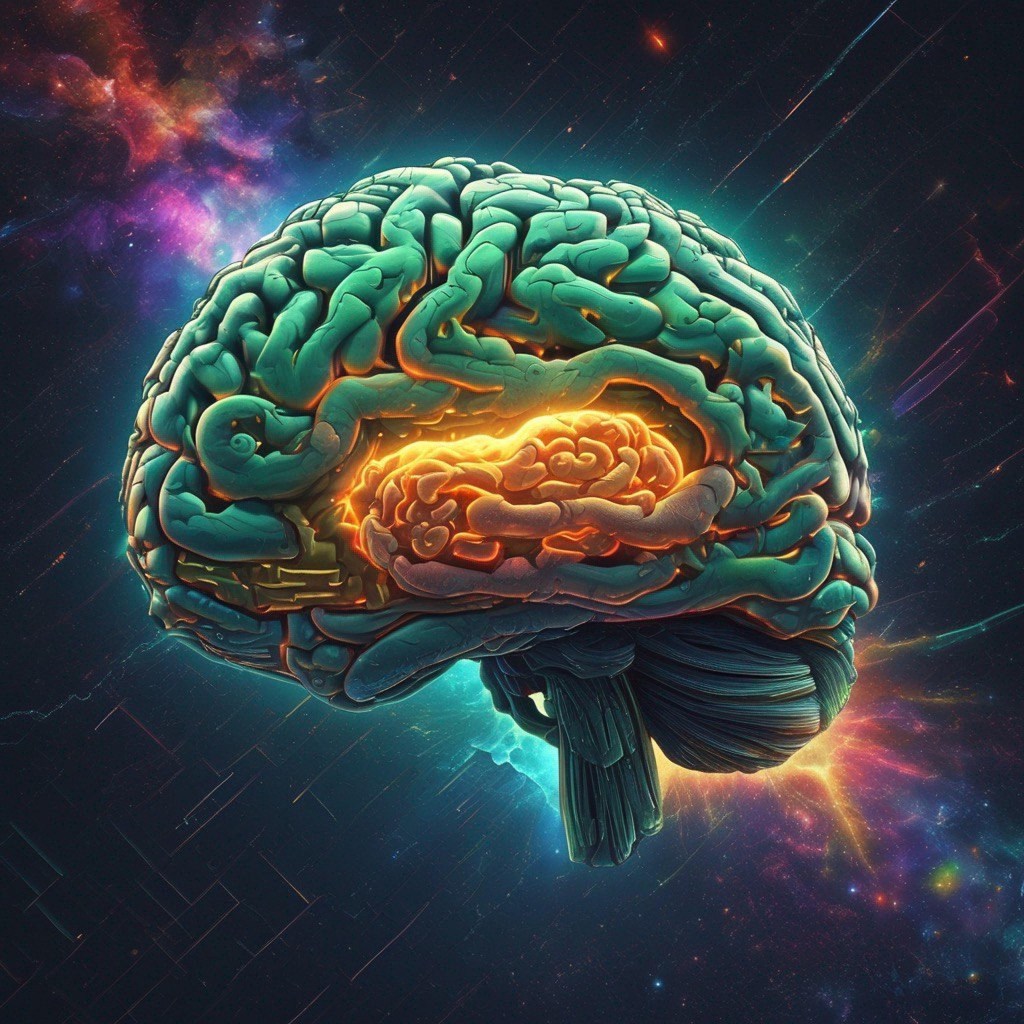
There are changes to the amount of folding on the surface of the brain, as well as the length and depth of those folds.
There’s a widespread drop in grey matter throughout the brain, too, although this isn’t as worrisome as it might sound. There’s no evidence that it results in any drops in mental ability. Interestingly, this grey matter reduction is seen in new father’s brains as well. So matrescence isn’t just for the moms, but all parents.
And deep in the interior of the brain, the region called the hippocampus, which is an important control centre for our memories, goes through a major restructuring too.
These physical changes to the makeup of the brain are a kind of neuroplasticity, which is where the brain physically restructures itself to change how it works. Neuroplasticity is what allows people who’ve had strokes or other brain injuries recover some or all of the skills and abilities they had before, despite losing the part of the brain originally involved in those skills. But it’s also happening on a smaller scale to all of us, through our lives, in response to our learning and changing needs. Matrescence marks a major acceleration in brain morphing, similar to those recovering from brain injuries.
But the brain also does something called neural compensation, which is where existing brain networks are activated in new ways to help support new behaviours. New moms are faced with a completely new challenges, including the mental load and multitasking involved with keeping another human alive.
And so scientists think that, during matrescence, the restructuring and rewiring of a mom’s brain primes her to more easily acquire new skills and knowledge from her everyday experiences.
The good news is that all of this works to help her manage the new and demanding tasks involved in motherhood, while developing a strong bond with her baby too.
But the inevitable result of this permanent brain restructure is that, after having a baby, a mom never truly goes back to how she was before.
Her brain changes fundamentally and irreversibly. It’s confusing and disorienting while it’s happening, and it can leave a new mom wondering who exactly she is. But the upside is that, once completed, these brain changes equip her with new capabilities that last for the rest of her life.
For instance, a fact that that will surprise nobody is that moms have shown to have better executive function, which helps them plan, focus, and juggle multiple tasks at the same time.
Not only that, but by the time they get to middle age, mothers typically have a younger looking brain structure than men and those who never had children. Plus, it’s thought that the neurological changes help to improve the brain’s resilience to disease, illness, and aging as well.
But that’s a whole other story, for another time.
Just The Beginning
Words can be powerful, and the coming of the word matrescence is finally giving voice to something that every single mother has been through. Knowing that it’s a thing and not just a reflection of your inability to cope, or conform to the norm, can make a new mother feel less alone, and less of a failure.
And yet, the mental, physical, social and emotional changes in becoming a mother are still so poorly understood – a lot of the research has only been done in the last 5 years, and there’s still much to learn about physical, mental, emotional and societal changes, as well as their long term dependencies and implications. Science is better than it was, but it’s still inequitable, and research into mothers and newborns is fraught with difficulty.
But by acknowledging the huge, important, life-changing transition of motherhood, mothers should at least feel empowered to live their matrescence, without worrying that they’re somehow doing it wrong.

Becoming a mother is hard, and confusing, and dispiriting. And that’s totally normal. For many, adolescence was a painful transition, and matrescence can be too. Now that I recognise that, I feel like I can own my motherhood, and all of the messy, ugly, illogical things that come with it. I talk about it to anyone who’ll listen (like you, if you’re still reading, hi!), and encourage all new moms to do the same.
You’ll never go back to how you were before, but the mother you become is more resilient and stronger than you could ever imagine.
Read More…
- A new way to think about the transition to motherhood | Alexandra Sacks TED Talk
- Orchard et al 2023 Matrescence: lifetime impact of motherhood on cognition and the brain
- Matrescence (2024) by Lucy Jones – a must-read for all mothers grappling with their new identity
- The Birth of a Mother – Alexandra Sacks, NYT






 The Science Baby
Leave a reply to Why you can cope with those newborn sleepless nights – The Science Baby Cancel reply