
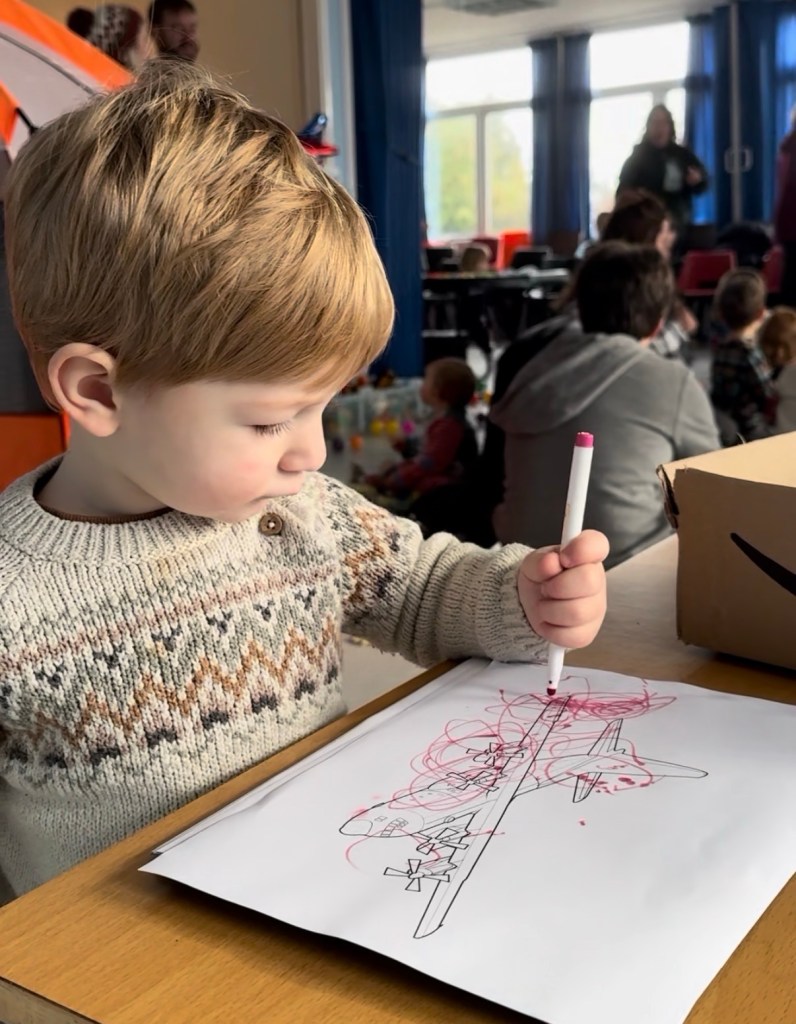
You know what it’s like once a toddler discovers the joy of mark making. Drawers are emptied, make up becomes “face paint”, and every surface starts to look like a potential canvas.
When permanent marker enters the scene, it can feel like game over for your walls and furniture.
But there is a surprisingly simple trick that can rescue glossy surfaces, and it works because of a bit of clever chemistry.
The Whiteboard Rescue Story
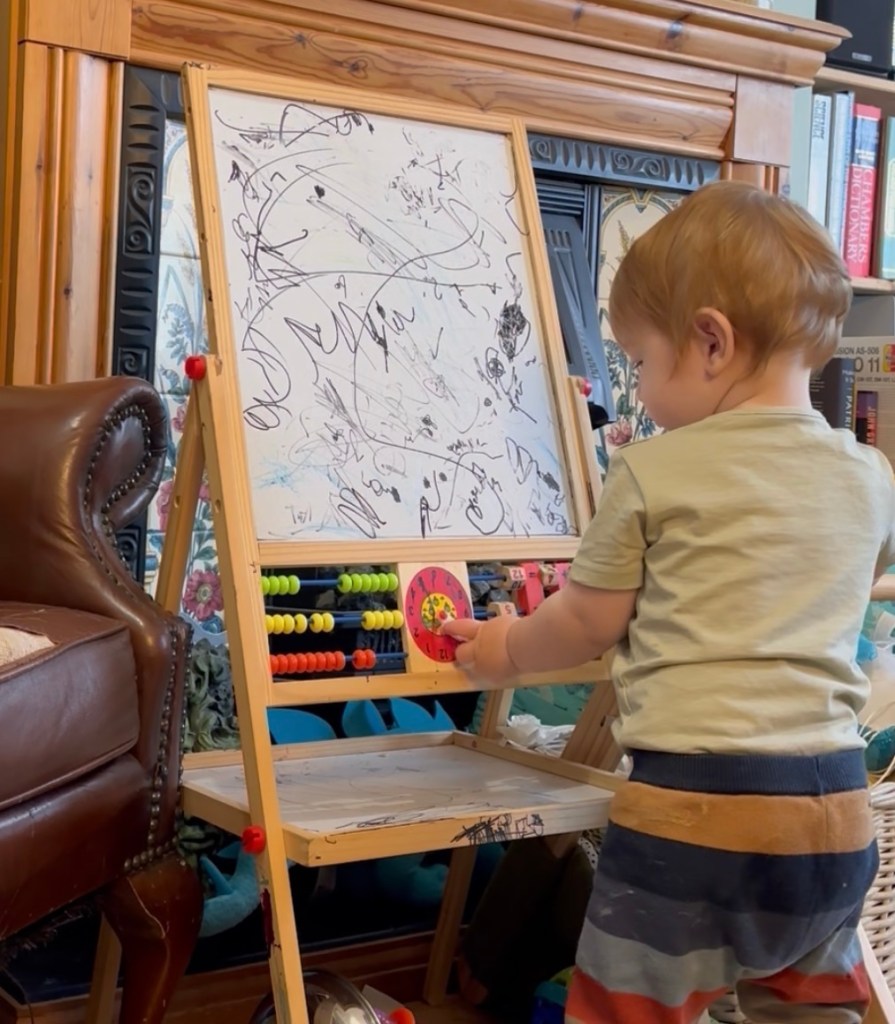
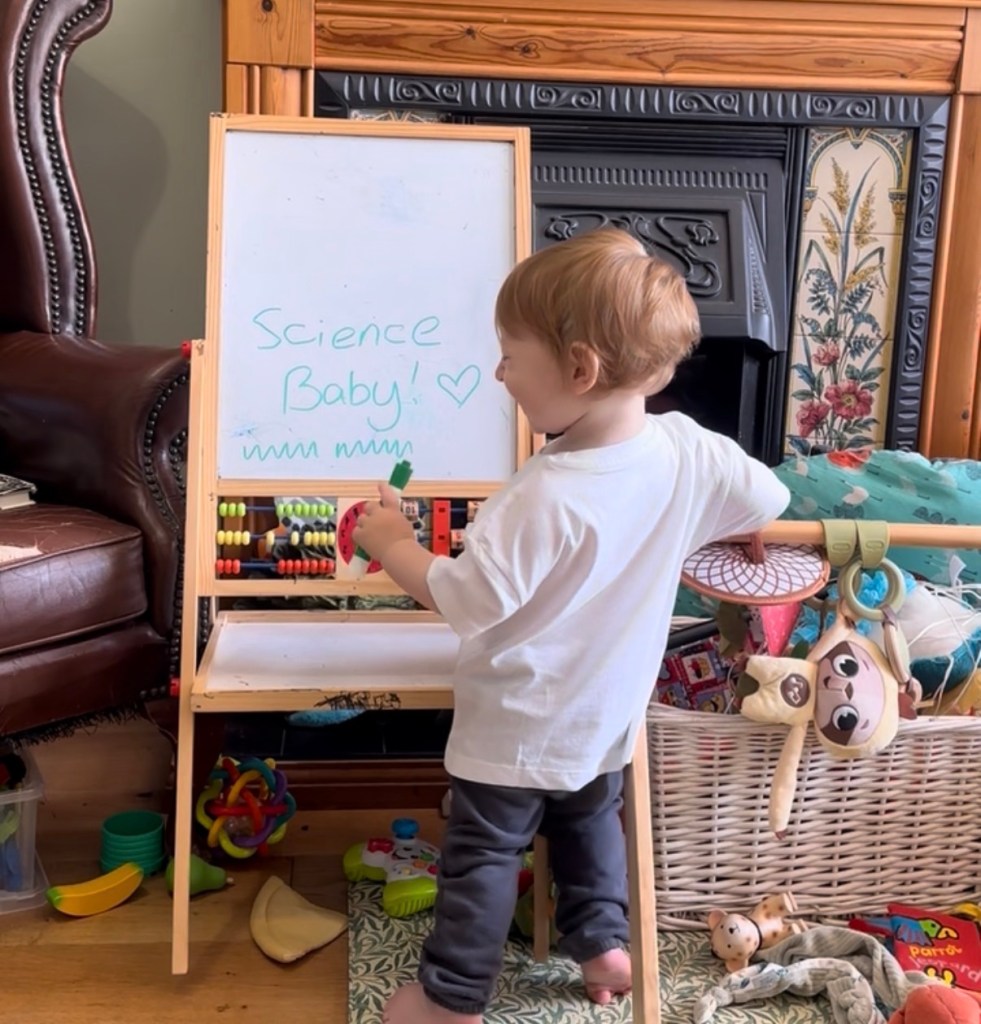
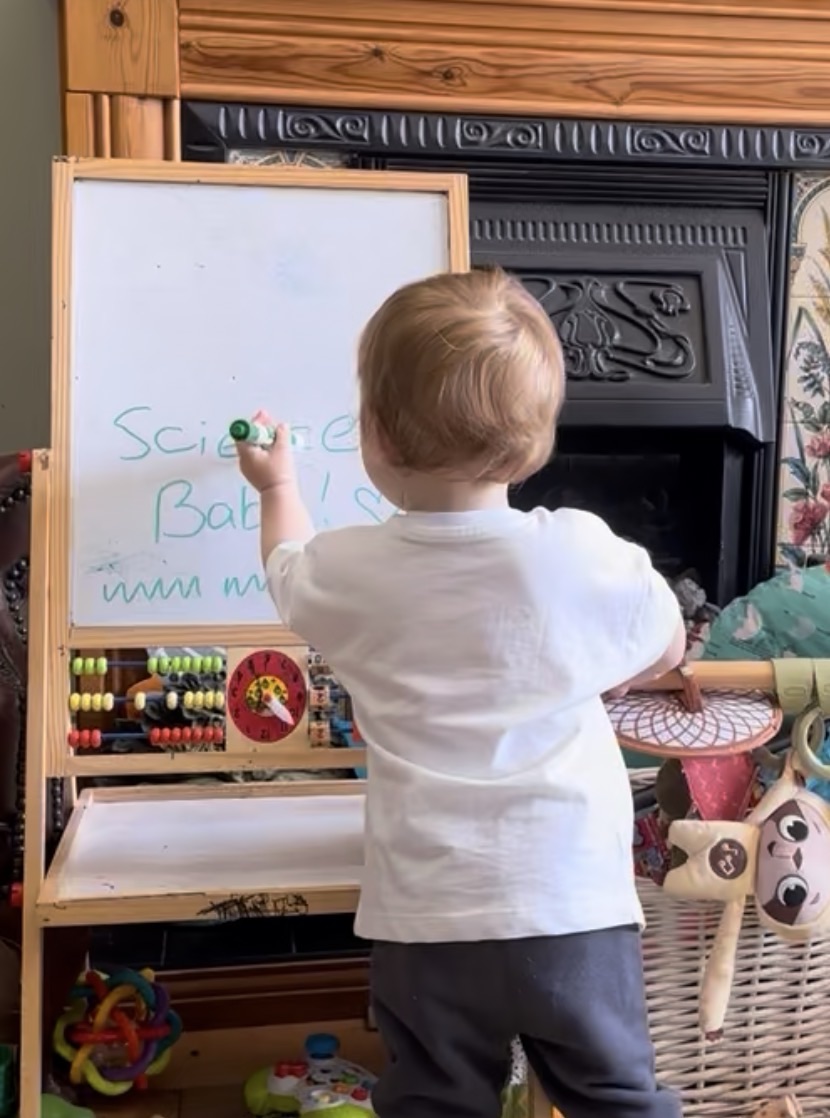
We recently inherited a slightly battered whiteboard easel that looked like it had lived a hard life. It was covered, not in dry erase pen as intended, but in thick, stubborn permanent marker.
No amount of scrubbing or wiping shifted it.
But then I remembered a trick from my teaching days, when my KS3 students (and some older ones, too) made a little too free with my stationery supplies.
Here’s the trick:
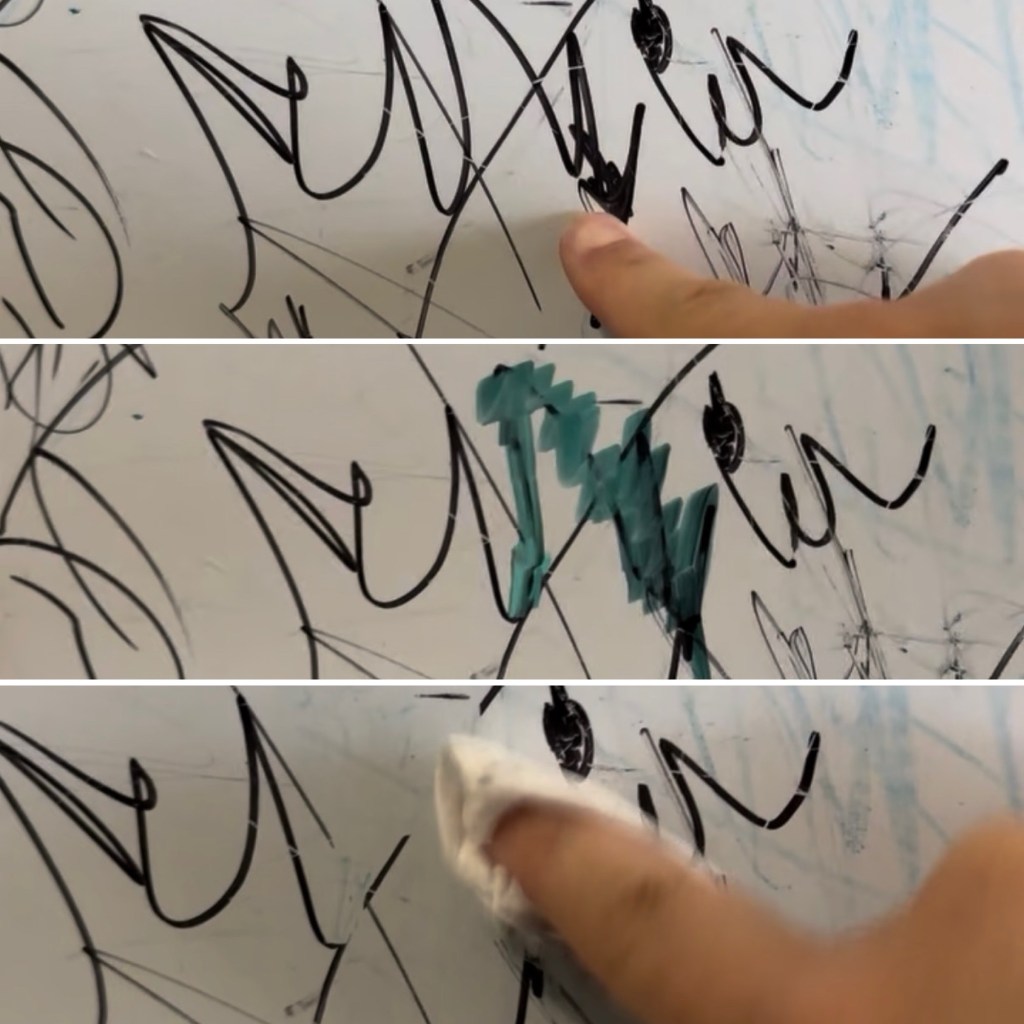
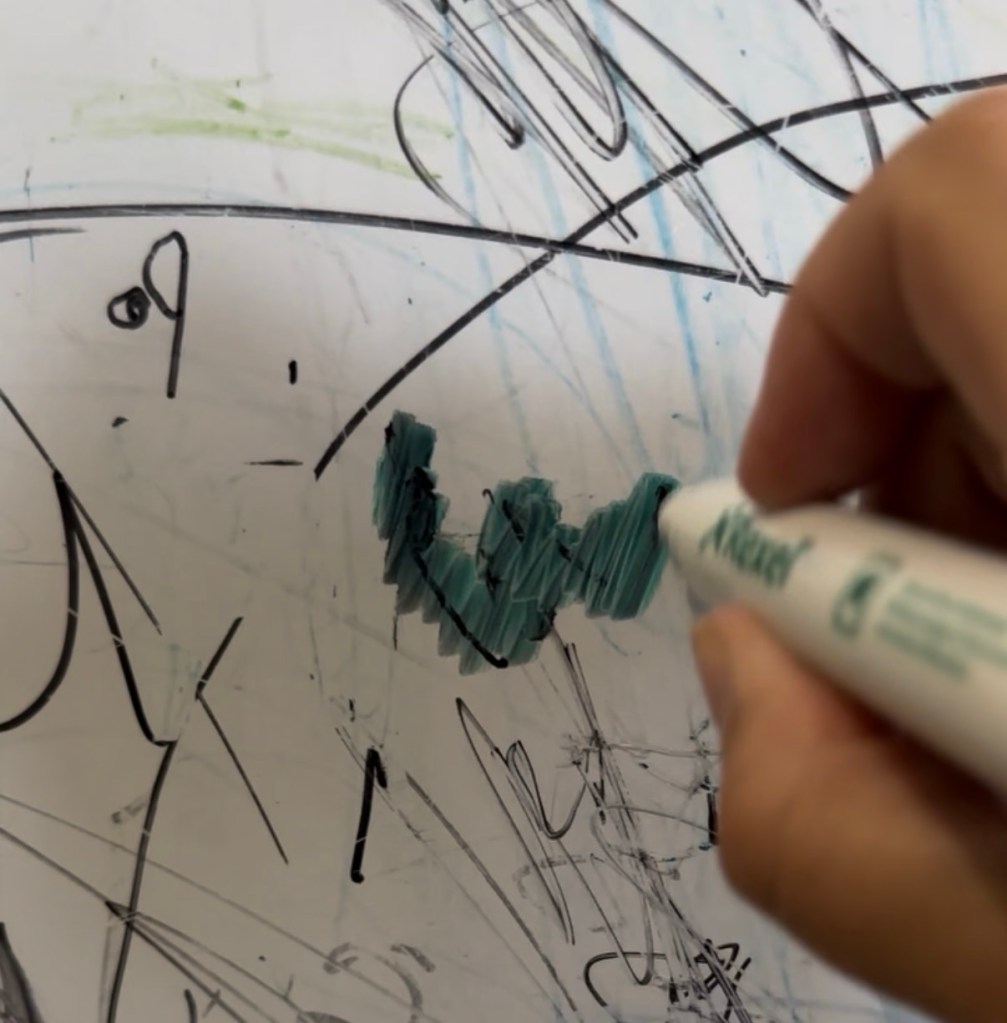
Scribble over the permanent marker with a dry erase marker. Wait a few seconds. Wipe it off.
Both marks come away together.
It feels like magic. It is not magic. It’s the science solvents!
Why Permanent Marker Is So Stubborn
Permanent markers are designed to stick. Their pigments are typically bound with acrylic polymers, which form a durable film that clings tightly to surfaces.
On porous materials like wood, fabric, or unfinished walls, the ink seeps into tiny gaps and fibres. Once that happens, removal becomes extremely difficult. Honestly, in this cases your only real options are to sand it down, paint over, or start over. Sorry
But, on smooth, glossy, water resistant surfaces, though, the ink mostly sits on top.
That distinction is everything.
How Whiteboard Markers Work
Dry erase markers are designed specifically for glossy whiteboard surfaces. They contain pigments suspended in a solvent, often alcohol-based, along with a release agent that stops them sticking too hard to the board surface.
The solvent used in many whiteboard markers is isopropyl alcohol. When isopropyl alcohol comes into contact with certain inks, it can break the bonds holding ink molecules – even permanent inks – to a surface by dissolving them back into solution.
That is the key.
The Chemistry Behind the Hack
Both permanent markers and dry erase markers contain pigments dissolved in alcohol-based solvents.
When you draw over permanent marker with a dry erase marker, you are essentially repainting the area with fresh solvent.
The alcohol in the dry erase ink redissolves the dried pigment in the permanent marker ink. Once the permanent ink is back in a semi-dissolved state, it can be wiped away.
You’re not “covering” the permanent marker. You are chemically undoing it.
Simply rinse and repeat for heavily marked areas.
What other ways can I remove permanent marker?
You may have heard other removal tricks:
- Toothpaste
- Vinegar
- Hand sanitiser
- Rubbing alcohol
Some of these work for similar reasons. Many hand sanitisers contain alcohol, which can dissolve certain inks. Toothpaste can act as a mild abrasive. Vinegar can sometimes help loosen residues.
However, the dry erase marker method has one advantage. It delivers solvent precisely where it is needed, in a controlled way, on surfaces specifically designed to tolerate it.
Where This Trick Works, and Where It Does Not
This hack works best on:
- Whiteboards
- Glossy laminates
- Non porous plastics
- Sealed tiles
It does not work well on:
- Unsealed wood
- Fabric
- Matte painted walls
- Paper
On porous materials, the ink penetrates too deeply. At that point, your options are limited.
Sometimes the most realistic strategy is to lean into the aesthetic and call it modern art.
The Science Takeaway
What looks like a parenting miracle is really a simple lesson in chemistry:
Solvents dissolve solutes. Alcohol dissolves certain inks. Glossy, non porous surfaces prevent deep absorption.
Understanding how materials interact gives you power over everyday problems, even the Sharpie wielding toddler variety.
And sometimes, that power saves a whiteboard from the bin.



 The Science Baby
Leave a comment