

Can you guess what you’re looking at?
It might not be much to us. A hazy reddish glow. Diffuse light. Shadows without edges.
But if you are around 32 weeks pregnant, that glow might be your baby’s view of the world.
We tend to imagine the womb as completely dark. A sealed, silent chamber where sight only begins at birth. Yet research suggests that in the final months of pregnancy, some babies may experience far more visual stimulation than we once believed.
When Do Fetal Eyes Start Working?
Eyes are complex pieces of biological engineering, and they develop more slowly than many other sensory systems.
- The retina, which contains the light sensitive cells that detect incoming light, is partly functional from around 12 to 17 weeks of pregnancy
- Eyelids can open as early as 20 to 22 weeks in some fetuses
- By around 30 to 32 weeks, the visual system is mature enough to support directed visual attention, if enough light is available
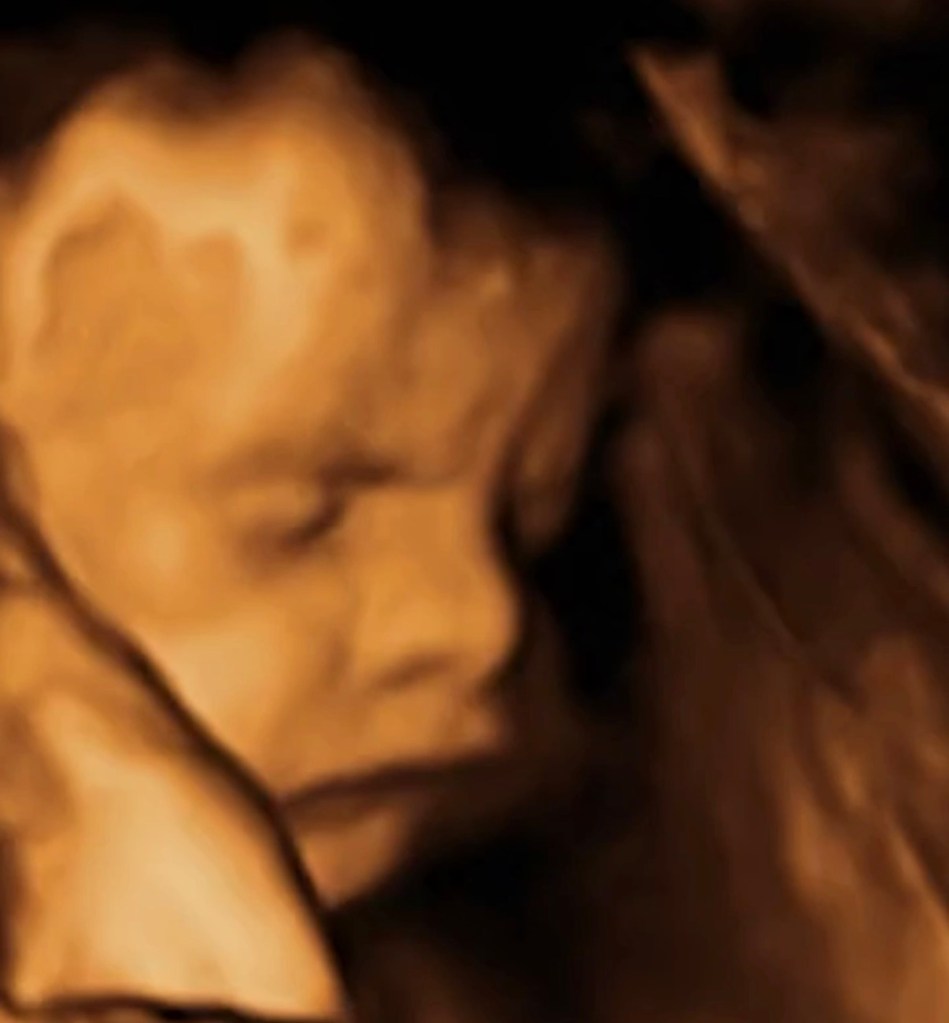
Studies of premature babies show that from this stage, they can respond to dim light, roughly equivalent to a softly lit room.
(It’s worth saying that eyesight will continuing developing throughout an infant’s first year on Earth, along with changes in their eye colour, and strengthening of the eye muscles)
So the hardware is there. The question is, is there enough light?
Is the Womb Really Dark?
For a long time, scientists assumed that visual experience before birth was negligible. But in 2011, that assumption was directly challenged by a psychologist who, instead of guessing, actually modelled how much light passes through the stuff in between a fetus and the outside world.
Things like:
- Skin
- Muscle
- Fat
- Clothing
And his findings were striking. Depending on:
- How bright it is outside
- The thickness of the abdominal wall
- Skin pigmentation
- What the mother is wearing
The womb may receive between 0.1 percent and 1 percent of the external light .

Now, I know that sounds tiny, but light works on a huge scale. Indirect sunlight can reach 50,000 lux. That’s equivalent to 50,000 candles at arms length.
And so even 0.5 percent of that equals 250 lux, a mere 250 candles, but similar to what you find in a well lit room .
In other words, under bright conditions outside, the womb may be far from dark.
Summer Babies vs Winter Babies
Because of the all of the different factors at play, the 2011 study predicts large variation between pregnancies .
A baby nearing birth in bright summer light, with a mother wearing light clothing, and near a window, may experience a surprisingly illuminated uterine environment.
In contrast, a baby developing during dark winter months, under heavy layered clothin, experiencing mostly artificial indoor lighting may experience much less visual input.
Some babies likely spend their final weeks in a softly glowing world. Others in near darkness.

This does not mean one is better than the other. There is no evidence to suggest any difference in vision or development depending on the light or dark. But it does mean fetal light exposure is not uniform.
Can Fetuses See Faces?
The fact that light levels can change over time presents an interesting possibility – that changes in light over space are also detectable to a developing fetus.
In a 2017 study researchers projected patterns of light through pregnant women’s abdomens.
They used three dots of light:
- One arranged like an upside down triangle
- One arranged like a “face”, two dots above, one below
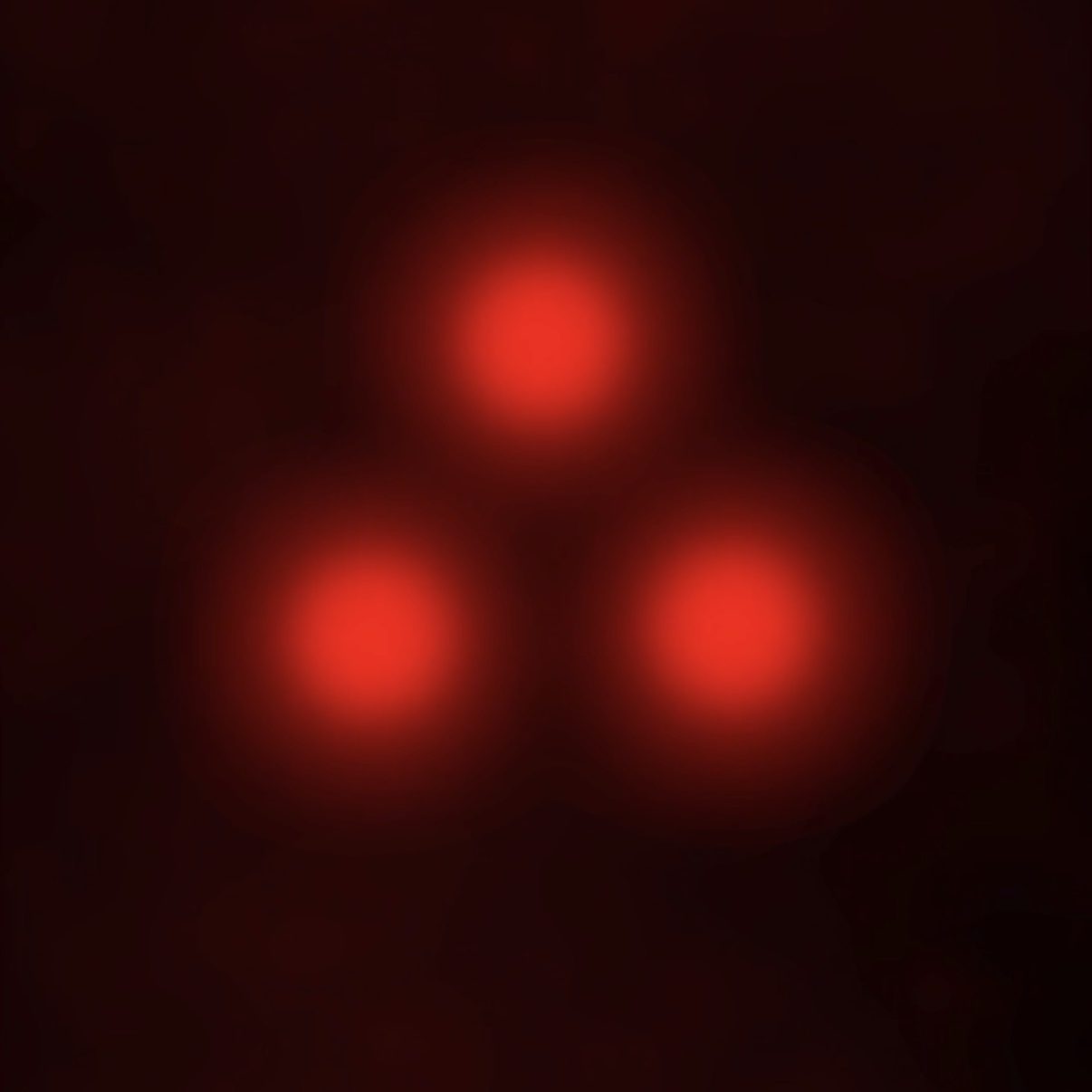
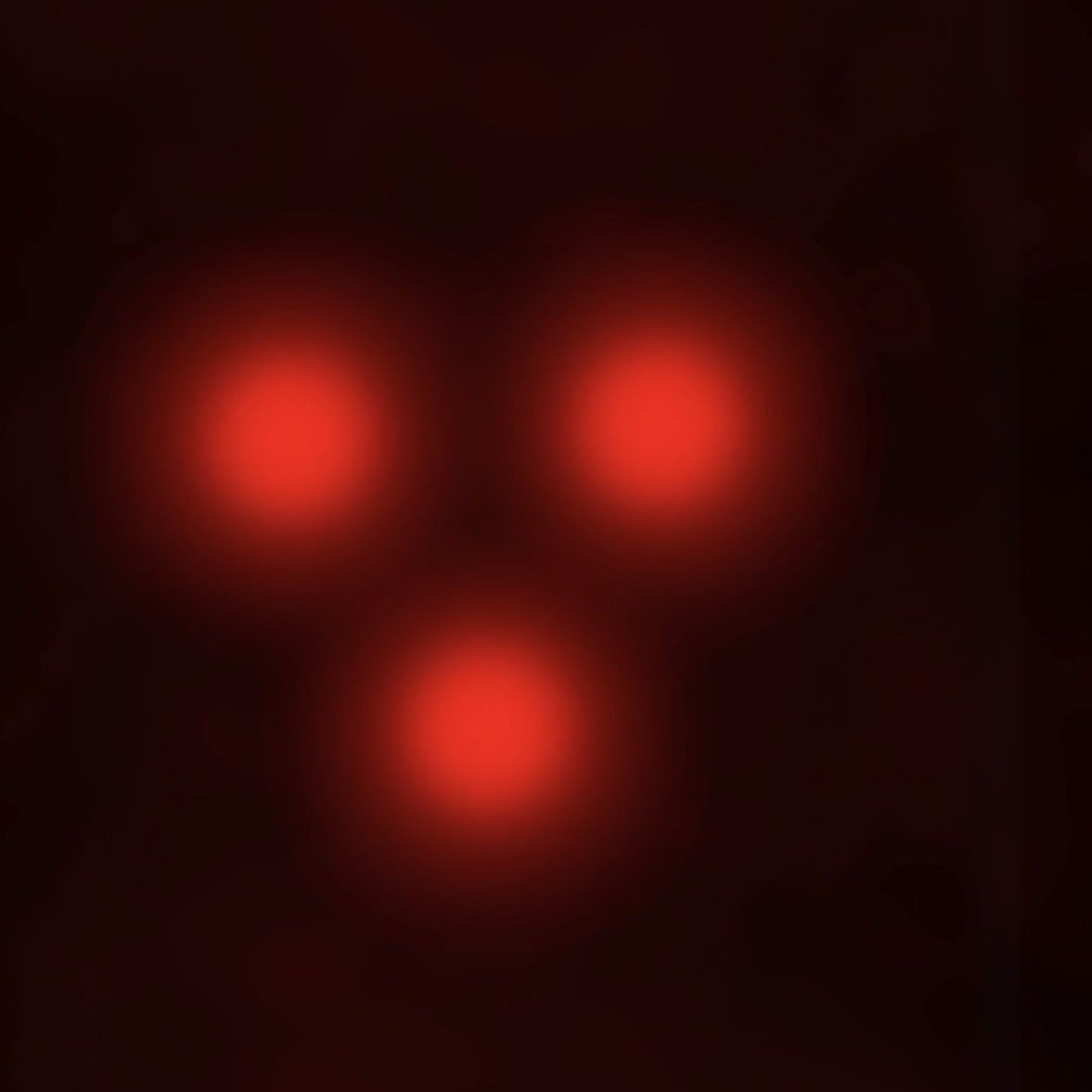
Using ultrasound, researchers found that fetuses were more than twice as likely to turn their heads toward the face like pattern.
This wasn’t because they could see a detailed face. They couldn’t – it was only a triangle to begin with, and then that would have been dimmed and diffused as it passed through the woman’t flesh.
But after before birth, the human brain appears biased toward face like configurations. And so, the tendency to search for connection in nearby faces we see in newborns may not begin at birth. It may begin before.
What Can a Baby Actually See?
Let’s be realistic. This is not high definition vision. Baby is not reading the news inside your belly.
Fetal vision is blurry and diffuse, and it’s likely dominated by red wavelengths, which pass more easily through tissue. And studies of newborn eyes reveal that, even if the picture was perfect, baby wouldn’t be able to make it out anyway.
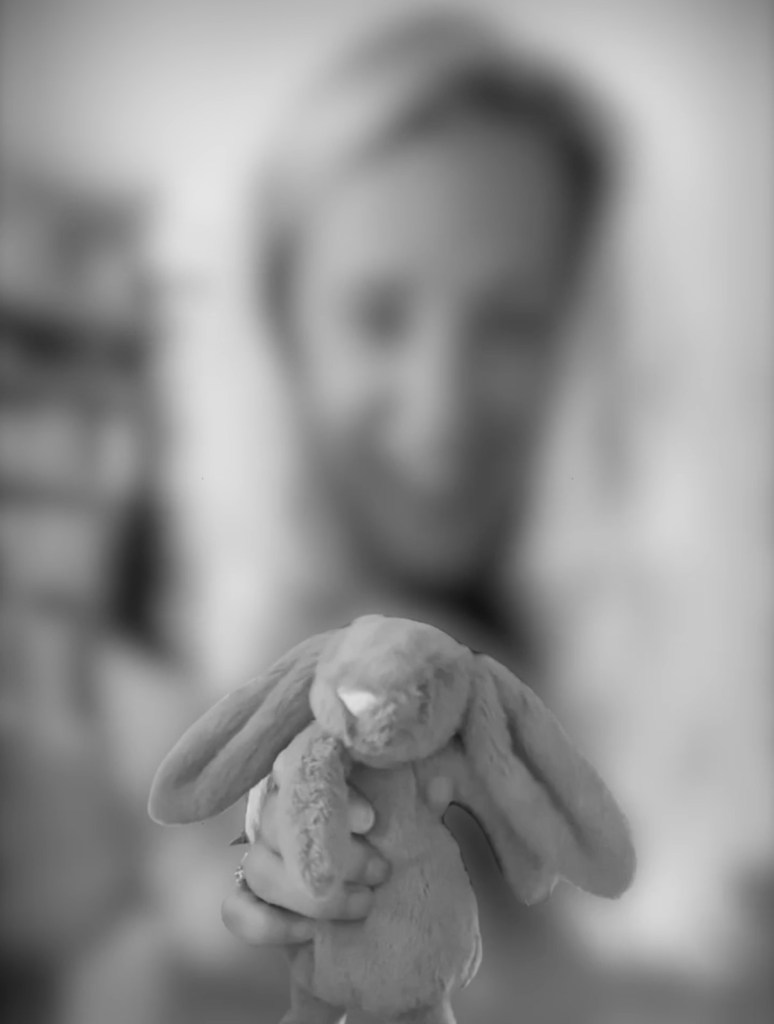
But they may detect a surprising amount of variation, including:
- Brightness changes
- Large shapes
- Movement
- Perhaps their own limbs moving in front of them
That last point is the big one. The primary source of visual stimulation late in pregnancy may be the baby’s own movements . Seeing your hand move toward your face could help wire early visual-motor connections.
Should You Shine a Torch at Your Belly?
Short answer: no need.
Nothing here suggests parents should deliberately increase light exposure. Direct intense light may even be uncomfortable.
This research is about understanding the environment babies naturally develop within, not optimising it.
Your baby does not need prenatal visual stimulation to develop normally. Vision develops beautifully in babies born from both bright and dark uterine environments.

A New Way to Think About the Womb
For decades we have known that babies learn in the womb through sound and smell, or technically taste.
They recognise their mother’s voice.
They remember flavours from her diet.
Now we have good reason to think that, under the right conditions, some babies may also experience light. Not crisp images. Not scenes. But glow. Movement. Contrast.
If someone comes close to a bright window and says hello, there is a real possibility that baby notices.
Just, make sure to ask mum first!
Read More
- Marco Del Giudice, 2011, Alone in the Dark? Modeling the Conditions for Visual Experience in Human Fetuses, Developmental Psychobiology
- Scientific American article on fetal responses to face-like light patterns:
- Fulford et al., 2003, “Fetal brain activity in response to a visual stimulus,” Human Brain Mapping
- Jacques, Weaver & Reppert, “Penetration of light into the uterus of pregnant mammals,” Photochemistry and Photobiology










Leave a comment