
As a new parent, it’s easy to feel like every choice you make is under the microscope. Even something as simple as enjoying a glass of wine with dinner can spiral into questions: Is this safe? Will it affect my baby? Should I pump and dump? So, is it safe to drink alcohol while breastfeeding?The advice out there often feels contradictory. Some people will tell you that one drink is no problem, others will insist that you avoid alcohol entirely until you’ve weaned. The truth, as usual, lies somewhere in between.
How much alcohol gets into breast milk
When you drink, alcohol enters your bloodstream and, since milk is basically made from mom’s blood and bones, passes into your milk at almost the same concentration. It’s the same with other drugs you might consume, like caffeine.
Levels usually peak between half an hour and an hour and a half after your drink, and slower if you’ve had food alongside it. Just like in your blood, the amount in your milk then steadily declines as your body breaks it down. There’s no “storage” effect: once it’s out of your system, it’s out of your milk too.
Here’s some perspective: if you’ve had a large glass, or a pint, and your blood alcohol concentration is around 0.05%, which is the drink-drive limit in many countries, your breast milk will also contain about 0.05% alcohol. Compare that to the wine, which is typically 12%, or spirits, which are around 40%, and you can see the difference. Your baby is not drinking a glass of wine; they’re getting a tiny fraction of that amount.
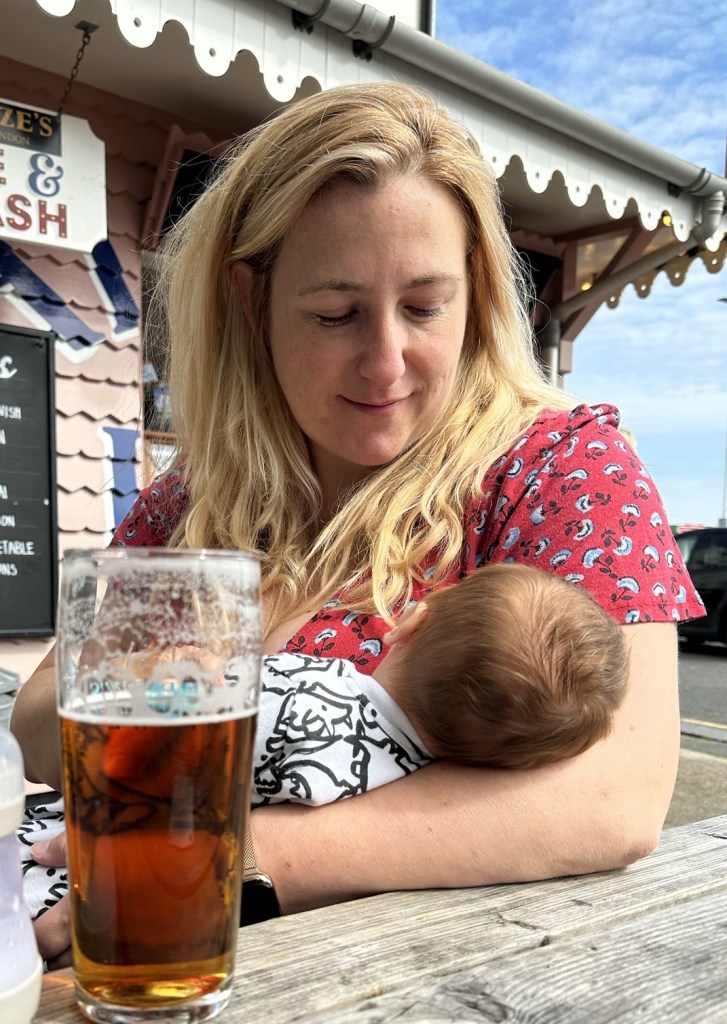
For comparison, 0.05% is about the concentration of alcohol you find in foods like bananas, fruit juice, yoghurt and bread. So when your baby is eating these (which are likely to be some of the first foods they try) they’re getting the same amount of alcohol.
And let’s not forget that that doesn’t become the baby’s blood alcohol concentration. Just like a glass full of 12% wine becomes 0.05% in moms body, the 0.05% in a breast-full of milk is further broken down by baby’s liver until it’s much lower in their blood.
In fact, studies have found that mom would have to drink enough alcohol to be four times the legal drinking limit, before the alcohol in her milk begins to have an effect on the baby.
Timing matters
It’s worth remembering, though, that your baby’s liver is still developing, so even small amounts of alcohol are harder for them to process.
Fortunately, the simplest way to moderate how much alcohol is making it into your baby’s milk is to let your liver do the work, by giving it a little time. To limit the risk, most official advice will instruct you to wait for the alcohol to clear your system (although it’s important to note that everyone’s level of acceptable risk is different)
For one standard drink, like a small glass of wine or a single measure of spirits, it takes about two hours before your milk is clear again. Two drinks will take longer. Ultimately, the more you drink, the longer it will take for your blood alcohol – and therefore you milk alcohol level – to drop.
If you want to know how long after drinking it’ll be safe to breastfeed, then the simplest way to judge if it’s been long enough is this: if you still feel tipsy, that’s a good sign your milk is probably tipsy too.
So what if you’re heading for a heavy night? Feeding before you have your drink, or keeping some expressed milk ready, is often the easiest way to sidestep the timing stress.
Pump and dump?
You’ve probably heard the phrase “pump and dump”. It’s the idea that expressing and discarding milk after drinking will clear it of alcohol. Unfortunately, that’s a myth. Pumping doesn’t make the alcohol leave your milk any faster; only time does that. Pumping can be useful for comfort or to keep up your supply, but it won’t change the alcohol content.
Safety first
Ultimately, the biggest concern when drinking with a newborn isn’t what’s in your milk, but your ability to care for your baby safely.
Alcohol affects judgment and coordination, and sadly is the source of many tragic cases of child deaths, including those incurred when cosleeping.
So, if you’ve had more than a drink or two, you’ll want to make sure there’s another sober adult who can take over caregiving. And if you’ve been drinking, it’s especially important not to bedshare with your baby.
The bottom line
Having the occasional drink while breastfeeding is compatible with feeding your baby. Baby is unlikely to be harmed or affected by the alcohol levels in your milk.
But if you want to be doubly sure, the key is to time it well: allow roughly two hours per standard drink before nursing again, and plan ahead if you know the timing might be tight.
Forget the pump-and-dump, focus on safe caregiving, and remember that one glass enjoyed thoughtfully is very unlikely to cause harm.
Parenthood is demanding. If sharing a toast, relaxing with a glass of wine, or enjoying a beer in the sunshine helps you feel like yourself again, you don’t need to give that up. With a little planning and an eye on safety, you can do it in a way that’s perfectly consistent with nourishing your baby.
More Reading
- CDC: Alcohol and Breastfeeding – Clear U.S. guidance on timing, safety, and caregiving considerations.
- NHS: Drinking Alcohol and Breastfeeding – UK-specific advice on how alcohol passes into milk and tips for safe drinking.
- La Leche League International: Alcohol and Breastfeeding – Easy-to-read overview, plus reassurance and myth-busting.
- LactMed Database (U.S. National Library of Medicine) – Evidence-based summaries on how alcohol affects milk and babies.
- KellyMom: Alcohol and Breastfeeding – Popular, parent-friendly guide, with charts and FAQs.
- InfantRisk Center: Alcohol in Breast Milk – Practical explanations, including a time-to-zero calculator


 The Science Baby
Leave a reply to How Breastfeeding Can Protect Against Breast Cancer – The Science Baby Cancel reply