
One of the many delightful surprises of early parenthood is spotting those tiny signs of personality. Is your baby a deep thinker? A thrill-seeker? A snuggler? And sooner or later, you’ll probably catch yourself wondering: Is my baby going to be left-handed or right-handed?
Of course, we’re going to be curious, to see who baby takes after, or if genetics has dealt them a wild card. But knowing your child’s dominant hand can also supercharge your parenting skills, avoiding needless fights and frustration during everything from mealtimes to scissor practice.
But just how soon can you tell? And what should you be looking out for?
Is Handedness Decided Before Birth?
Incredibly, yes, your child’s handedness is largely set before they’re even born!
Whether you prefer use your right hand or left hand is determined in part by genetics – the same thing that influences the colour of your eyes, hair, and skin. The hand that your parents favour affects which one you do. But it’s not a certain thing. There’s still a 10% chance that two right handed parents will make a left-handed kid.
Of course, as with all things, environmental factors after birth can play a role too. Science baby’s dad swears that he should have been left-handed but had right handedness drilled into him through his childhood.
But before any real environmental factors can come into play, we do see a natural preference for one hand over another, while still in the womb!
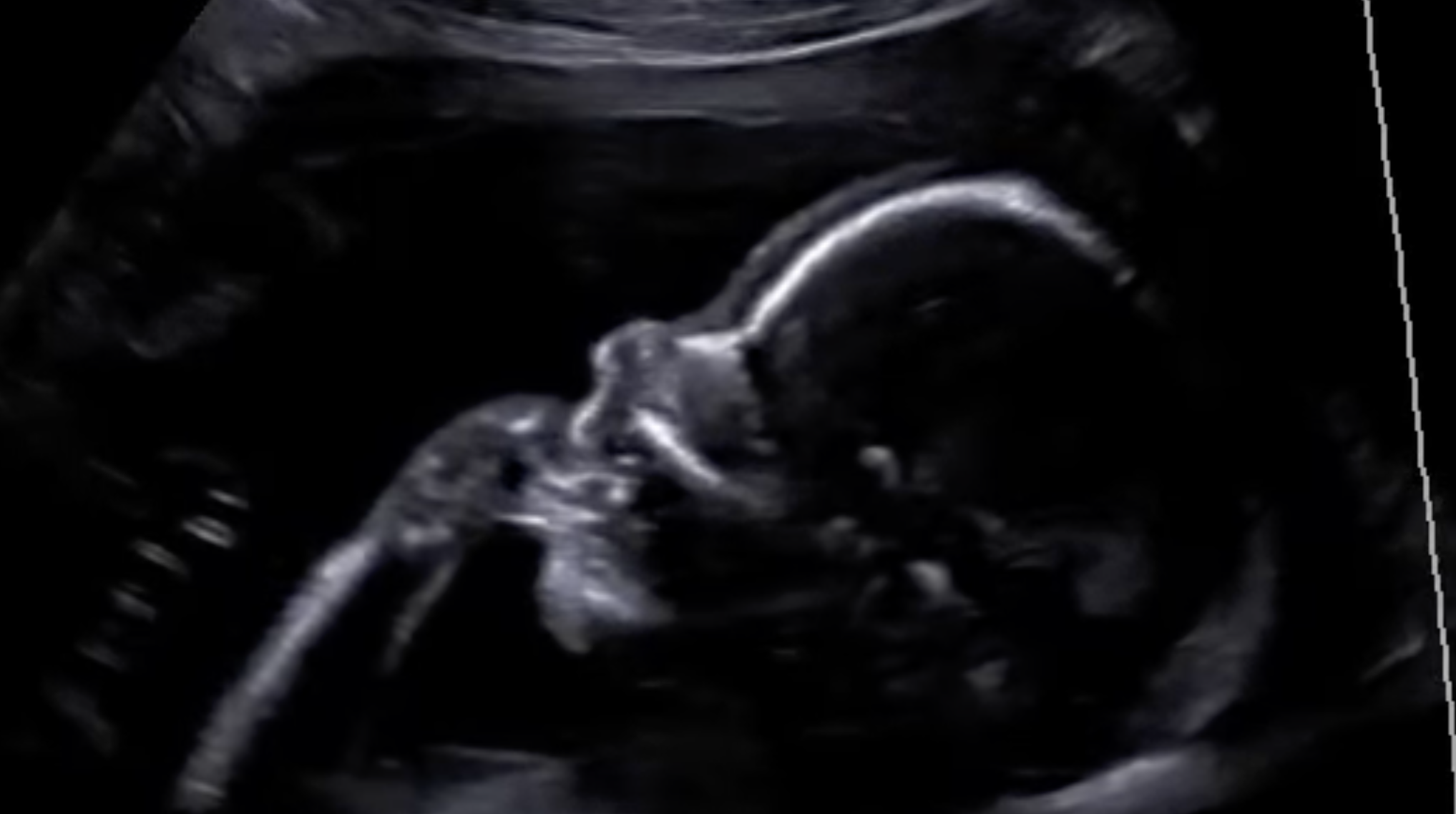
what hand they’ll prefer later in life
Researchers have used 4D ultrasound scans to observe fetuses throughout pregnancy, and found that those as young as 10 weeks gestation consistently favoured one hand. The hand they preferred to suck or move tended to match the one they’d go on to use in early childhood. One small study (like all childhood research tends to be) found that every single 15-week old foetus that sucked their right thumb, ended up being right handed as a child. That’s a 100% predictive success rate, from the time your developing baby is the size of an apple!
So in a very real sense, handedness is hardwired. But once they’re earth-side, it can take a little while for parents to clue in.
When Can You Tell Which Hand Your Child Will Use?
Even though there’s something inside their tiny brains that’s nudging them towards one hand over another, it can be a while before any kind of preference becomes noticeable. In fact, most kids don’t show a consistent hand preference until between 18 months and 3 years.
In the first year, it’s totally normal for hand use to flip-flop. One day it’s the left, the next it’s the right, and that’s all perfectly healthy. So, this stage is about exploring the world, not about committing to a side.
They’re working hard to connect the dots, discovering that they have hands, before learning how to use them. Their brains are still forming, making new connections at an astounding rate, and it’ll be a few years before they start to refine those connections into consistent traits like handedness.
That said, you might start noticing early hints as your baby approaches toddlerhood. As you’ll see from the video above, Science Baby was about 10 months old when we started to notice him favouring his left hand over his right. And in many cases, preferences can start to show up from around 6 months.

Things you can look out for include:
- using spoons and forks or holding their finger food
- drawing with crayons
- reaching for toys in front of them
- stacking blocks
If they consistently choose one hand for fine-motor tasks over several weeks, that’s a good sign it may be their dominant hand.
But if you’re not seeing a consistent preference, there’s no need to worry! Some children don’t fully settle into their preferred handedness until age 4 or even 5.
Hands guide the brain
There’s an interestign bit of science that comes out of understanding exactly when handedness first develops.
There was a prevailing theory that that a child’s growing brain develops a kind of asymmetry as it develops, where one side is favoured over another, and that affects which hand they’ll prefer. Strangely, the left side of the brain controls the right side of the body, and vice versa, so those who are right handed would have a dominant left brain, and those who are left handed would have a dominant right brain.
But the foetal handedness that researchers have observed throws a spanner in the works.
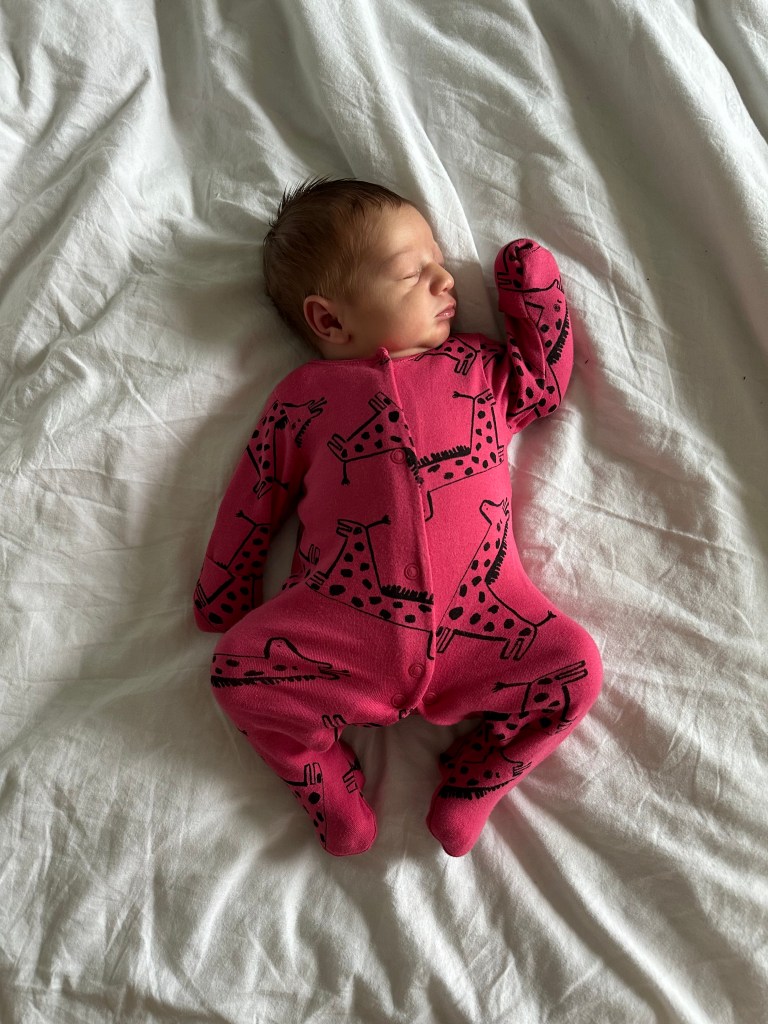
Researchers have found evidence for one-hand dominance in foetuses that are just 10 weeks gestation. That’s barely enough time for your baby to even have limbs to wave around, but crucially, it’s believed to be before the brain has developed enough to connect to those arms. Instead, the hand movement works as a kind of reflex, passing through the spinal column without ever detouring to the conscious brain.
So the hemispheric preference can’t be guiding the hand preference. But it might work the other way around.
Some scientists have suggested that one side of the body might develop slightly faster, possibly as a result of the increased input from a more commonly used hand, and it’s this that causes the corresponding brain hemisphere to develop more.
What Should Parents Do?
Not much at all! This is one of those few things that’s going to develop just fine without any parental innovation, but here are some supportive ways to encourage healthy handedness development:
- Observe gently. Watch which hand your child uses naturally. No need to test or push, just take mental notes over time.
- Follow their lead. Offer toys or tools (like cutlery or crayons) to their preferred side, but don’t discourage use of the other.
- Avoid correcting. It can be tempting to guide a child toward the “right” hand (especially in a right-handed world), but let them choose what feels natural. Forced switching can confuse motor development.
- Be prepared. If your child turns out to be left-handed, a few small adjustments like lefty scissors or different pen grips can make a big difference.

but also on environmental factors
I’ve got a leftie, what now?!
About 1 in 10 people are left-handed, including plenty of brilliant minds, artists, scientists, and athletes. But historically, being left-handed wasn’t just unusual—it was considered wrong.
In many cultures, the left hand has long been associated with bad luck, impurity, or even evil. The word “sinister” comes from the Latin for “left,” while “dexter” (as in dexterous) comes from the Latin for “right.” In some European traditions, the Devil himself was said to be left-handed. In religious rituals, people were told to use their right hand; the left was often seen as the hand of rejection or punishment.
In classrooms well into the 20th century, left-handed children were often forced to switch hands. Teachers would tie their left hands behind their backs, slap rulers across knuckles, or insist they write with their non-dominant hand, all in an effort to “correct” what was never a problem in the first place. This kind of enforced switching could lead to real issues: slower writing, confusion, stuttering, and long-lasting frustration.
As I mentioned above, Science Baby’s dad claims he was forced to use his right when he showed a preference for the left. He writes beautifully, but even the mental trauma has proven hard to shake.

Thankfully, we now understand that handedness is just a natural part of how our brains and bodies are wired. It’s not a quirk to be fixed; it’s a difference to be respected. Left-handedness is slightly less common, but entirely normal, and it often runs in families. Science Baby is still favouring his left hand, and we’ll be doing everything we can to support him.
So if your little one seems to favor their left hand, there’s no reason to worry. Quite the opposite! They’re joining the ranks of left-handed legends like Leonardo da Vinci, Marie Curie, Barack Obama, and Oprah Winfrey.
Whether your child favors the left, the right, or even shows signs of ambidexterity for a while, remember: it’s not a milestone to hit, it’s just part of who they are. Their brain, their preferences, and their pace are beautifully their own.
So keep an eye out for those subtle signs, but don’t worry if things take time. You’ll know soon enough. And in the meantime, enjoy the journey of discovering who they’re becoming, one block, spoon, and scribble at a time.
Oh, and a heads up…we talked about the link between handedness and the brain a lot more in our The Science Baby Podcast episode “Is My Baby Right or Left Handed? (and when will I know?)“. So if you like things in your ear holes as well as your eye holes, be sure to click the link and check it out!

Read More
- Scientists Can Tell if Babies Will Be Left-Handed Before They’re Even Born – TIME
A short, engaging article summarising the research on fetal hand preference using 4D ultrasounds, and what it reveals about handedness before birth. - Prenatal thumb sucking is related to postnatal handedness – Hepper et al., Neuropsychologia (2005)
This foundational study showed that fetuses who sucked their right thumb at 15 weeks gestation were overwhelmingly right-handed by age 10. - Ultrasound can detect if baby will be left-handed – Motherly
A warm, parent-focused summary of recent findings about how and when handedness first emerges in the womb. - Development of fetal self-touch: Normal vs. increased risk for developmental disorders – Reissland et al., Epilepsy & Behavior (2015)
This research used 4D ultrasound to show that fetal movement patterns—including hand preference—are visible from 18 weeks and may offer insights into later development. - Right-handed or left-handed? Hand preference during gestation – ScienceDaily
A well-written explainer based on original research that tracks prenatal motor patterns and how they relate to the brain’s structure. - A general theory concerning the prenatal origins of cerebral lateralization in humans – Previc, Behavioural Brain Research (1991)
A classic and still-cited paper proposing that handedness and other brain asymmetries are shaped well before birth.




 The Science Baby
Leave a comment