
When science baby was a few months old, I was finally starting to feel a bit more human after the whirlwind of pregnancy and childbirth. But just when I thought things were settling down… surprise! I started losing hair. A lot of hair. Like, coming out in clumps in the shower a lot of hair!
It can be worrying, but would you believe it’s totally normal? If you’re a new parent and you’ve started shedding like your dog in summer, you’re not alone. Postpartum hair loss (or telogen effluvium, if you want the sciencey name) is incredibly common—and thankfully, temporary.
Let’s break down why this happens, how long it lasts, and what you can do about it.
What Is Postpartum Hair Loss?
Postpartum hair loss is the excessive shedding many women experience in the months after giving birth. It’s not the same as permanent hair loss—your follicles aren’t damaged, and your hair will grow back.
On average, people lose about 100 hairs per day. But after pregnancy, that number can rise to around 400 hairs a day. That’s why you might be clogging the shower drain, brushing out clumps, or constantly picking stray hairs off your baby’s onesie.
When Does Postpartum Hair Loss Start—and Stop?
Postpartum shedding usually begins around 2 to 4 months after giving birth, and it often peaks around month 4 or 5. Most people find it starts to taper off by the time their baby is 6 months old.
That said, everyone’s experience is different. Some moms may notice thinning hair for up to a year. But rest assured: your hair is growing back underneath, even if it looks and feels thinner for a while.
The Hair Growth Cycle: A Quick Science Lesson
Your hair grows in three main phases:
- Anagen (Growth Phase): Lasts 2–6 years; around 85–90% of your hair is usually here.
- Catagen (Transition Phase): A short phase when the hair follicle shrinks.
- Telogen (Resting Phase): Lasts ~3 months before hair falls out and new growth begins.

Pregnancy prolongs the growth phase, stopping them from entering catagen. But after birth, the follicles that were “paused” now resume their cycle, resulting in a wave of shedding.
Why Does Postpartum Hair Loss Happen?
As with so many changes in the postpartum body, the answer is: hormones.
During pregnancy, your estrogen levels soar. This high level of estrogen helps keep hair in the growth phase (anagen) longer than usual. That’s why many pregnant women report fuller, thicker hair: it’s not just growing more, it’s also falling out less.
But after birth, estrogen levels drop sharply. This hormonal shift causes a large number of hair follicles to enter the resting phase (telogen), where they typically stay for about three months before the hair falls out. That’s when the shedding begins. And because it grows so much during pregnancy, then all stops growing at once at birth, then about 3 months later it’s all going to start falling out at once.
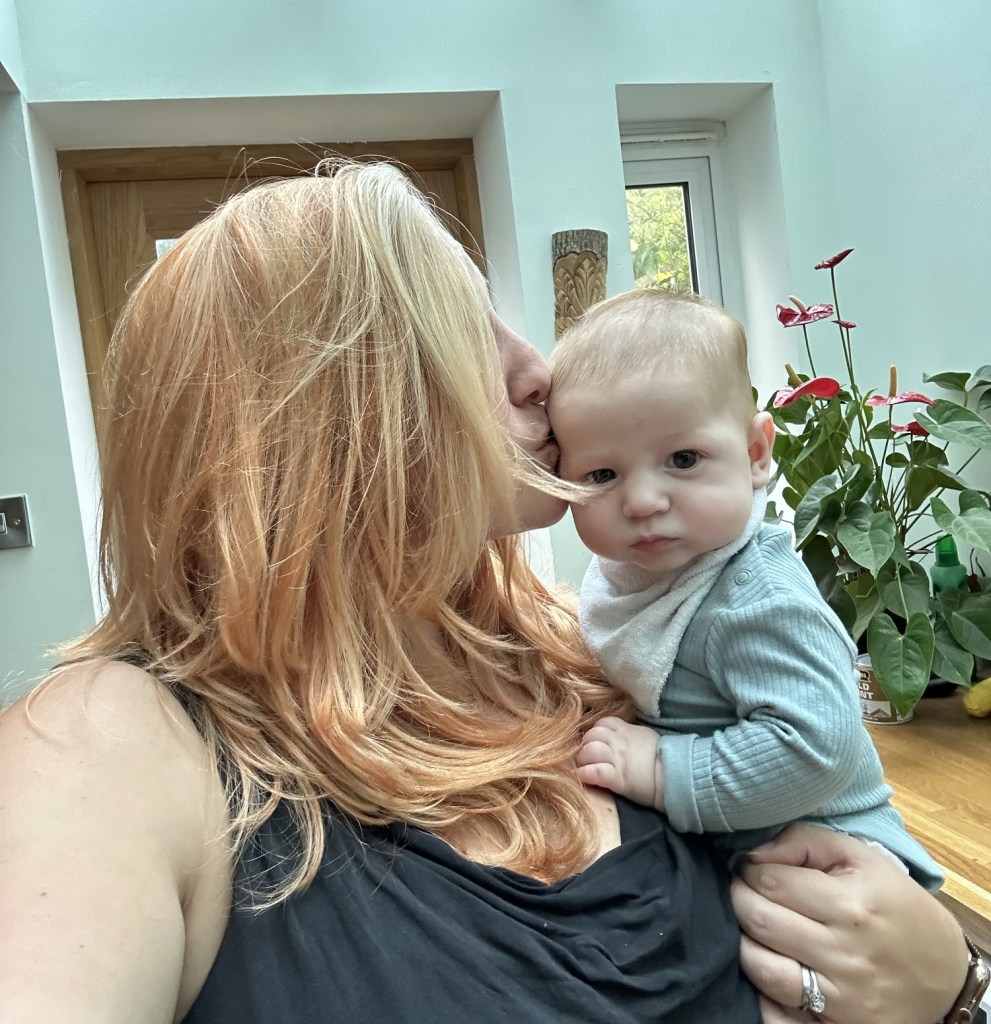
And it’s not just you that this hormonal hair loss affects! Since your baby shared your hormones in the womb, they will experience the same sharp drop in estrogen, which can make their hair fall out too. Again, it can be a bit of a shock, but it’s totally normal.
Is There Anything You Can Do About It?
While you can’t prevent postpartum hair loss entirely (blame biology!), you can take steps to support healthy hair regrowth:
- Eat a balanced diet with protein, iron, and vitamins like biotin and B12.
- Be gentle with your hair. Avoid excessive heat styling or tight ponytails.
- Stay hydrated, and try to rest (easier said than done with a newborn, we know!).
- Consider a multivitamin if recommended by your healthcare provider.
And remember: this is normal. It might feel like a lot, but it’s mostly the bonus pregnancy hair you didn’t lose at the time.
Should You See a Doctor?
If your hair isn’t showing signs of regrowth by your baby’s first birthday, or if you notice bald patches, scalp irritation, or other symptoms, it’s worth speaking to a GP or dermatologist. Conditions like thyroid imbalance or iron deficiency can also cause hair loss and may need medical attention.
TL;DR: Postpartum Hair Loss Is Temporary
Losing hair after having a baby can be alarming, but it’s a normal, hormone-driven process that pretty much every new birthing mom goes through. It peaks a few months after birth and usually resolves by the time your baby is crawling.
So if you’re finding strands in your sink or waking up to a hairy pillowcase, take a deep breath. Your hair will grow back. And in the meantime, try to embrace those wild baby bangs. You’ve earned them!

More reading…
- American Academy of Dermatology: Postpartum Hair Loss
A trusted dermatology guide explaining why postpartum shedding happens and what to expect. - Mayo Clinic: Hair Loss After Pregnancy
Straightforward answers from a leading medical source on the causes and timeline of hair loss after birth. - Cleveland Clinic: Postpartum Hair Loss – Causes and Treatment
A detailed look at the hormonal roots of postpartum shedding, with supportive tips for regrowth. - Tommy’s: Hair Loss After Birth
UK-based resource with compassionate, clear advice for new mums navigating this common change. - Healthline: What You Can Do About Postpartum Hair Loss
Accessible science-backed tips for handling hair loss and knowing when to seek help.



 The Science Baby
Leave a reply to Why Motherhood Is Not What You Expect: Embracing Matrescence – The Science Baby Cancel reply