
If you’ve ever looked down at your baby’s sweet little head and spotted what looks like a patch of yellow, greasy, flaky skin, you’re not alone, and there’s no need to panic. That scaly stuff is something called cradle cap, and while it can make your baby look like they’ve been swapped on a swamp safari, it’s both common and harmless.
What Is Cradle Cap?
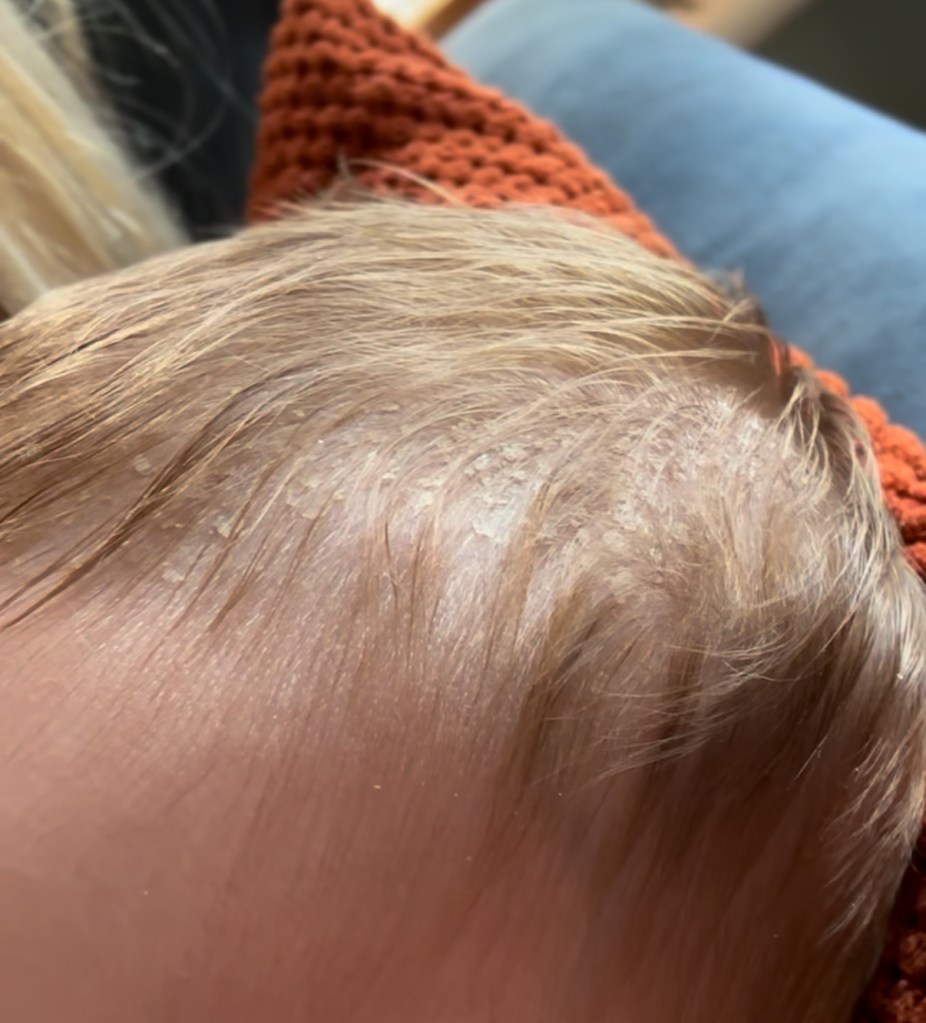
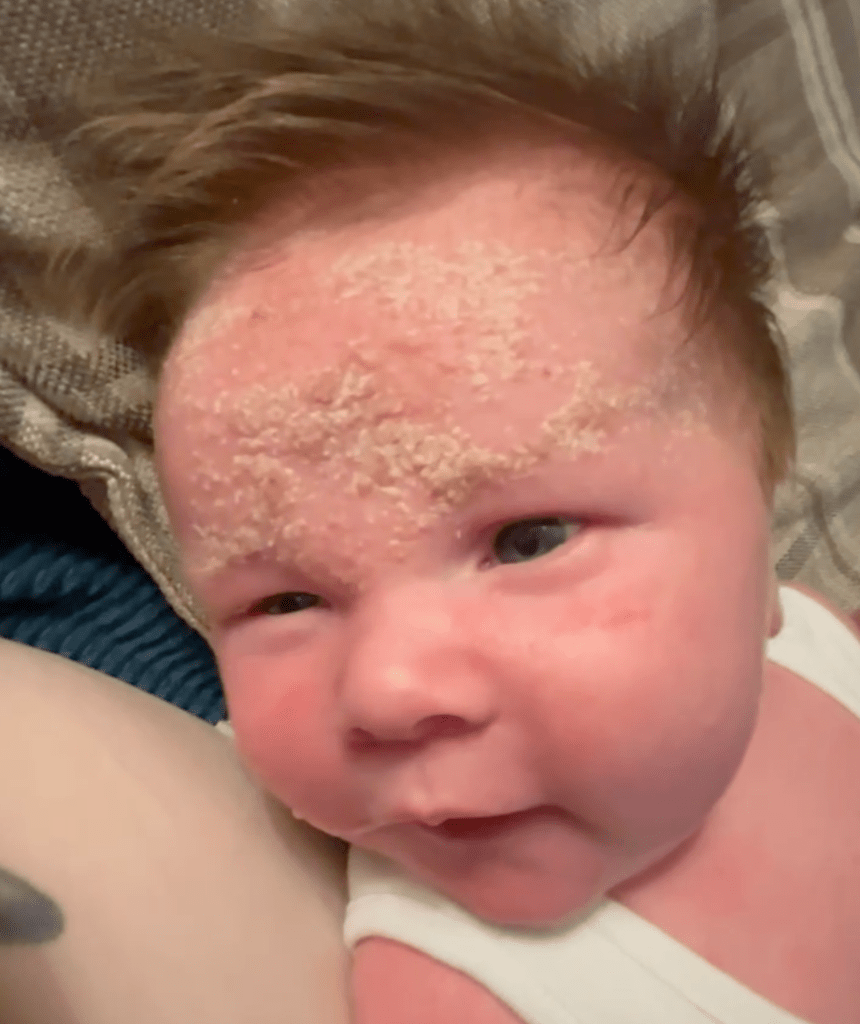
Cradle cap is the everyday name for a condition called seborrheic dermatitis in infants. It usually appears within the first few weeks or months of life and is most common around three months of age. It looks like:
- Thick, greasy, or waxy scales
- Yellow, white, or brown crusts
- Mild redness on and around the affected areas

It’s most often found on the scalp, but can also show up on the forehead, eyebrows, ears, and even in skin folds like the armpits or groin.
The good news? It doesn’t itch, hurt, or bother your baby, though it may bother you a little when you first spot it.
So, What Causes It?
Here’s where things get interesting: we still don’t know exactly what causes cradle cap. But scientists have a few educated guesses based on what we do know about baby skin.
Cradle cap seems to involve the sebaceous glands—the oil-producing glands located at the base of hair follicles. These glands secrete sebum, a natural oil that helps keep skin moisturized and protected. But in babies with cradle cap, these glands may be producing too much oil, or producing oil with an unusual composition.
The idea is that excess oil traps dead skin cells that would normally flake off invisibly, making them stick around, creating the characteristic crusty appearance.
Some researchers believe that leftover maternal hormones still circulating in a baby’s body after birth may stimulate the sebaceous glands, making them temporarily overactive. Others point to a naturally occurring yeast called Malassezia that lives on the skin. This yeast may feed on the excess oil and alter the skin’s chemistry, contributing to the buildup.
Still, it’s not a simple equation. While about 80% of babies with cradle cap have this yeast on their skin, plenty of babies without cradle cap do, too. So it’s likely a mix of genetics, skin chemistry, and environmental factors.
Babies with a family history of eczema, asthma, or other skin conditions are more likely to develop cradle cap, which makes sense, since skin sensitivity often runs in families. Both of Science Baby’s parents have problem skin, so he really doesn’t stand a chance!
What Cradle Cap Is Not
Let’s clear up a few common misconceptions about cradle cap:
- It’s not contagious
- It’s not caused by poor hygiene
- It’s not painful or itchy
- And it’s not your fault in any way.
If you’re a parent dealing with this, please know: you didn’t do anything wrong, and you don’t need to scrub your baby’s head like a casserole dish. In fact, gentle care is best.
How to Treat It
Cradle cap often clears up on its own within a few weeks to months. Most cases are gone by the time a baby turns one. But if you’d like to help it along, or if it’s becoming thick or widespread, then there are some safe ways to manage it:
- Soft brushing: After a warm bath, use a soft baby brush or toothbrush to gently loosen the flakes.
- Apply oils: Natural oils like coconut oil, mineral oil, or baby oil can be massaged into the scalp to soften the scales. Leave it on for 15 minutes (or overnight), then gently brush and wash it out.
- Mild shampooing: Wash your baby’s hair regularly with a gentle, fragrance-free baby shampoo. In more stubborn cases, your doctor might recommend a medicated shampoo, but these should only be used under medical guidance.
Most importantly, even though it’s tempting: try not to pick at the flakes. Pulling at them can irritate the skin and even cause minor infections.
When to Talk to a Doctor
Most cases of cradle cap are mild and don’t require a trip to the doctor. But reach out to your pediatrician if:
- The cradle cap is spreading or worsening
- The skin looks red, swollen, or appears infected
- Your baby seems uncomfortable or is scratching at it
- It hasn’t improved by around 12 months of age
In the Meantime…
You are not alone if your baby’s head has turned into what looks like a flaky, golden-brown biscuit. An estimated 1 in 10 babies experience cradle cap. It’s just one of those funny, mysterious things about babyhood, like hiccups, crossed eyes, or the need to put everything in their mouths.
And while it might not be the cutest milestone in the baby book, it is a harmless one. So whether your little one is a bit scaly or smooth as a peach, they’re still perfectly healthy and perfectly loved.
Read More:
- Mayo Clinic – Cradle Cap – Overview of symptoms, causes, and treatment options
- American Academy of Dermatology (AAD) – Cradle Cap – Information from board-certified dermatologists on what cradle cap is and how to manage it.
- NHS – Cradle Cap in Babies – The UK’s National Health Service explains symptoms, home care, and when to seek medical advice.
- Cleveland Clinic – Cradle Cap – Detailed breakdown of possible causes and treatment tips, including the role of sebaceous glands and yeast.
- DermNet NZ – Infantile Seborrhoeic Dermatitis (Cradle Cap) – More technical insights into the condition’s biology and clinical features.






 The Science Baby
Leave a reply to Pox Parties Explained: Risks vs. Benefits for Kids – The Science Baby Cancel reply