
When I was pregnant, I would have to visit my local midwife and children’s centre for regular checkups. Alongside measurements of my belly and a check of baby’s position and heartbeat, the appointment involved a check of my blood pressure, the amount of carbon monoxide in my breath (from active or passive smoking), and a test for UTIs and protein (a sign of pre-eclampsia) in my urine.
And so, with increasing regularity through my pregnancy, I found myself on the toilet in the children’s centre, with a pot between my legs (invariably getting more on my hand than in the pot), staring at the poster on the back of the toilet door. It read:
Breastfeeding burns 500 extra calories per day and can help you lose weight after pregnancy!
It was a compelling argument for me, as I’m sure it would be for many a mother. Despite my best efforts while I was pregnant, those pounds just piled on, and as much as I wanted to believe I was going to give birth to 10kg baby, the truth was that a lot of that weight was staying with me long after the little one was his own person.
So could the poster be true? Or was it too good to be true? We hear lots about the health benefits of breastfeeding for the baby, but what about for mom? Could I really lose all that baby weight by breastfeeding or pumping?

Baby weight
It’s expected that a mother will put on weight throughout her pregnancy. In fact, it’s encouraged!After all, she’s building a whole other human inside of her, and that final product, as well as the organic machinery to assemble it, is all an addition to mom’s normal bodily organs. On average, expectant moms put on 10-12.5kg (22-28lbs) over the nine months they’re pregnant, with most of that appearing in the last 4 months or so.
Thankfully though, not all of that weight is destined to stick around. In a typical woman:
- 0.9kg (2lbs) is amniotic fluid, which is the first to go when your waters break
- 3-3.5kg (7-8lbs) is the baby, whose exit is self explanatory
- 0.7kg (1.5lbs) is the placenta, delivered shortly after baby
- 0.9kg (2lbs) is attributed to the greatly expanded uterus, which contracts and returns to its normal size and weight over a few weeks after the birth
- 1.4-1.8kg (3-4lbs) of extra blood, and 0.9-1.4kg (2-3lbs) of extra fluid in moms body is there to supply baby with everything they need in utero. That will gradually decrease in the weeks after birth too.
- 0.5-1.4kg (1-3lbs) belongs to the enlarged breasts, whose mammary tissue expands ready to supply milk. That weight will stick around as long as you’re breastfeeding or pumping, but that might be one place you don’t mind the extra pounds!
- That leaves 2.7-3.8kg (6-8lbs) of fat stores that the body intentionally hangs onto
Bear in mind that these are average figures for mothers that start out a healthy weight. Everybody’s body is different, so the amount of weight you gain, and the proportion of that which is fat, can vary a fair bit.
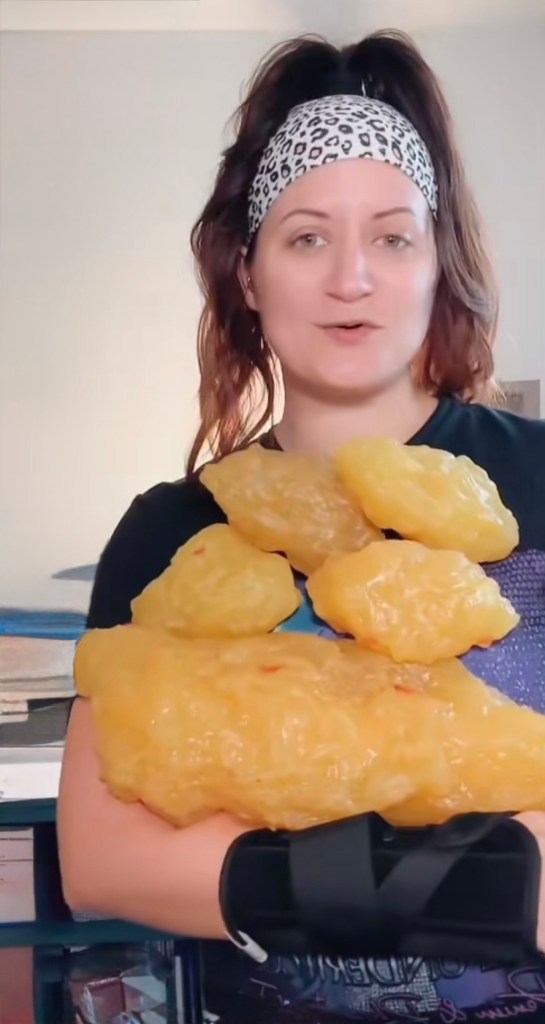
However, on average women put on around 4kg of fat when they’re pregnant, which basically stays there until it can be burned by a calorie deficit!
What’s with the fat, anyway?
You might be wondering why you need to put on fat at all while you’re pregnant. Why does your body do you dirty, after all you’ve been through, to leave you with new wobbly bits that you definitely didn’t order? Why do you get fat while you’re pregnant?
It helps to think about it from the point of view of our hunter-gatherer ancestors.
A prehistoric mother who has just given birth wouldn’t be able to go out and get her food like she did before, because she would be busy tending to baby. And without all the luxuries of doordash/UberEats/insert food delivery service here, there’s no guarantee that the tribe would have the time or resources to get extra for her either.
And yet, far from going down, that new mother’s energy and food requirements actually go up, because they now have to feed their baby with breast milk produced from their own bodies. Making breast milk takes energy, which comes from the calories in our food, or from the energy (aka fat) stores in our bodies.
Ultimately, hoarding fat within the body provides an internal food store for mother and baby, which acts as an energy buffer through those vulnerable times when demand is high and supply is low.
Of course, life is different now. Many of us are lucky enough to not have to balance food scarcity with new hungry mouths, but our biology hasn’t yet caught up. Biochemically we are still hardwired to lay in contingencies for potential hard times to come. And so, unless you’re eating an unhealthily small amount during your pregnancy, you’re going to end up packing on a few pounds of fat.

Pump to Burn
Evolutionarily speaking, the fat that you put on in pregnancy is meant to be used up during breastfeeding, and any breastfeeding mother will attest to just how much the unconscious act of making milk takes it out of you.
It literally takes energy to assemble the molecules for breast milk, and that energy equates to calories burned.
It’s important to remember here that calories are, scientifically speaking, a measure of energy. It’s actually the amount of energy needed to heat up one gram of water by one degree Celsius. You can just as easily release the calories in your food by setting fire to it as by eating and digesting it.
The poster in the children’s centre was right when it quoted 500 calories a day. It even underestimated it.
Exclusive breastfeeding burns about 595 calories a day in first two months, which increases up to roughly 695 calories a day when the baby is bigger.
All else being equal, that’s a pretty big calorie deficit, and in theory it would mean that you could lose one pound, or half a kilo a week. By that measure, the extra 4kg that the average pregnant mother gains would be gone within two months. You would be back to pre-pregnant weight while your little one was still technically a newborn.
Of course, nothing is ever quite as simple as that.
No such thing as a free lunch
The breastfeeding calorie deficit is certainly enough to help you lose your pregnancy weight fast, but it’s rarely so simple.
Because our bodies and our lifestyles make it really really hard to maintain that deficit.
As anyone who has breastfed will tell you, it’s important to be kind to yourself during this taxing time. Especially at the beginning of a breastfeeding journey, new mothers are advised to get plenty of rest and eat plenty of food to help keep up their milk supply. Certain foods, like oats and even beer, can boost milk production, but in general a healthy varied diet is plenty to keep supply going. Overall the message is: don’t go hungry!
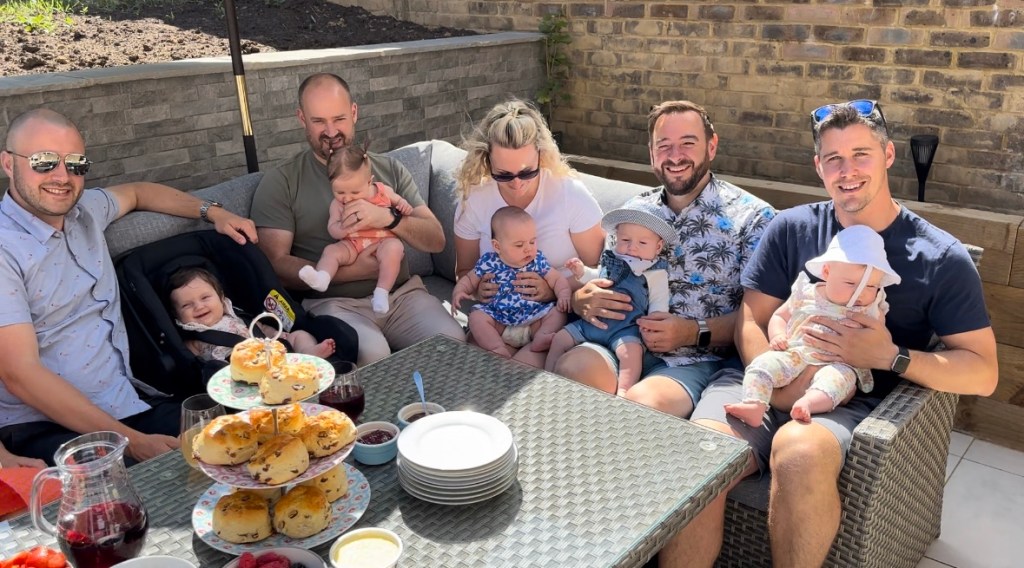
Not only that, but when there’s a tiny dependent newborn in your life, it can be hard to find the time and energy to exercise. Many new mums find it hard to return to their pre-pregnancy activities, and end up with a more sedentary lifestyle than they had before. Less activity means fewer calories being burned than normal, and when combined with the recommendation to eat, even healthily, that daily calorie deficit soon dwindles.
Even for those of us who are determined to keep a handle how much is going in, and get back to exercising, or bodies are working against us.
When we’re breastfeeding, the production of milk in the breasts is triggered by a hormone called prolactin, which is produced in the brain. Prolactin’s main role is to stimulate the growth of breast tissue and the production of milk, but it also has another very important side effect – it increases appetite! Even though we might not be as physically active, we’re hungrier than ever.
It’s not hard to see how this came about, evolutionarily. Even after an expectant mother has piled on the pounds in preparation for breastfeeding, it won’t do her body, or her baby, any good if she loses all of that fat in just a few months. She needs to keep up her supply of calories to keep up the supply of calories to her baby. Prolactin is the little chemical reminder in her brain to eat, eat, eat!

And there’s another bit of chemical trickery lying in wait to trip us up. Sleep deprivation, which is an almost guaranteed side effect of having a newborn whose sleep schedule is all over the place, seriously messes with the hormones that control hunger and feeling full. Normally when we sleep, the hormone leptin reassures our brain that we’re full. But if we’re not sleeping, we’re not getting that reassurance. Also, sleep deprivation increases the levels ghrelin, also known as the appetite hormone. These imbalances basically end up making a sleep deprived parent (or anyone who’s not getting enough sleep, really!) crave sweet and starchy foods. Exactly the kinds of food that will destroy a calorie deficit!
So if, like me, you have found yourselves ravenous, reaching for the chocolate covered raisins during a midnight feed or pump, know that it’s not a sign of weakness, just the torrent of new and unbalanced hormones manipulating your brain! At least, that’s my excuse and I’m sticking to it!
So, will breastfeeding make you thin?
Breastfeeding is hard work, especially on the body. But over millions of years of evolution, our bodies have put in place contingencies to help a mother succeed. Unfortunately, those contingencies don’t always conform to modern cultural notions of how a mother should ‘bounce back’ from pregnancy and birth, lose the weight, and get her old body back.
Certainly, the calorie deficit that comes from breastfeeding is appealing to anyone wishing to hurry that process along, but moms need to be realistic about just how easy that’s going to be.
So will breastfeeding make you lose weight faster? Science says yes, but only a little bit.
Studies have shown that after a year, breastfeeding moms only lose between 0.6kg and 2kg more than non-breastfeeding moms.
Compared with the theoretical loss of 4kg in two months, this is at least 12 times slower than the calorie deficit alone would seem to suggest.
So if you want to breastfeed your baby, do it for their health, your long term health and happiness, and your mutual bond. Don’t do it for the weight loss, and moreover, don’t be swayed by the propaganda in children’s centre toilets!
Be kind to yourself, you’re keeping a brand new human alive!



 The Science Baby
Leave a reply to Does Morning Sickness Indicate a Girl? Exploring the Myths – The Science Baby Cancel reply