- Do You Really Need to Burp Your Baby After Every Feed?
 Do babies really need to be burped after every feed? Science suggests not always. Explore the evidence, reflux, colic, and how to respond to your baby’s cues with confidence.
 - The IVF Hangover: An Emotional Aftermath Nobody Warns You About
 From injections to pregnancy and beyond, IVF can leave lasting marks. We explore the physical and emotional impacts of IVF during treatment and after it ends, and how to care for yourself along the way.
 - Making a Baby With Science: An IVF Deep Dive
 What actually happens during IVF? From eligibility and referrals to injections, egg collection, embryo grading, and frozen transfers, a clear, human guide to how IVF really works.
 - How Breastfeeding Can Protect Against Breast Cancer
 When it comes to feeding your baby, breastfeeding is often promoted as the best way to do it, if you can. It’s not always easy, and for many parents, it’s not even possible. There are several short term health benefits for baby, but many oft-repeated long-term advantages, like making baby smarter, and reducing the risk… Read more: How Breastfeeding Can Protect Against Breast Cancer
 - When Should You Wean our Baby?
 When your baby is a few months old, it’s time to start facing down the next big milestone in your parenting journey: weaning them onto solid foods. But while the official guidance is clear, the advice you get from different people can vary. So when should you start the process? Right now, Kim is just about to… Read more: When Should You Wean our Baby?
 - We Need To Talk About Pregnancy Loss
 On average, one in every four pregnancies ends in loss, and yet miscarriage, stillbirth, and pregnancy loss are still taboo subjects in many cultures. As a result, women who go through it experience shame, guilt, and loneliness which is entirely a product of attitude, and not science. This Baby Loss awareness week, Kim and Leila… Read more: We Need To Talk About Pregnancy Loss
 - Breastmilk vs Formula – Is Breast Really Best?
 Mothers these days might be told that ‘breast is best’ when it comes to feeding their baby. But why is that the case, when infant formula has been an option for decades? What does that mean for mothers that struggle with their breastfeeding journey, and how does it affect a child in the short and… Read more: Breastmilk vs Formula – Is Breast Really Best?
 - Does Paracetamol During Pregnancy Cause Autism? Science Baby’s Reality Check
 Last week, a certain loudmouth in America told pregnant people to stop taking paracetamol (or “acetaminophen” or “Tylenol,” pick your flavour, they’re all the same thing), claiming it might cause autism in their kids. That advice set off alarm bells everywhere. Expectant mothers have long been told that paracetamol is one of the safest over-the-counter… Read more: Does Paracetamol During Pregnancy Cause Autism? Science Baby’s Reality Check
 - UK Plug Sockets Are Already Baby-Safe… Here’s Why Covers Can Be Risky
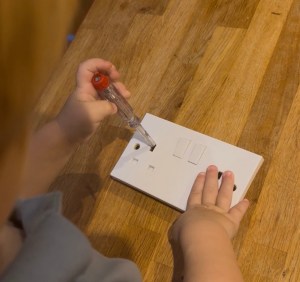 When you’re baby-proofing your home, it feels like there’s danger lurking in every corner. Hot pans, sharp edges, cleaning sprays… and those mysterious little holes in the wall where the electricity lives. It’s no wonder so many parents rush to buy socket covers. They seem like an easy win: pop in some plastic, and your… Read more: UK Plug Sockets Are Already Baby-Safe… Here’s Why Covers Can Be Risky
 - The Perils of Social Media for Parents
 Social media can be a great tool for discovering new people and new things (including maybe this podcast and blog?!) but it has a dark side. The “algorithm” which determines exactly what social media content you see is a highly efficient beast of hyerconnectivity. It can reveal things about your inner wants, desires, and fears… Read more: The Perils of Social Media for Parents
 - Drinking Alcohol While Breastfeeding: What Parents Really Need to Know
 As a new parent, it’s easy to feel like every choice you make is under the microscope. Even something as simple as enjoying a glass of wine with dinner can spiral into questions: Is this safe? Will it affect my baby? Should I pump and dump? So, is it safe to drink alcohol while breastfeeding?The… Read more: Drinking Alcohol While Breastfeeding: What Parents Really Need to Know
 - Introducing: The Science Baby Podcast 🎙️
 When I first became a mum, I found myself constantly Googling everything about babies: sleep, feeding, milestones, and the quirky little things I never expected. Because I’m a science communicator at heart, I couldn’t stop digging into the actual research behind those questions. That’s how Science Baby began. What started as a few fun TikTok… Read more: Introducing: The Science Baby Podcast 🎙️
 - Parenting, Risk, and the Myth of the Perfect Parent
 Parenting today often feels like walking through a minefield of opinions. Whether it’s about how we feed our babies, whether we use car seat mirrors, or even whether a mum can enjoy a glass of wine while breastfeeding, there seems to be no shortage of strong voices ready to weigh in. If you’ve ever scrolled… Read more: Parenting, Risk, and the Myth of the Perfect Parent
 - Moms Carry a Little Bit of Their Babies Forever: The Science of Fetal Microchimerism
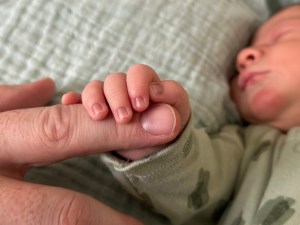 During pregnancy, fetal cells can remain in a mother’s body for decades. This phenomenon, called fetal microchimerism, shows how pregnancy changes you forever.
 - How to Teach Your Toddler to Count in 3 Easy Steps
 If your toddler is starting to talk, some of the first words in their repertoire are likely to be the numbers. I for one was especially proud when science baby learned all his numbers from 1 to 10. He could finish off a sequence, and even say them backwards (countdown to blast-off, anyone?!). But it… Read more: How to Teach Your Toddler to Count in 3 Easy Steps
 - Do Babies Always Look Like Their Dads?
 Do babies really look like their fathers at birth? Research in genetics, evolution, and human perception explains why this belief is so widespread, and if there’s any truth behind it.
 - Why Is My Hair Falling Out After Birth? The Science of Postpartum Hair Loss
 When science baby was a few months old, I was finally starting to feel a bit more human after the whirlwind of pregnancy and childbirth. But just when I thought things were settling down… surprise! I started losing hair. A lot of hair. Like, coming out in clumps in the shower a lot of hair!… Read more: Why Is My Hair Falling Out After Birth? The Science of Postpartum Hair Loss
 - The Science-Backed Lullaby That Helps Babies To Sleep (and new parents too!)
 Struggling to get your baby to sleep? You’re not alone. Newborn parents will be painfully aware of how unhinged their baby’s sleep schedule is, and no amount of physical flipping will flip their concept of day and night. From endless renditions of Baa Baa Black Sheep to tiptoeing through the house like a ninja, most… Read more: The Science-Backed Lullaby That Helps Babies To Sleep (and new parents too!)
 - Why Moms Think Their Baby’s Poop Smells… Okay?
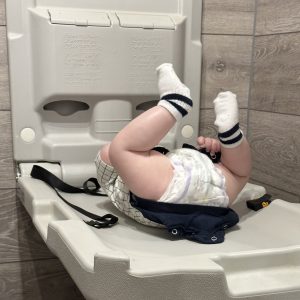 It’s a classic joke: “I love them so much, even their farts smell like roses!” But it turns out this sentiment might be rooted in real science, especially when it comes to babies and their moms.
 - Are Pets Beneficial for New Moms?
 There’s lots of evidence to suggest that pets are good for our mental health, but not much is known about how they affect new and expectant mothers. Take part in a quick survey to help researchers get to the bottom of the question.
 - Why Motherhood Is Not What You Expect: Embracing Matrescence
 Motherhood wasn’t what I expected, and I don’t think I’m alone in feeling disoriented and dispirited. But these experiences are totally normal parts of matrescence – the major physical and psychological transformation to motherhood. Matrescence changes our bodies, brains, and roles, and we need to talk about it more.
 - The Truth About Losing Weight While Breastfeeding
 Breastfeeding is often touted as a way to fast track weight loss, helping a mother get back to her pre-pregnancy weight in record time. But while it’s theoretically possible, the reality of breastfeeding weight loss is often a very different story.
 - Why you can cope with those newborn sleepless nights
 If there’s one thing you can be sure of when you bring you fresh newborn baby home, it’s that you can kiss goodbye to a full night’s sleep for the next weeks, months, maybe even years. A newborn’s sleep schedule is famously all over the place, and what with needing to feed every few hours,… Read more: Why you can cope with those newborn sleepless nights

The Science Baby
Being a Parent

Hi, it’s me…
…the Science Baby!
Babies are weird, and parenting is tough. If you’re a new parent, you might be constantly wondering “is this normal?”, or “am I doing this right?”. And that’s where I can help. I may be just a baby, but me and my mom are dedicated to giving you evidence-backed, scientific facts that might just make your parenting journey a little easier.
Elsewhere on the internet
Even more Science Baby!
Get adorable behind the scenes insights and updates with our monthly newsletter

 The Science Baby