
It might not seem like the biggest deal in the world, but your child’s dominant hand will help to shape how they experience the world. As soon as your little one has discovered they have hands, they’re going to start experimenting with which one is their favourite. And watchful parents are looking out to see whether they have a right-hadner or a left-hander.
It turns out that hand preference goes a lot futher than just what’s in their sticky little fingers. It’s a window into the structure and function of the brain itself. Kim and Leila dive into the surprising science that links dominant hand with language, emotion, genes, and the environment. And since Science Baby himself is a leftie, we consider his experience growing up in a right-handed world.

What to Expect in This Episode
On average, about 90% of people are right-handed, whereas just 10% are left handed. That’s weird, but the fact that we have a dominant hand at all is a uniquely human thing, and scientists think it might be related to how uniquely expressive we are as a species. Language is processed in the left side of the brain, which because of the strange way we are wired, ends up controlling the right side of the body. So the fact that we’re so good with words could be linked to our species’ preference for the right hand.
In demonstrating this, Leila shouts out to the AuDHD creator Savant Devereux, who expresses himself beautifully with words and gestures, in a way that showcases the link between our hands and our words.
But the link between language and right handedness isn’t clear cut. We talk about the genetic basis for our dominant hand preference. Like many things in the human body, it’s not something that’s controlled by a single dominant or recessive gene, but rather a suite of at least 40 genes, that are also related to other factors like the layout of the body.
For this reason, the dominant hand that you and your infant will end up having is in many ways ingrained within your DNA, however there are certain environmental factors that can affect the hand you end up using. For instance, Leila’s husband now writes (very neatly!) with his right hand, but believes he was born a leftie. Culturally, left-handers have historically been marginalised and demonised, and Leila’s husband wasn’t alone in being forced to learn to use his right hand despite what his DNA was telling him.
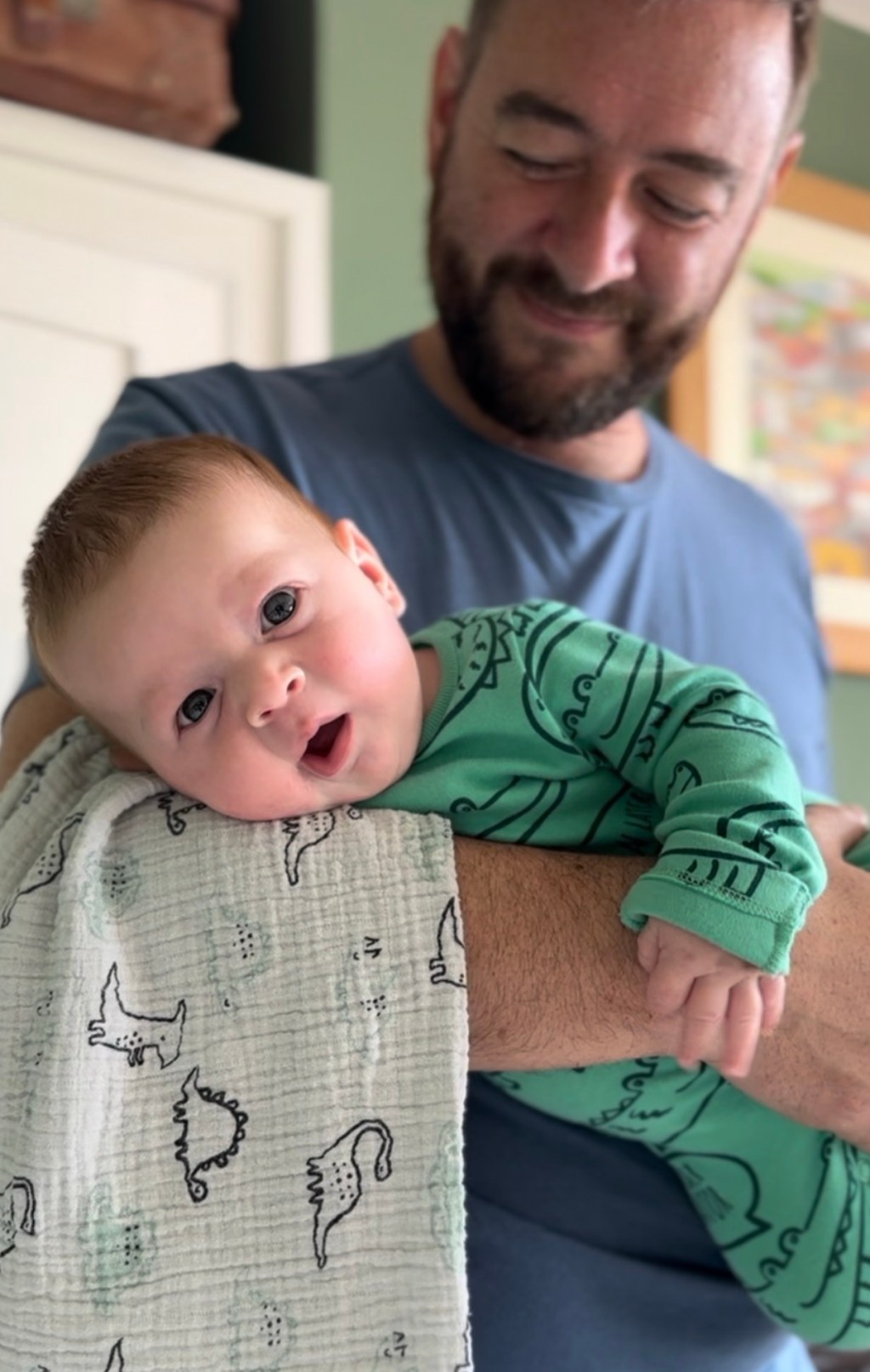
Science Baby seems to have settled on preferring his left hand, and we consider whether Kim’s daughter is, at six months, beginning to show a preference or not. This is the age at which babies start to experiment with which hand feels natural. Despite early hints towards left-handedness, Kim acknowledges she might have been unconsciously biasing the test by always offering things from her right side, leading her daughter to take things with the left.
This isn’t the only unconscious maternal behaviour. Remarkably, the vast majority of mothers instinctively cradle their babies and hold their toddlers on their left-hand sides, regardless of whether they are left- or right-handed themselves. In fact, this is a phenomenon that extends into the animal kingdom, with many mammal mothers choosing to keep their babies on the same side. Once again, this is down to the lateralisation of the brain – the division of labour between its left and right sides. Because while the left side is all about language, the right is about emotion and bonding. So by keeping baby on the left, in the left visual field, mothers are engaging that right side of the brain to keep their baby close mentally as well as physically.
Next, we discuss a study that seems to suggest that babies who show an early preference for their right hand tend to be more advanced in their language. While this might be consistent with the language-left brain-right hand pathway, we have a few thoughts about the methodology that led to those results. Are there enough left-handers tested in the study to make it fair test? Are their language skills being tested in the right way, or do left-handers process their language differently? Science Baby, now an out and proud leftie and an uncannily good communicator, seems to go against the study’s conclusions.
Finally, given that Science Baby now seems to be a leftie in a world of righties, we talk about some of the (many!) ways that left-handers might be disadvantages, and some of the things to look out for as right-handed parents. Simple things like which hand to offer a breadstick to, to how to model a proper writing grip, and how to string a guitar are all pitfalls that Leila has had to navigate already.
Listen to The Episode
👉 You can watch and listen to the latest episode right here:
Or find The Science Baby Podcast on your favourite podcast app.
Join the Science Baby Community
We’d love to hear what you think about this episode, and the podcast in general!
Leave us a review, share this episode with a fellow parent, or drop us a message with the topics you’d love us to cover.
And make sure to follow us on Instagram, Facebook, TikTok or YouTube to make sure you never miss an update.


 The Science Baby
Leave a comment