
When you’re baby-proofing your home, it feels like there’s danger lurking in every corner. Hot pans, sharp edges, cleaning sprays… and those mysterious little holes in the wall where the electricity lives.
It’s no wonder so many parents rush to buy socket covers. They seem like an easy win: pop in some plastic, and your toddler can’t stick their fingers where they don’t belong. But here’s the surprising truth: in the UK, those socket covers don’t make things safer. In fact, they can actually make things more dangerous.
UK Sockets Are Already Among the Safest
Unlike the two-pin sockets you’ll find in much of Europe or the US, British sockets are designed with layers of protection built in. The live and neutral holes (the ones that carry electricity) are hidden behind shutters when not in use. The shutters only open when the earth pin, the top, longer pin of a proper plug, is pushed in. That means a toddler with a crayon or spoon simply can’t reach the electricity, no matter how determined they are.
Plugs themselves add more protection. The base of the pins is covered in plastic so even when a plug is halfway in, there’s no exposed metal to touch. And modern wiring standards require extra safeguards like circuit breakers and residual current devices (RCDs), which cut the power in milliseconds if something goes wrong.
All of this is to say: UK sockets are not waiting to zap your child. They’re carefully engineered to stop accidents before they happen.
Why Socket Covers Can Backfire
So what happens when you stick a cheap bit of plastic into this carefully designed system? You start to undo the safety features.
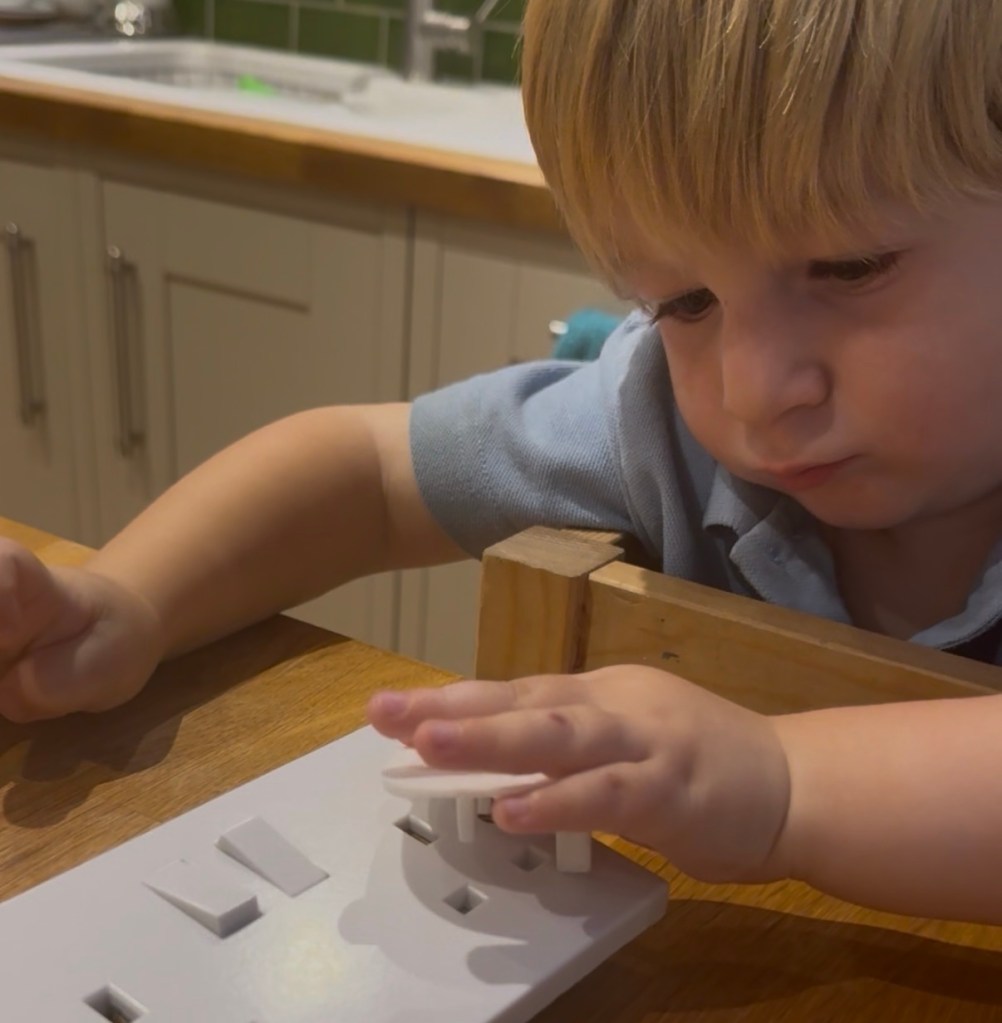
Many socket covers are made to the wrong dimensions, which can bend or damage the socket itself. Some are flimsy enough to snap or break off inside. Worst of all, a curious toddler could flip a cover upside down, use it to open the shutters, and suddenly have direct access to the live holes the cover was meant to block.
It’s easy to assume you’re adding a layer of safety, but the truth is you might be introducing new hazards: fire risk, broken sockets, or live parts exposed by accident.

What You Can Do Instead
The best thing you can do is trust the system already in place. Leave those sockets uncovered, and make sure they’re modern, undamaged, and properly wired. If your home doesn’t already have RCD protection, ask an electrician about installing it. It’s one of the best defences against electrical accidents.
Beyond that, the usual baby-proofing advice applies: keep an eye on your child, block off access to sockets with furniture where possible, and model safe behaviour around electricity.

It’s important to note again that this only applies to properly wired three-pin UK systems. If you’re living in a country with two pin plugs or something else, then there may be some safety systems inbuilt, but often the benefits of using socket protectors outweigh the risks they might pose.
The Takeaway
I completely understand the urge to buy every safety gadget going. I’ve been there too. But in the case of socket covers, the experts are clear: they’re unnecessary in the UK, and they can make things worse.
So, do yourself (and your sockets) a favour. Skip the covers, and let the engineering built into your home do its job.





 The Science Baby
Leave a comment