
When you become a parent, you would not believe how much time you spend thinking about, talking about, worrying about and yes, even photographing poo. It’s a unique window into your baby’s inner health, and we can learn a lot about their development from what we find in their nappies and potties.
In this episode, Kim and Leila discuss the biology of baby poop.
What to Expect in Episode 2
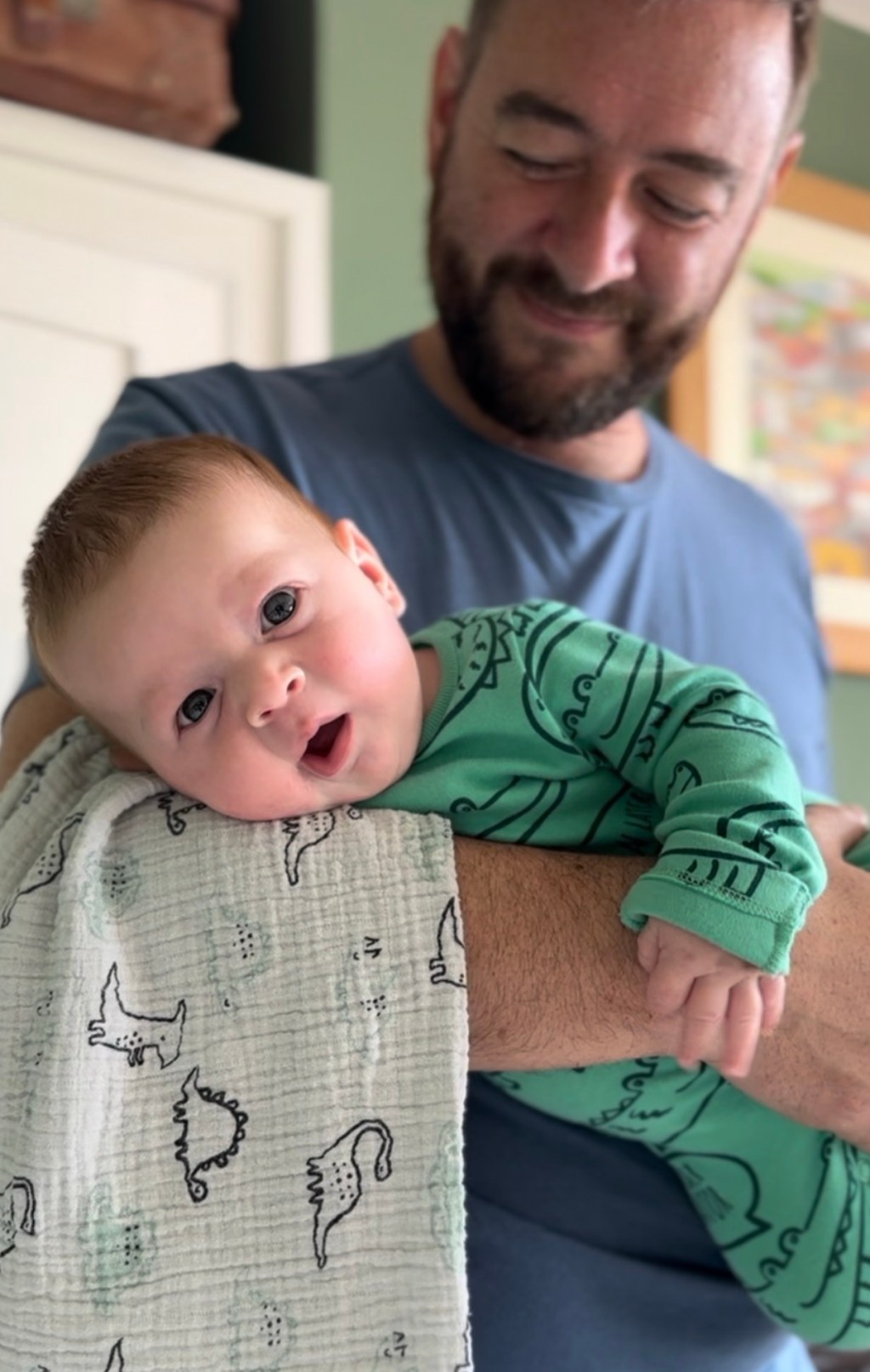
Kim and Leila are both at very different stages of our parenting journey, and that is never more apparent than when considering our baby’s poop. Kim has a 4 month old, so is still very much in the trenches of nappy blow outs and curry coloured poop. Leila, on the other hand, has a fully weaned 2.5 year old, who is (more or less) potty trained, and who produces big grown up poos that anyone would be proud of. We chat about our personal experiences with poo at these different stages.
Next, we dive into the biology of poo, what it is and how it changes over baby’s first few months. The very first poo to appear is meconium – a thick tarry substance that has basically been brewing in your baby’s belly for as long as they’ve had a stomach. So it’s little wonder it looks so strange.
But poo isn’t just the dry leftovers of what the body can’t use. It’s also massively influenced by the gut microbiome – a city of bacteria that live inside your digestive tract and help to break down the food that you eat. Incredibly, babies are born with no microbes at all inside their bodies, and get their first bacteria from their mothers. Babies born vaginally are exposed to more diverse bacteria as they exit the birth canal, when compared with C Section babies. Vaginal seeding has been suggested as a way of imporving C-Section babies’ gut health, but when we look at the science, the evidence isn’t quite there.
With a healthy gut microbiome in place, the next thing your baby needs to do is learn to poop. When they’re born, they have a very sensitive gastrocolic reflex, which basically signals the bowels to empty as soon as something goes into the top. But over time that becomes less sensitive, and babies may suddenly seem to stop pooing for a while.
Then comes the hard part. Babies have to actively learn how to poo, but contacting the ab muscles and simultaneously relaxing the muscles in their bum. It’s a tricky dance that can lead to some strange movements!
Finally, we talk about why dealing with our baby’s poop isn’t as gross as we thought it might be before we had kids. Science has found that moms think their own babies’ nappies smell better than everyone elses, and it turns out that it’s probably an evolutionary adaptation.
Listen to The Episode
👉 You can watch and listen to Episode 3 right here
Or find The Science Baby Podcast on your favourite podcast app.
Join the Science Baby Community
We’d love to hear what you think!
Leave us a review, share this first episode with a fellow parent, or drop us a message with the topics you’d love us to cover.
This is just the beginning. We’ve got a long list of incredible baby, toddler, and parenting science to share with you.


 The Science Baby
Leave a comment