
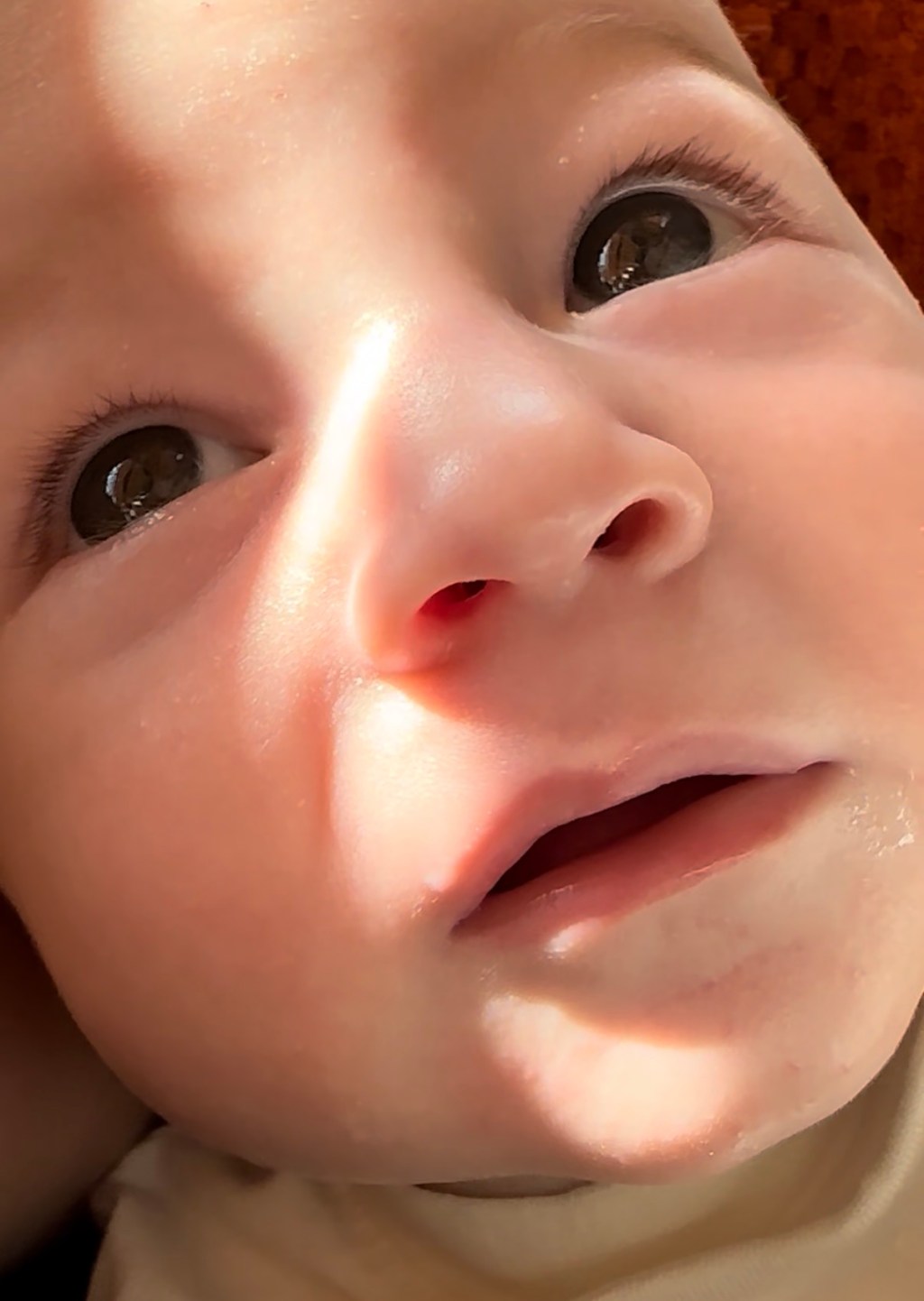
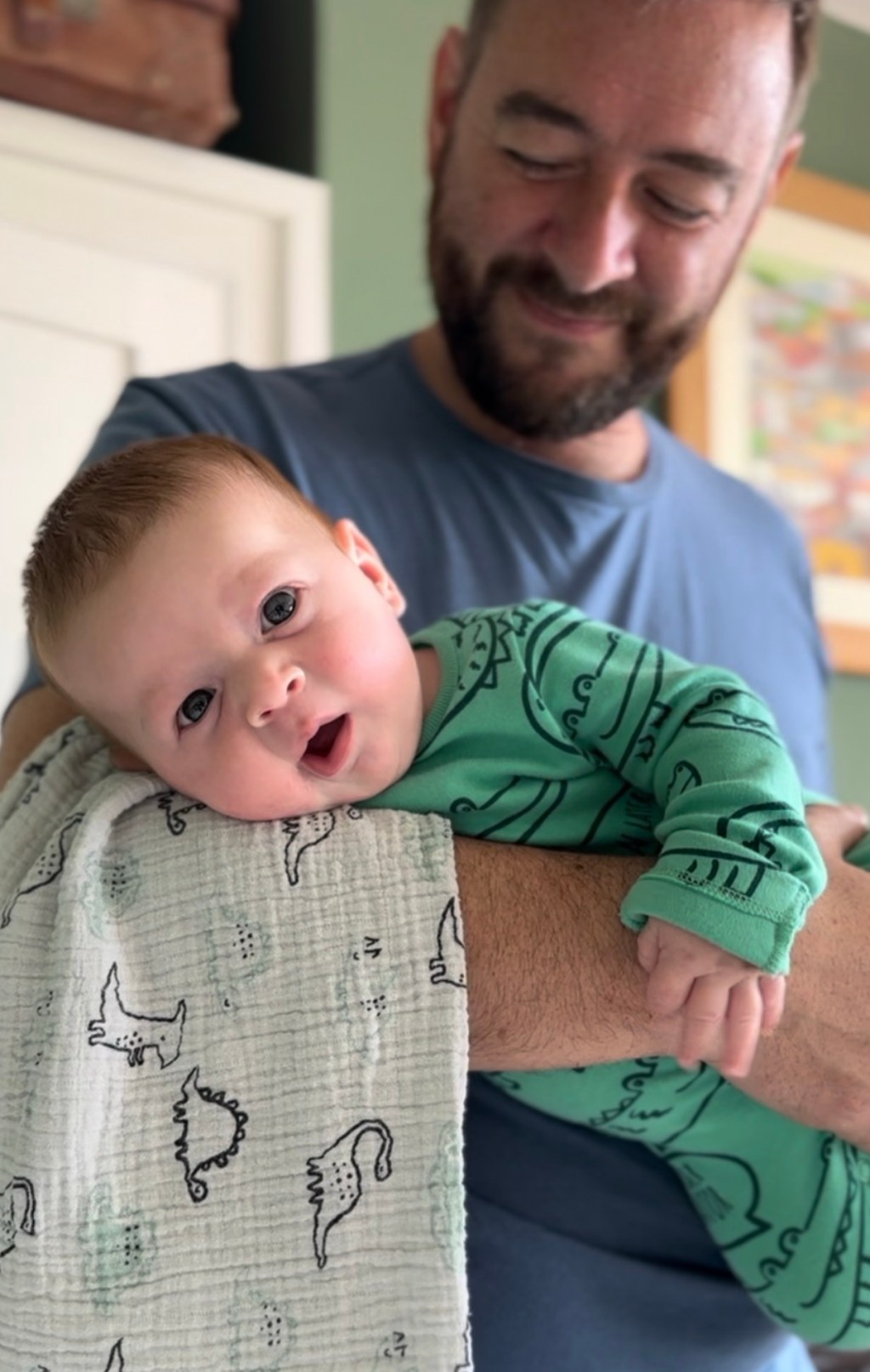
When I look into my baby’s eyes, I can’t help but marvel at them. My husband swears they’re blue, while I’d call them more of a slate grey. But the truth is, whatever colour they look right now probably isn’t their final shade. Like many newborns with lighter skin, he was born with eyes that appear blue-grey, but they’ll likely change as the months go by.

Why Are Babies Born with Blue or Grey Eyes?
The secret lies in melanin, the pigment that gives colour to our skin, hair, and eyes. Newborns are born with very little melanin in their irises, which is why their eyes appear so light at first.
In fact, even though they might look blue, there are no true blue or green pigments in the eyes at all. Instead, those colours are an optical effect, caused by the way light scatters in the iris when melanin levels are low.
It actually works with the same clever bit of physics that makes the sky blue. Tiny particles in the atmosphere let red wavelengths of light pass through, but scatter the blue light all around, giving the sky its… well, sky blouse colour. And the same thing is happening in blue eyes. Low, dispersed concentrations of melanin scatter the incoming light to make the irises appear blue.
How Eye Colour Changes During the First Year
Once babies open their eyes and are exposed to light, specialised cells in the iris called melanocytes begin to produce melanin. As pigment builds up, eye colour can shift from light blue or grey toward hazel, green, or brown.
This transformation usually begins around three months of age and continues through the first year. By 9–12 months, many babies’ eyes are close to their permanent colour. However, in some children, subtle changes can continue for years, sometimes up until age six.
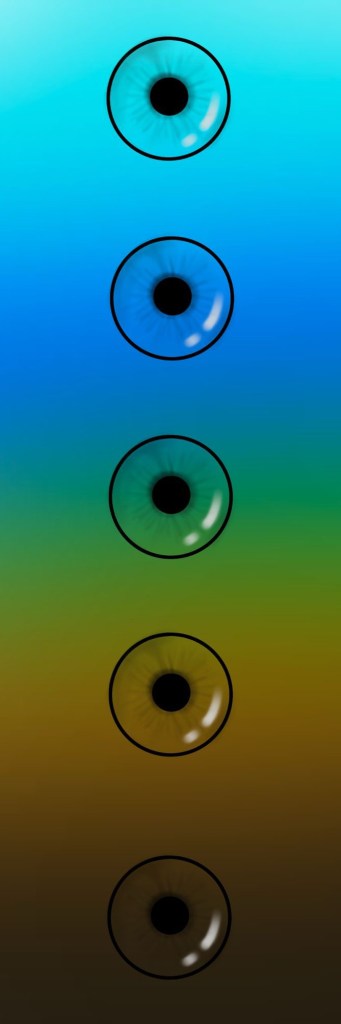
So what colour will my baby’s eyes end up?
Ultimately, your baby’s final eye colour will depend on the genetic instructions they inherited from their parents.
When people talk about eye colour inheritance, they often mention “dominant” and “recessive” genes. The classic example is that brown eyes are dominant, while blue eyes are recessive. In simple terms, if your child inherits one copy of the “brown” variant and one copy of the “blue” variant, the brown tends to win out—because the genes behind brown eyes usually trigger stronger melanin production. That’s why two brown-eyed parents are more likely to have a brown-eyed child.
But as with so many things in biology, the reality is more nuanced. Eye colour isn’t determined by just one gene, but by a whole team of them working together. So even if brown is “dominant,” the combination of other genes can tweak how much melanin gets made, leading to shades like hazel or green. It also explains why two blue-eyed parents can sometimes surprise everyone with a child who has darker eyes. Genetics is a complex mix of probabilities, not guarantees—one of the many reminders that every baby is truly unique.
In our family, I have blue eyes and my husband has brown. Because brown is usually linked to higher melanin production, there’s a strong chance our son’s eyes will darken over time. But genetics is never straightforward. Variants passed down from both parents (and even grandparents) mean there’s still a possibility he’ll keep lighter eyes.

When to Check with a Doctor
In most cases, changing eye colour is completely normal. But there are some situations where you should speak to a pediatric ophthalmologist:
If only one eye changes colour while the other stays the same If the iris or pupil looks cloudy If colour changes are accompanied by redness, irritation, or vision concerns
These cases are rare, but it’s always best to get professional reassurance if you’re worried.
The Takeaway for Parents
Baby eye colour is one of those little mysteries of early development. Most babies are born with blue or grey eyes because they lack melanin in their irises. Over the first year, exposure to light and genetics team up to shape the final shade, whether that’s deep brown, bright blue, or something in between.
For now, I’m savouring every moment spent gazing into my little one’s eyes, knowing that they’re still changing, and that wherever they land, they’ll tell a unique genetic story that’s been written since before he was born.



 The Science Baby
Leave a comment