
If there’s one thing you can be sure of when you bring you fresh newborn baby home, it’s that you can kiss goodbye to a full night’s sleep for the next weeks, months, maybe even years.
A newborn’s sleep schedule is famously all over the place, and what with needing to feed every few hours, parents find themselves in demand around the clock.
While we’ve all pulled a few all nighters in our time, whether through studying, working, or partying, it’s rarely as extreme as with a newborn. Your little baby will wake you up night after night, AND will continue to need you through the day as well. The stakes are high, you’re not just having to keep yourself going through these exhausted times, but you’re having to keep a vulnerable new life alive as well. No pressure!
And yet, somehow, we’re still able to do it. Under normal circumstances such little sleep for such a long time would leave us reeling, but with your perfect little bundle of joy by your side, parents are able to push on through. It might not even seem that hard!
So how is it possible? Why are new parents suddenly imbued with sleepless superpowers? The secret, in true fairytale fashion, is love.

We’ve got chemistry, baby
We are controlled by chemicals. And by that, I’m not talking about drugs, or mysterious substances secretly emittied into the air or water. I mean chemicals that naturally occur inside our bodies. In fact, our bodies and minds wouldn’t even be able to function without them. And these chemicals are, of course, hormones!
Some hormones control specific actions in the body, like the ones involved in the female menstrual cycle, which are manipulated during IVF treatment. But these and other hormones can often change how we feel as well.
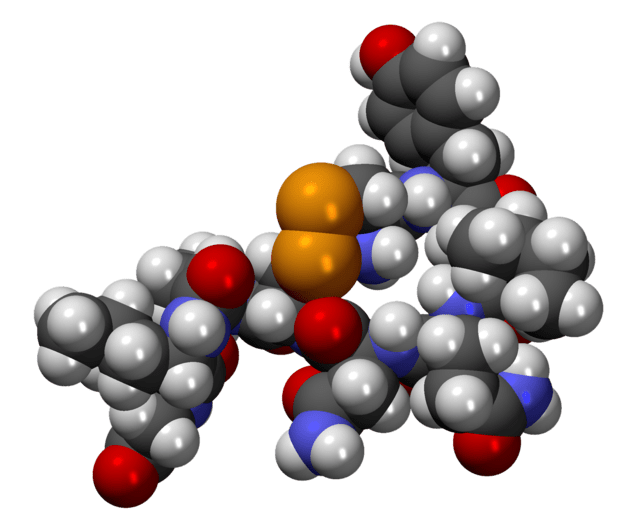
One of the most important hormone at work during the perinatal period is oxytocin, otherwise known as the love hormone.
If you went to any antenatal classes, you might remember hearing about oxytocin as the hormone that gets labour going. That’s why it’s great to have a loving birthing partner by your side during those painful hours, to keep oxytocin flowing and keeping those contractions going!
But once baby has been born, oxytocin’s role is far from over. It helps stimulated lactation in breastfeeding moms, but I’d say that it’s got an even more critical role to play. Because it’s instrumental in forging that bond between moms and dads and their baby.
High on Love
Oxytocin is produced by the hypothalamus, right in the centre of the brain. It’s then secreted into the blood and nervous system where it acts as a chemical messenger for cells all around the body.
When it reaches the uterus, it can stimulate contractions, and when it reaches the breast tissue it can stimulate lactation. But what’s most remarkable is what happens when it reaches the brain.
Earning its name ‘the love hormone’ oxytocin in the brain can give us that warm and fuzzy loved up feeling. It lifts our mood, relaxes us, and promotes trust in those around us. Similar to dopamine and endorphins, quite simply, it makes us happy!
And oxytocin is one of the few hormones that has a positive feedback effect. That means that when we feel good thanks to more oxytocin in our bodies, our bodies are stimulated to produce even more oxytocin. It’s like we’re tripping on love.
So what gets oxytocin flowing in the first place, to get us high on the love drug? In our normal – non perinatal – lives, things like exercise or sexual arousal will do the trick. But during that special, sensitive time when you’ve just brought a brand new life into the world, simply having close contact with your newborn baby is enough to open the oxytocin floodgates.
That’s one of the reasons that skin to skin contact is advised and widely supported in the hours and days after having your baby. And it works for moms (birthing and otherwise) and dads as well.
The oxytocin trip you’ll get will not only leave you feeling good, but it’ll help you to push through the sleepless nights that are to come.

Love conquers all
Scientists are still studying the effects of oxytocin on the brain and body, because it can vary a lot between people and under different circumstances. But they are beginning to realise that the love hormones is capable of a lot more than just making you feel warm and fuzzy.
For a start, in perinatal period higher oxytocin puts you in sync with your newborn, and makes you more responsive to their needs. The fact that close contact alone can stimulate its production and its ability to be self-sustaining means that it’s the drug you’re inadvertently taking to get you through the sleepless nights.
Baby wakes in the night, and you pick them up to comfort and feed them. Just being close to them is enough to get the oxytocin pumping, replacing that feeling of exhaustion and frustration with one of love. If you’re a breastfeeding mother, the oxytocin can help with a milk let-down, and your baby feeding only strengthens the love hormone feedback loop.
It’s this hormone high that keeps you coming back to your newborn, night after night. It’s the oxytocin that makes the unprecedented sleeplessness actually…alright!
But, incredibly, that’s not all. As I mentioned, scientists still don’t know the full effects of oxytocin on our minds and bodies, but it’s becoming clear that having more of the hormone circualting in your blood is only going to do you good.
When it’s produced as part of newborn interactions, it helps baby’s development, and your development as a parent (as mothers go through that aprticualrly mind-altering period of matrescence. The result of this co-development is that you both end up more socially competent, able to deal with the ups and downs of everyday social interactions, as well as more stressful situations.
Not only that, but it can do wonders for the body as well. Enjoying that happy loved up feeling helps to protect and heal your body’s cells. Oxytocin acts as an antioxidant and an anti-inflammatory agent in the body, helping to stop the effects of stress and strain, including the run-down feeling you get from endless sleepless nights.
So even though losing sleep with a newborn is unavoidable, and torturous under any other circumstance, with perinatal oxytocin in the mix you’re set up to succeed.

More Reading
Oxytocin and early parent-infant interactions: A systematic review
Oxytocin effects in mothers and infants during breastfeeding
Skin-to-skin contact with your newborn – Start for Life





 The Science Baby
Leave a comment