
Do you remember the first time you held your newborn baby? It’s the most surreal, magical experience in the world. One moment you’re just a normal person and the next, you’re a parent. You’re handed this tiny vulnerable bundle and instincts take over. At first it might seem strange as you take them in your arms, but as they settle down into the crook of your elbow, or against your chest, it soon becomes the most natural feeling in the world.
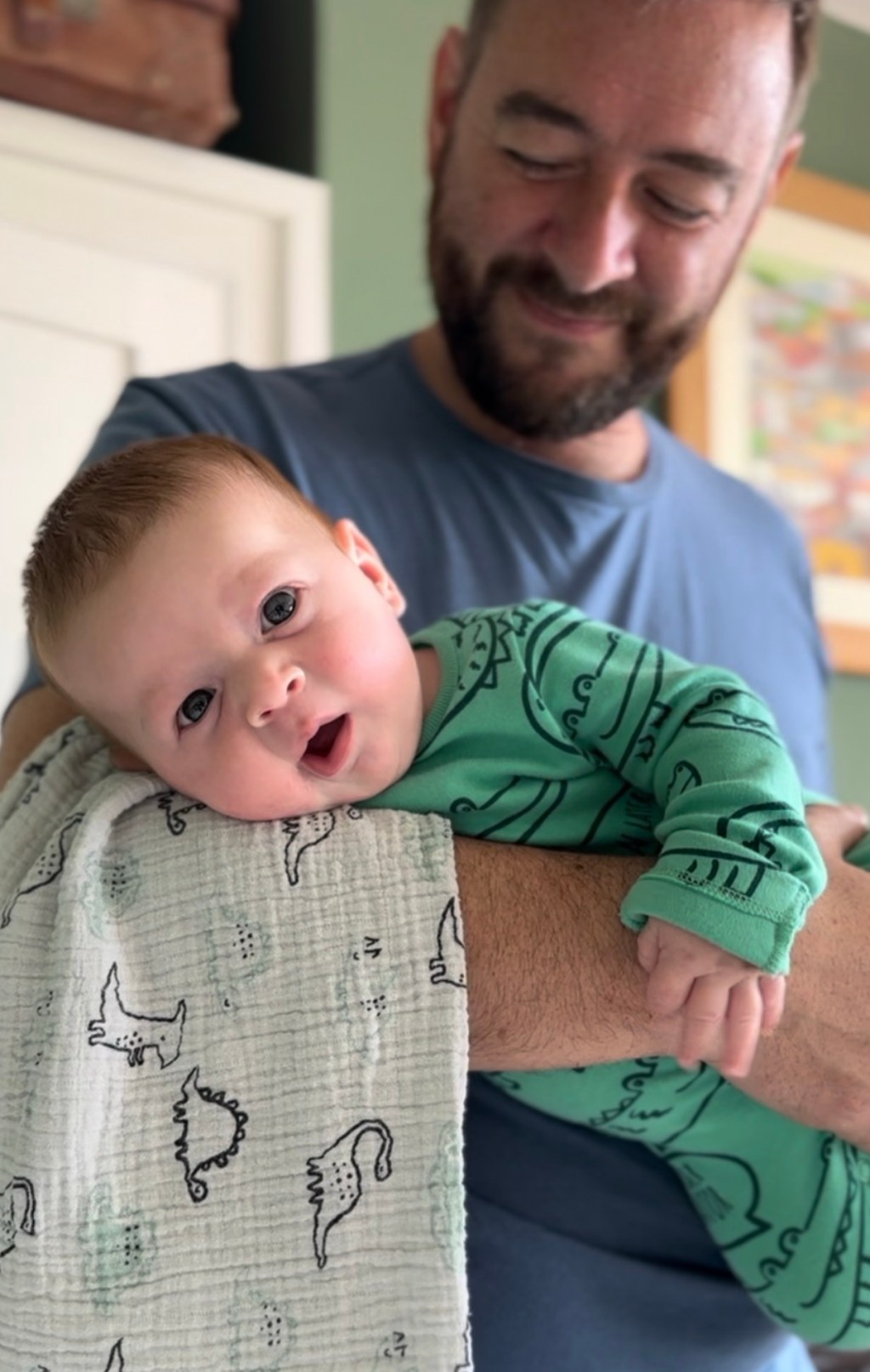
Which side did you choose to hold your baby? You’d never done it before, but I’m sure one side just felt right. For me, it was my left side.
That came as a bit of a surprise to me because I’m right handed, my right hand is my dominant hand, and my strongest arm. You’d think that if I wanted to keep this tiny baby safe then I’d want to be using the arm that felt most secure to me. But no, over to the left he went. And for the many many months of holding, cradling, and carrying that’s followed, on the left he stayed. Even now, when he needs a break from tearing around the house, he takes that break on my left hip. By now I think my left arm is stronger than my right, though unfortunately no more coordinated!
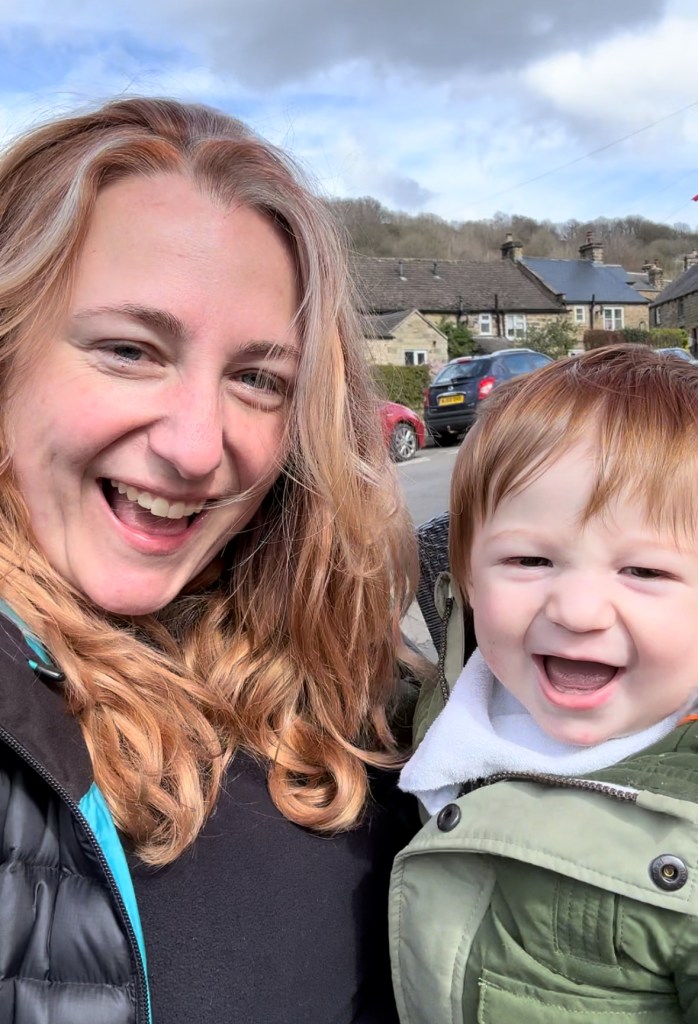
It’s not just you
I never really gave any thought to which side I held my baby. I’m not sure many do. But it turns out I’m not the only one who inexplicably chose to cradle on the left side.
In fact, studies have found that an incredible 90% of mothers instinctively hold their children on the left hand side, regardless of what they consider to be their strongest hand. So if you cradle on the right, you’re one of a rare 1 in 10!
It’s something that was first recorded scientifically back in the 1960s, but was actually noted over 300 years ago, so this has been a pattern throughout motherhood. Even in paintings from the 13th century you can see mothers holding their children on the left. And think how long they must have sat for those portraits!

And it’s not just human mothers either. Great apes like gorillas, chimpanzees and orangutans are our closest evolutionary relatives, and share many of the physical and behavioural features of human mothers, including holding and carrying their babies in their arms. In the wild as well as in captivity, these great apes consistently prefer to hold their young on the left sides of their bodies too. Whatever it is that’s causing this striking preference, it’s more than human.
Why do most prefer their left side?
With the vast majority of parents opting to hold their babies on the left hand side, scientists have tried to find out the reason for that preference.
One obvious possibility is that holding a child with your left arm leaves your right arm free to do…basically everything else that a parent needs to do! And considering about 90% of people in the Western world are right-handed, this would seem to match up with the 90% of people who hold their babies on the left.
Except, it’s not quite that simple.
The preference for left-handed cradling doesn’t necessarily go hand in hand (if you excuse the pun!) with right-handedness. People choose to hold their babies on the left regardless of whether they’re right or left handed. Many parents who are left-handed simply feel more comfortable holding their child on the left as well, meaning their free arm is the less-dominant one, and they’re less capable as a result.
Another theory is that by placing the child on the left, they’ll be better able to feel the parent’s heartbeat, since the heart can be felt more strongly on the left side of the body. That’s not because the heart is actually ON the left – it sits pretty much in the centre of your chest – but it’s slightly wonky so about two thirds of the muscle ends up on the left compare to a third on the right. So when it beats, that pulse can be felt more strongly behind your ribs on the left. The idea is that being able to feel mom or dad’s heart can calm and centre a baby, reminding them of the soothing time in the womb when mom’s heartbeat was a constant rhythm in their developing senses.
There’s nothing really wrong with this theory, although it’s hard to know just how calming the faint pulse of a parent’s heart will be amid the noisy confusion of day to day life. But more evidence has recently come to light to suggest that the left-sided connection is a lot more primitive.
It’s a lot more widespread than you’d think
Humans’ preference for holding babies on the left hand side of the body has been known about for hundreds of years, but scientists have recently found that the bias is much more widespread than just primates and their relatives. It’s seen in many unrelated mammal groups, including:
- kangaroos
- horses
- walruses
- orcas
- reindeer
- antelope
- beluga whales
- musk ox
- sheep
And scientists think that it could be a tendency that ALL mammal mothers share.

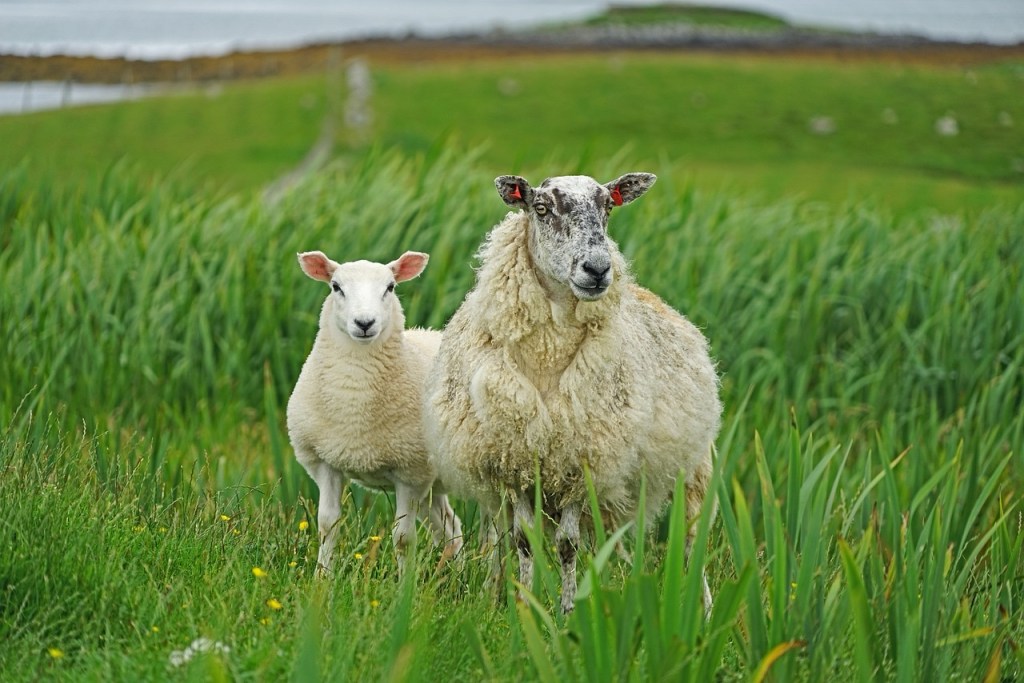
The interesting thing is that none of these animals are able to actually HOLD their young like humans and apes do, since they don’t really have arms to speak of. And these animals’ babies are more independent and mobile than a human newborn, so the choice of left or right side is actually down to the BABY, rather than the mother. Even so, researchers noted how baby kangaroos, walruses, sheep, etc, consistently approached and kept their mothers on their left hand sides.
It’s all in your head
Keeping baby on one side of the body turns out to be a widespread tendency amongst mammals, which tells us that the phenomenon probably has much deeper evolutionary origins than we once thought. It’s something that goes beyond the quirks of anatomy, and is rooted instead in the subconscious brain.
Scientists think it works like this: when a parent holds their baby in front of them on the left hand side, the left eyes of both the mother and the baby look directly at each other. That visual information is processed by the RIGHT side of the brain, because of the weird way that our nervous system is wired.
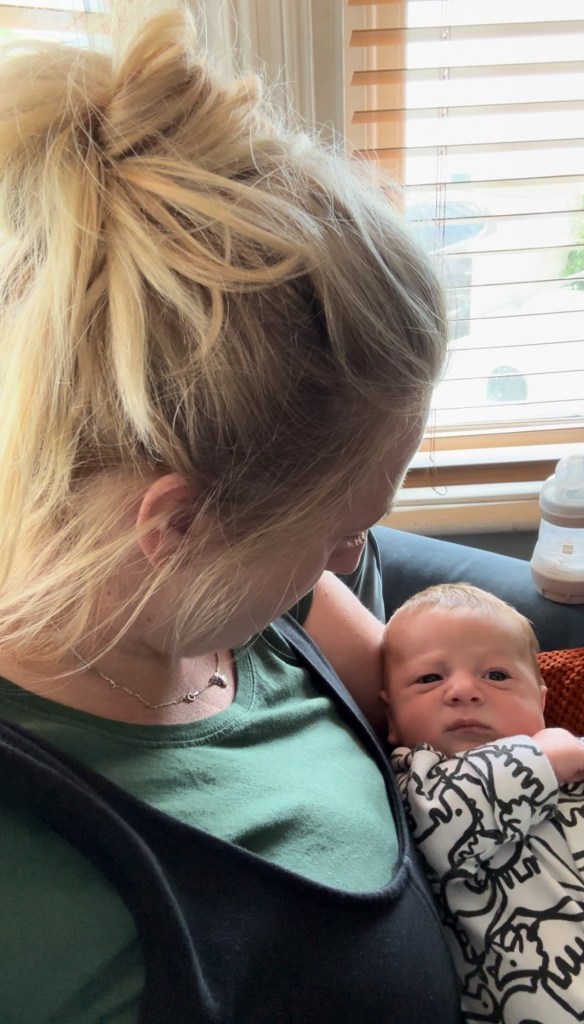
As a rule, the two different hemispheres of the brain tend to deal with different aspects of our subconscious. In particular, while the left side of the brain handles logic and analysis, the right hemisphere is thought to be involved in facial recognition, spatial processing, attention and memory. And it’s this right hand side that’s activated when making left eye contact.
Having different functions performed by different sides of the brain is called lateralisation, and in the case of parent-baby bonding, it can make all the difference.
Evolved to survive
So why is it so important that the pathways of the brain’s right hemisphere are activated when a mammal mother and child interact? At its root, it’s all about survival.
With the memory and facial recognition afforded by the right side of the brain, a parent is able to effectively monitor their baby. They can make sure they have the right child (I know, not so much an issue these days, but consider our evolutionary ancestors raising children all together), and can more effectively watch for changes in their health and wellbeing.
When it’s the animal offspring that are choosing to keep their mothers in their left visual field, then the right brain activation performs a similar function. The newborn whale, sheep or musk ox can more easily recognise its own mother, and respond to her cues.
Both of these processes ultimately help a young mammal to survive, whether through direct parental monitoring and care, or by staying close to a mother who is more clued into the dangers of the wider world.
Not only that, but scientists have shown that lateralised brains – that is, brains that subdivide some of their functions into right and left hemispheres, are much better at being able to do two things at once. For wild animals (and our human ancestors among them), that means they look our for predators and search for food at the same time, without really compromising their ability to do either.
And for parents, making the most of this brain lateralisation by holding your little one on the left side means that you can literally keep one eye on your baby, while also doing everything else a parent needs to do!
What if I hold on the right?
If you’ve been reading this thinking, ‘wait a minute, I hold my baby on the right, does that mean I’m broken or I don’t have a special bond with them?’, then don’t worry! Even being among one in ten means that there are hundreds of millions of right-hand cradlers out there. You’re still in good company, and you’re not broken!
The human brain is a funny old thing, and lateralisation isn’t some hard and fast rule of anatomy. It might just be that the brain functions that you use to take care of your baby are NOT all stuck in the brain’s right hemisphere. They could be spread across both sides of the brain, or you could prefer to do your facial recognition on your brain’s left side. Rest assured, you’re evolutionarily wired to take care of your little one, and whether that wiring is on the right or the left, there’s nothing you can do about it!
Oh, and a heads up…we talked about the link brain lateralisation a lot more in our The Science Baby Podcast episode “Is My Baby Right or Left Handed? (and when will I know?)“. So if you like things in your ear holes as well as your eye holes, be sure to click the link and check it out!




 The Science Baby
Leave a comment