
It’s a fact. Newborn babies smell fantastic. And I mean that in more ways than one!
Firstly, and perhaps most famously, you’ve got that delicious aroma that many newborns give off for a few weeks or even months after emerging into this world, which will have mom, dad, and anyone with a shred of a parenting instinct burying their faces in the poor baby’s hair.
But that’s not what I’m talking about here.
Instead, babies are born with an uncannily powerful sense of smell.
In many ways, your little one arrives in this world woefully inequipped for the trials of human existence. They can’t walk, unlike pretty much every baby animal in the wild. They can’t talk. Heck, they can’t even see properly.
But a newborn’s sense of smell is the thing that bucks the trend. Where a fresh new baby might by floundering in every other sense, their noses are right on the money.
Developing smell
The development of this smelling superpower starts before many mothers even realise they have a baby growing inside of them.
At 10 weeks into a pregnancy, towards the end of the first trimester, your foetus is about the size of an apricot, and although they’re starting to take the approximate shape of the baby they’ll become, right now they’re not much more than a loose collection of tissues and organs.
But among those early tissues, up in the foetus’s head, two teeny tiny nostrils have begun to form, along with the scent receptors that pick up any chemicals that pass their way. It’ll still be a little longer before their brain knows how to process that input though, and researchers think that it won’t be until the third trimester, when baby is 28 weeks old, that they’re able to properly detect smells.
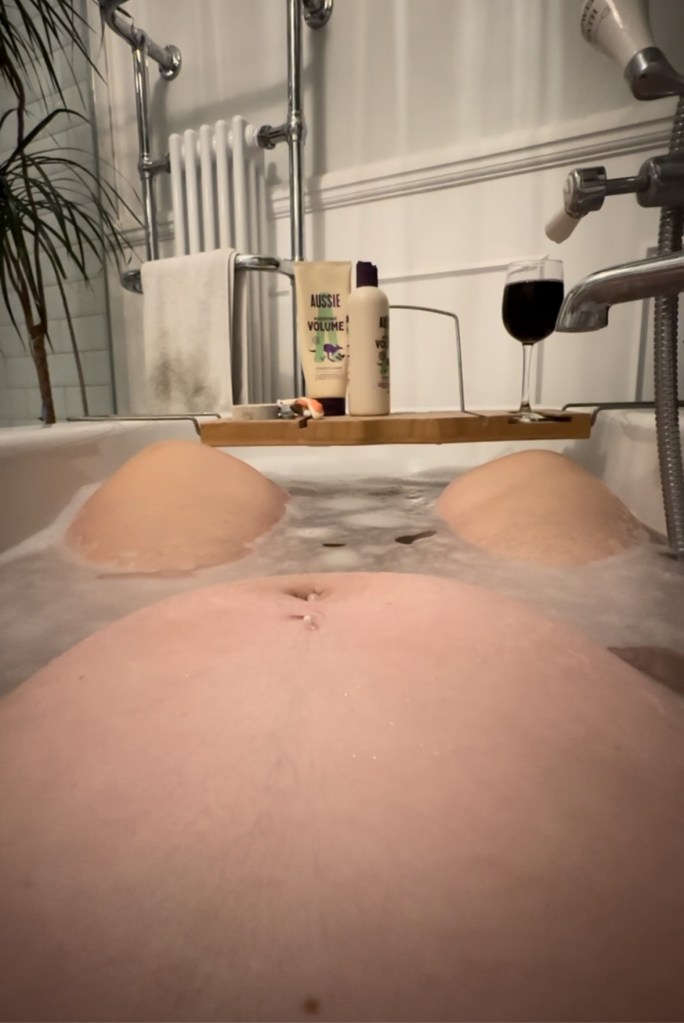
Of course, when baby is in the womb, the concept of ‘smell’ at all is a bit of a fluid one… if you’ll excuse the pun! In the outside world our sense of smell is reserved for detecting odours that are wafting through the air. But an unborn foetus is surrounded by the swirling protective embrace of amniotic fluid, so noses can’t work in their usual way in utero.
They can still work though, because the smells we detect – whether it’s a beautiful bouquet or your newborn’s dirty nappy come from specific molecules that enter the nostrils, touch and trigger the smell detectors (otherwise known as the olfactory sensory neurons), which sends a signal to be processed by the brain. In the womb, there may not be air, but there’s still a cocktail of molecules that can wash up the nose and trigger those neurons. In this way, an unborn’s sense of smell isn’t all that different from our sense of taste, which is all about detecting molecules in liquid.
What does the womb smell like anyway?
So if baby can detect smells in the amniotic fluid all throughout the third trimester, what sort of things are there to smell in there anyway?
You might be tempted to think that it always smells the same, and so doesn’t really have a scent at all to the unborn baby. After all, we’d be hard put to describe the scent of clean air, because we’re always immersed in it. We can’t see the wood for the trees, as it were. But over hours, days and weeks, the chemical composition of amniotic fluid does actually change.
Many of the molecules in the foods that mom eats while she’s pregnant can pass into the amniotic fluid via baby themselves. It works like this: mom eats food, digests it, and the chemicals pass into her blood. At the placenta, some of those food molecules make it through into baby’s blood, and can then be processed by their developing kidneys, passing into their urine, which is excreted into the amniotic fluid. Then, the chemicals are floating around ready for baby to smell and get familiar with. In this way, it’s a bit like when we smell our own farts!
It may be a little gross, but its perfectly normal to a developing foetus, and it gives them a chance to experience new things even before they’re earthside. Studies have shown that babies whose moms who eat lots of veggies while they’re pregnant are less likely to refuse those veggies when they’re weaned, and it’s likely because they’re already familiar with their smell and taste.
And let’s not forget that smell can be incredibly powerful memory trigger. You know how the smell of sun lotion takes you straight back to your last vacation? The same goes for those early smells in the womb. Because the scent detectors in the nose connect directly up into the brain, the signals are close to the brain’s memory and emotional centres too. And it’s been found that memories evoked by smell are more emotional that many of our other memories. It’s all connected, and it all starts in the womb.
Newborn scent hounds
While baby might be practicing with their sense of smell during the third trimester, their superpowers really come into their own once they’re born. Newborns come into this world not able to see, communicate or coordinate their limbs, but their sense of smell is unmatched. It’s the most advanced sense at birth, and scientists think a brand new fresh baby can smell ust as well, if not better, than an adult.
They’ve spent all that time floating around in amniotic fluid that smells uniquely like mom and the kinds of things she likes to eat, and so when they finally make it into the air and their noses begin to work like they will for the rest of their lives, mom is the familiar smell that they’re going to be instinctively drawn to. Although they won’t be able to see her, a baby can recognise their own mother by smell alone. That’s not something most adults can do easily!
Studies have found that newborns are most sensitive to a range of sweet odours, and in particular the sweet smell of breastmilk. Doing so enables them to hone in on the main thing that’s going to keep them alive, so it’s not hard to see how that particular skill came about.
By just two weeks old, studies have shown that a baby can tell the difference between their mother’s breast milk and milk from another woman, just by smell alone. Again, that’s definitely not something most adults would be able to do!

Discerning nose
As baby grows and develops, their superb sense of smell continues to develop along with them. They can recognise the smell of mom – the most important person in their lives – straight away, but by just three months old an infant can use smell alone to identify familiar people or detect strangers.
This remarkable skill probably came about through evolution for survival. A newborn baby is pretty helpless, but they do need to learn who is going to help them early on. And while it takes a while for their vision to get going, their sense of smell is their best chance of telling friend from foe.
Around six months old, a baby’s focus shifts from milk to food, and as I said above, baby is able to tap into their memories of food smells from before they were born. If you give an infant a food that you ate a lot in the womb, they may already be somewhat familiar with the scent, and associate it with a time that they were warm, comfy and protected. As a result, they may be more receptive to it. A sign, if you needed one, to get your veggie fix when you’re pregnant to save yourself a headache when weaning!
Smell continues to be a powerful tool for your baby as they continue their weaning journey too, as they use smell as well as sight, touch and taste when deciding what foods they will eat. Originally this would have been an evolutionary adaptation, helping to them avoid foods that were potentially rotten or toxic, but these days it’s more about recognising familiar and tasty smells.

Aroma-therapy
It goes further than just being familiar. Several studies have shown that familiar smells can have an active soothing effect on young babies. That’s likely to be a result of the close connection between smells, memory, and emotion I described above.
In one study of premature babies, scientists found that a pad that’s soaked in mom’s breast milk, or infused with her scent, is enough to reduce a preemie’s heart rate when left in an incubator.
Because of their sweet scents, it’s believed that lavender and sweet almond oils can be calming to newborns, especially when used as a massage oil. Be careful when using diffused smells around little ones – because their sense of smell is so acute, you don’t want to be overwhelming those tiny nostrils with strong essential oils.
Even more remarkably, comforting smells have even been found to reduce the pain that newborns feel during painful procedures like the dreaded 5-day heel prick test. In this procedure, a midwife will use a small needle to prick a baby’s heel to draw a small spot of blood for testing. But your 5-day old newborn has never experienced a pain like that, and it can often result in a very dramatic reaction.
Researchers exposed various newborns going through this procedure to different smells – either their mother’s milk, another woman’s milk, or the smell of formula. And the results were incredible – those babies exposed to the smell of their mother’s milk appeared to feel less pain and stress, based on how much they screamed and cried and the levels of cortisol (the stress hormone) in their blood. Other studies have seen a similar effect during vaccinations and in preterm blood sampling too.
So your baby really does have superpowers. They can smell better than a grown up, pick their favourite foods before they’re even born, and use the powerful link between smell and emotion to calm themselves through stressful and painful experiences. I don’t know about you, but I wouldn’t mind a bit of that as a grown up!
More Reading



 The Science Baby
Leave a comment